THE ADVENTURE COLLECTIVE® · Independent discovery and booking for outdoor travel

Walk Busan’s working waterfront with a local guide: Gamcheon’s painted alleys, Jagalchi fish stalls, Yeongdo haenyeo stories and a market crawl that folds history into everyday life. Expect stairs, seafood tastings, and plenty of photo stops.
Walk Busan’s working waterfront with a local guide: Gamcheon’s painted alleys, Jagalchi fish stalls, Yeongdo haenyeo stories and a market crawl that folds history into everyday life. Expect stairs, seafood tastings, and plenty of photo stops.
You step off the bus into a harbor wind that tugs at your jacket, the sea daring you to follow the scent of grilled fish into Jagalchi Market. Stalls shout, knives flash, and gulls wheel above a working port where boats return heavy with the day's catch.
Verified experiences and guided adventures in the surrounding area.
Operated by MUSTVISITKOREA · Busan, Busan
You step off the bus into a harbor wind that tugs at your jacket, the sea daring you to follow the scent of grilled fish into Jagalchi Market. Stalls shout, knives flash, and gulls wheel above a working port where boats return heavy with the day's catch.
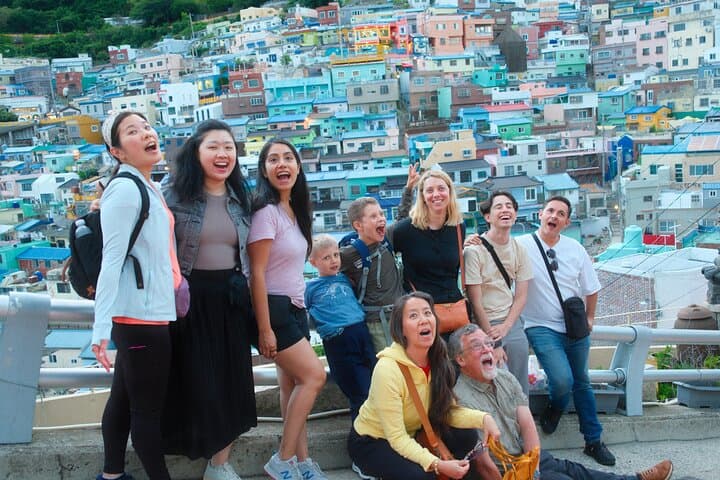
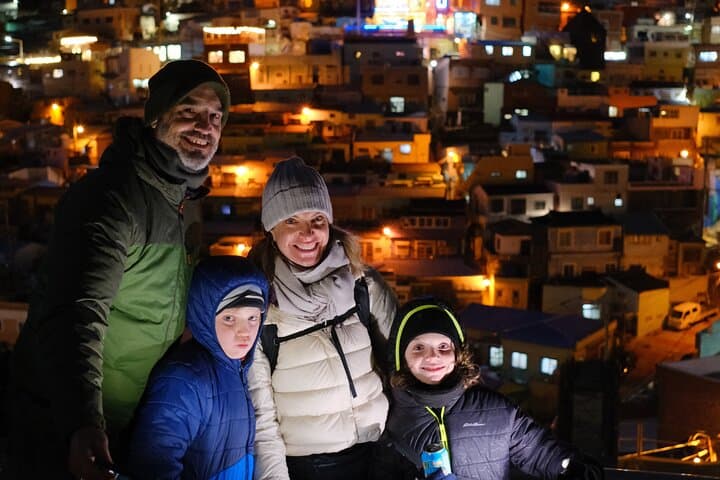
This five-hour walking tour threads through neighborhoods shaped by modern industry and wartime migration: Yeongdo’s working waterfront and haenyeo traditions, Gamcheon Culture Village’s stepped alleys of painted houses, and Gukje’s market stalls that grew from Korean War-era trade. Geology shows itself in the jagged headlands and narrow inlets that define Busan’s coastline; culture appears in vendors’ calls, salted seafood, and stories about the Japanese colonial period and the city’s role as a refuge during the Korean War.
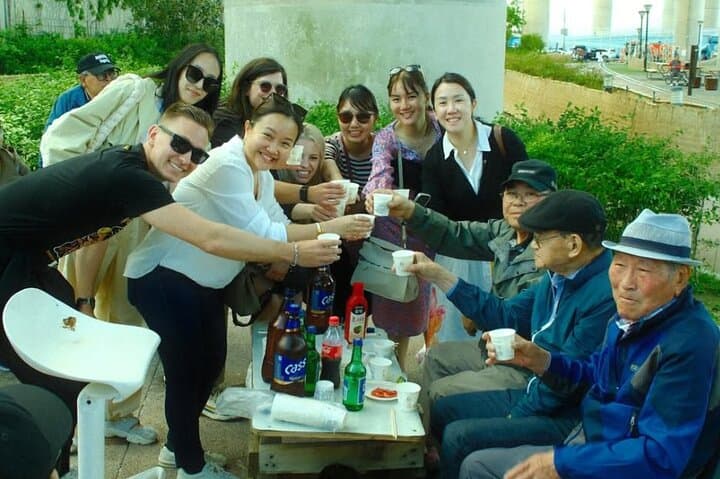
Expect steep concrete steps, short climbs between viewpoints, and close-up market encounters rather than long wilderness hikes. The guide will share local history, point out haenyeo diving techniques, and capture photos for you. Practical notes: the route covers roughly 3–5 km of walking with intermittent stair sections, so shoes with grip matter; bring about 10,000–15,000 KRW if you want to sample market food. Public transport and a taxi are typically used between points—the tour can be timed for cruise dock arrivals if needed.
Morning light is best for photos and cooler walking; midweek visits reduce crowds. Be prepared for humid summers, blustery winters, and busy weekends. Enjoy the rhythm of a port city where human industry and coastal geography push you forward together.
easy.
5 hours.
Suitable for most fitness levels; expect several flights of stairs and 3–5 km of walking with stops
No; lunch is not included—expect to spend around 10,000 KRW at market stalls if you want to try local seafood.
Yes; the guide can time the route to match docking times—notify them in advance when booking.
Generally yes, but there are many stairs and uneven surfaces; participants with limited mobility should contact the operator before booking.
No; the tour typically includes one taxi and one bus segment; public transport fares are extra and can be paid on the spot.
Gamcheon and Gukje developed rapidly after the Korean War when refugees settled and established markets; the neighborhoods retain stories of displacement and local resilience.
Support local vendors, avoid single-use plastics at market stalls, and respect diving communities; mindful purchases help sustain traditional livelihoods.
MUSTVISITKOREA operates guided outdoor trips and adventures with an emphasis on safety, stewardship, and memorable experiences.
You step off the bus into a harbor wind that tugs at your jacket, the sea daring you to follow the scent of grilled fish into Jagalchi Market. Stalls shout, knives flash, and gulls wheel above a working port where boats return heavy with the day's catch.
You step off the bus into a harbor wind that tugs at your jacket, the sea daring you to follow the scent of grilled fish into Jagalchi Market. Stalls shout, knives flash, and gulls wheel above a working port where boats return heavy with the day's catch.
This five-hour walking tour threads through neighborhoods shaped by modern industry and wartime migration: Yeongdo’s working waterfront and haenyeo traditions, Gamcheon Culture Village’s stepped alleys of painted houses, and Gukje’s market stalls that grew from Korean War-era trade. Geology shows itself in the jagged headlands and narrow inlets that define Busan’s coastline; culture appears in vendors’ calls, salted seafood, and stories about the Japanese colonial period and the city’s role as a refuge during the Korean War.
Expect steep concrete steps, short climbs between viewpoints, and close-up market encounters rather than long wilderness hikes. The guide will share local history, point out haenyeo diving techniques, and capture photos for you. Practical notes: the route covers roughly 3–5 km of walking with intermittent stair sections, so shoes with grip matter; bring about 10,000–15,000 KRW if you want to sample market food. Public transport and a taxi are typically used between points—the tour can be timed for cruise dock arrivals if needed.
Morning light is best for photos and cooler walking; midweek visits reduce crowds. Be prepared for humid summers, blustery winters, and busy weekends. Enjoy the rhythm of a port city where human industry and coastal geography push you forward together.