THE ADVENTURE COLLECTIVE® · Independent discovery and booking for outdoor travel

Walk winding boardwalks through one of Lake Ontario’s last coastal wetlands. This guided tour highlights Sheridan Creek, Knoll Trail lookouts, and abundant birdlife while explaining the marsh’s ecology and conservation.
Walk winding boardwalks through one of Lake Ontario’s last coastal wetlands. This guided tour highlights Sheridan Creek, Knoll Trail lookouts, and abundant birdlife while explaining the marsh’s ecology and conservation.
You step off the pavement and the city’s hum thins; boardwalk planks creak underfoot and reeds lean as if to whisper directions. The air tastes faintly of lake and peat, and the trail threads between alder and cedar where herons stand like patient sentinels. The Marsh’s shoreline opens in sudden cups of water reflecting sky — each inlet seems to dare you to look closer.
Verified experiences and guided adventures in the surrounding area.
Operated by Rattray Marsh Conservation Guide · Mississauga, Ontario
You step off the pavement and the city’s hum thins; boardwalk planks creak underfoot and reeds lean as if to whisper directions. The air tastes faintly of lake and peat, and the trail threads between alder and cedar where herons stand like patient sentinels. The Marsh’s shoreline opens in sudden cups of water reflecting sky — each inlet seems to dare you to look closer.
Rattray Marsh is one of the last intact lakefront wetlands on Lake Ontario, preserved through local conservation efforts in the late 20th century. The geology here is glacially derived sand and clay, with a shallow basin that traps freshwater and supports cattails, sedge meadows, and forest patches. The area has long been important to Indigenous peoples and later to settlers for its fisheries and shoreline resources; today it’s a community-supported conservation area managed to balance access and protection.
A guided tour follows winding boardwalks and short forest trails, pausing at Sheridan Creek and the Knoll Trail lookout. Expect binocular-worthy birdlife — migratory warblers, kingfishers and great blue herons — and occasional turtles sunning at the water’s edge. Guides point out invasive species, marsh hydrology, and seasonal rhythms.
Practical notes: the walk is low-impact but uneven in places; waterproof shoes and layers make the six-hour outing comfortable. Bring water, insect repellent in summer, and a camera with a zoom lens for wildlife. Stay on marked paths to protect fragile vegetation, and plan around shorter daylight in winter. Arrival by car or transit to Port Credit is straightforward; once here, the marsh rewards observers who move slowly and look often.
easy.
6 hours.
Suitable for most fitness levels; you should be comfortable walking on uneven, sometimes wet surfaces for several hours.
The full guided experience runs about six hours over mostly flat boardwalks and short forest trails; it’s classified as easy and suitable for most walkers.
Some main boardwalk sections are level and accessible, but portions of the trails and lookouts can be narrow or uneven—check with the tour operator for specific accessibility accommodations.
Common sightings include great blue herons, songbirds, kingfishers, and snapping turtles; seasonal migrations bring additional waterfowl and passerines.
Rattray Marsh is in Mississauga near Port Credit—reachable by car in about 25–40 minutes or by GO transit and a short local bus or taxi from Port Credit station.
Rattray Marsh is among the last remaining coastal wetlands on Lake Ontario and was protected through local conservation efforts in the late 20th century to preserve its ecological and community value.
Visitors are asked to remain on boardwalks to limit trampling, avoid feeding wildlife, and respect ongoing invasive species management programs to protect native marsh habitat.
Rattray Marsh Conservation Guide operates guided outdoor trips and adventures with an emphasis on safety, stewardship, and memorable experiences.
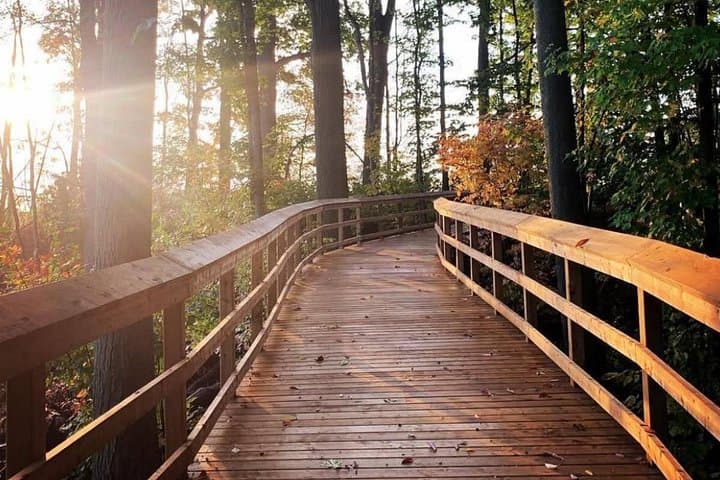
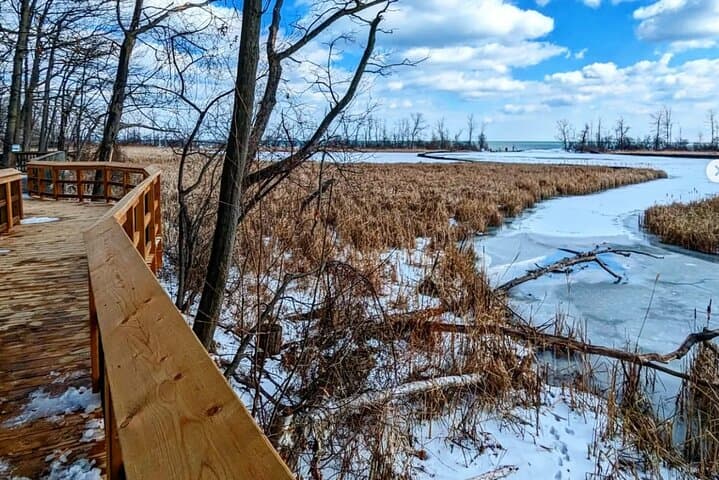


You step off the pavement and the city’s hum thins; boardwalk planks creak underfoot and reeds lean as if to whisper directions. The air tastes faintly of lake and peat, and the trail threads between alder and cedar where herons stand like patient sentinels. The Marsh’s shoreline opens in sudden cups of water reflecting sky — each inlet seems to dare you to look closer.
You step off the pavement and the city’s hum thins; boardwalk planks creak underfoot and reeds lean as if to whisper directions. The air tastes faintly of lake and peat, and the trail threads between alder and cedar where herons stand like patient sentinels. The Marsh’s shoreline opens in sudden cups of water reflecting sky — each inlet seems to dare you to look closer.
Rattray Marsh is one of the last intact lakefront wetlands on Lake Ontario, preserved through local conservation efforts in the late 20th century. The geology here is glacially derived sand and clay, with a shallow basin that traps freshwater and supports cattails, sedge meadows, and forest patches. The area has long been important to Indigenous peoples and later to settlers for its fisheries and shoreline resources; today it’s a community-supported conservation area managed to balance access and protection.
A guided tour follows winding boardwalks and short forest trails, pausing at Sheridan Creek and the Knoll Trail lookout. Expect binocular-worthy birdlife — migratory warblers, kingfishers and great blue herons — and occasional turtles sunning at the water’s edge. Guides point out invasive species, marsh hydrology, and seasonal rhythms.
Practical notes: the walk is low-impact but uneven in places; waterproof shoes and layers make the six-hour outing comfortable. Bring water, insect repellent in summer, and a camera with a zoom lens for wildlife. Stay on marked paths to protect fragile vegetation, and plan around shorter daylight in winter. Arrival by car or transit to Port Credit is straightforward; once here, the marsh rewards observers who move slowly and look often.