THE ADVENTURE COLLECTIVE® · Independent discovery and booking for outdoor travel

Climb rock fins, lower into the shadowed Medieval Chamber, then free-hang 120 feet beside Morning Glory Natural Bridge. This guided Moab rappel pairs technical rope work with a scenic 2.5-mile canyon walk to the Colorado River.
Climb rock fins, lower into the shadowed Medieval Chamber, then free-hang 120 feet beside Morning Glory Natural Bridge. This guided Moab rappel pairs technical rope work with a scenic 2.5-mile canyon walk to the Colorado River.
Sandstone walls absorb the desert sun as you step onto the rock fins above Grandstaff Canyon, the wind nudging loose grains from cliffs that have been eroded for millions of years. The first descent threads you into the Medieval Chamber — a narrow, shadowed slot where layered banding reads like pages of geologic time. Light shifts as you move; the canyon seems to watch you, urging steady feet and steady breath.
Verified experiences and guided adventures in the surrounding area.
Operated by Paddle Moab · Moab, Utah
Sandstone walls absorb the desert sun as you step onto the rock fins above Grandstaff Canyon, the wind nudging loose grains from cliffs that have been eroded for millions of years. The first descent threads you into the Medieval Chamber — a narrow, shadowed slot where layered banding reads like pages of geologic time. Light shifts as you move; the canyon seems to watch you, urging steady feet and steady breath.
This stretch of eastern Utah sits on the Colorado Plateau, where uplift and water carved deep drains and formed massive natural bridges like Morning Glory — one of the country’s longest at roughly 243 feet across. The area carries Paiute and Ute cultural connections to the land, and early settlers used the river corridors as travel routes. The geology is straightforward: cross-bedded Entrada and Navajo sandstones, steep fins, and narrow slots that amplify sound and light.
Expect roughly 1 mile of approach over slickrock to two technical rappels, the second a dramatic 120-foot free-hanging drop beside Morning Glory. After the ropes, a scenic 2.5-mile walk down Grandstaff Canyon follows the Colorado River corridor back toward civilization.
Practical guidance: arrive hydrated and sun-ready, wear sticky-soled shoes and long sleeves for rope abrasion, and be prepared for exposure on the second rappel. Guides supply harnesses, helmets, and ropes, but you’ll need a moderate level of fitness and a steady head for heights.
The route rewards climbers with striking layers, a broad natural bridge, and a close-up lesson in how water and time cut through stone — a compact, technical day that feels far deeper than its hours suggest.
challenging.
3–4 hours.
Moderate to fit — comfortable with short scrambles, sustained standing, and exposure to heights; not suitable for those with serious cardiovascular issues.
There are two rappels: a short entry into Medieval Chamber and a dramatic free-hanging 120-foot descent next to Morning Glory Natural Bridge.
No — the tours are guided and include all necessary gear, but participants must be comfortable with exposure and follow guide instructions.
Operators collect height, weight, and other details during booking; limits exist to ensure correct rigging and safety — disclose information up front.
Trips are canceled for unsafe conditions (heavy rain, lightning, extreme winds); operators typically offer full refunds if canceled 24+ hours in advance.
Grandstaff Canyon and nearby formations sit on the Colorado Plateau, where Native American peoples and later Euro-American explorers used river corridors; Morning Glory Bridge formed as stream action undercut fin walls over millennia.
Stay on established approaches and pack out all waste; the fragile cryptobiotic soil and thin desert vegetation recover slowly from trampling, so minimize new bootprints.
Paddle Moab operates guided outdoor trips and adventures with an emphasis on safety, stewardship, and memorable experiences.
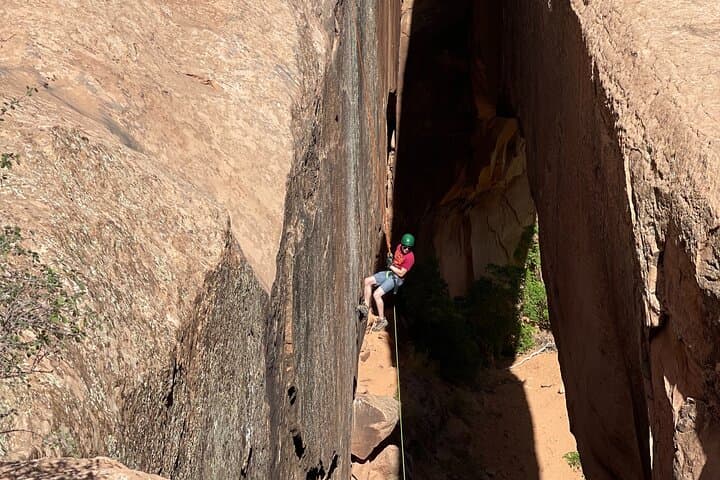
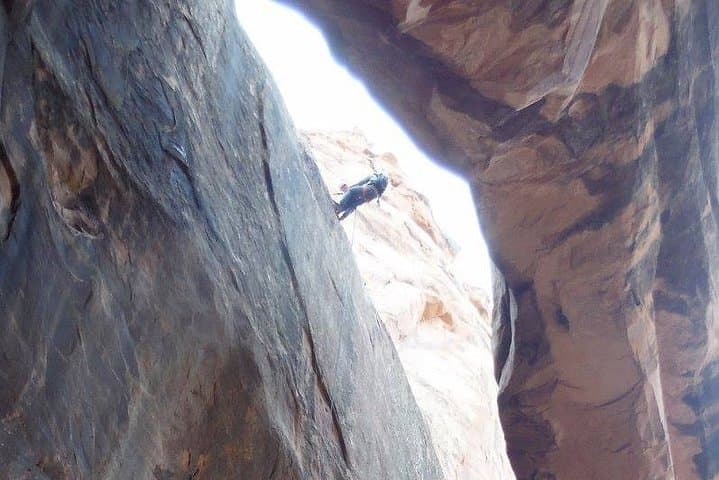
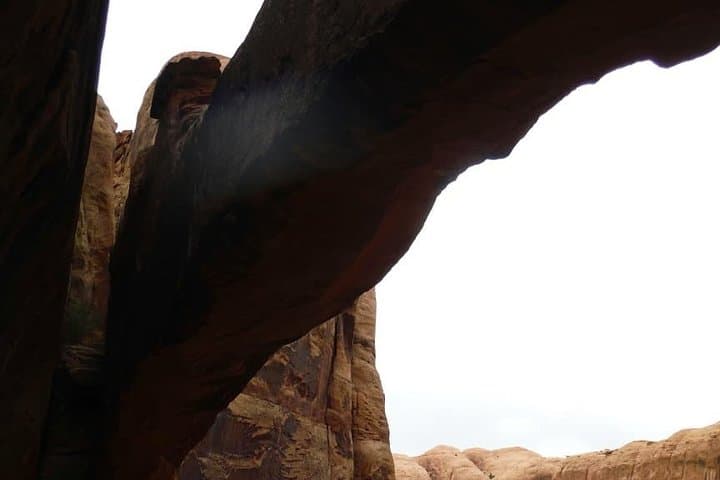
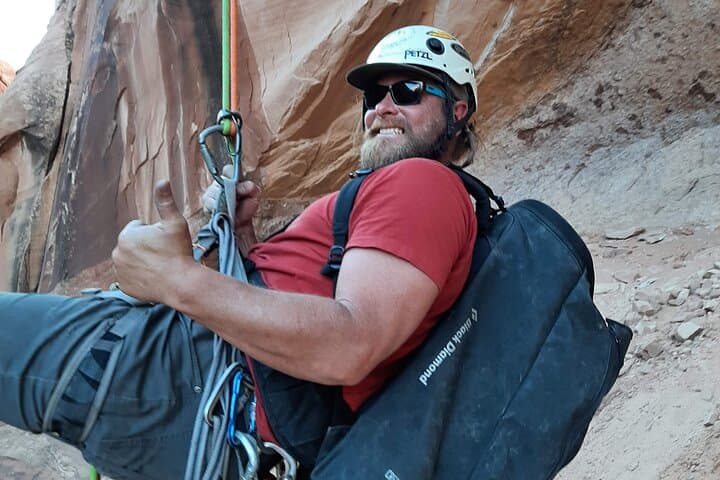
Sandstone walls absorb the desert sun as you step onto the rock fins above Grandstaff Canyon, the wind nudging loose grains from cliffs that have been eroded for millions of years. The first descent threads you into the Medieval Chamber — a narrow, shadowed slot where layered banding reads like pages of geologic time. Light shifts as you move; the canyon seems to watch you, urging steady feet and steady breath.
Sandstone walls absorb the desert sun as you step onto the rock fins above Grandstaff Canyon, the wind nudging loose grains from cliffs that have been eroded for millions of years. The first descent threads you into the Medieval Chamber — a narrow, shadowed slot where layered banding reads like pages of geologic time. Light shifts as you move; the canyon seems to watch you, urging steady feet and steady breath.
This stretch of eastern Utah sits on the Colorado Plateau, where uplift and water carved deep drains and formed massive natural bridges like Morning Glory — one of the country’s longest at roughly 243 feet across. The area carries Paiute and Ute cultural connections to the land, and early settlers used the river corridors as travel routes. The geology is straightforward: cross-bedded Entrada and Navajo sandstones, steep fins, and narrow slots that amplify sound and light.
Expect roughly 1 mile of approach over slickrock to two technical rappels, the second a dramatic 120-foot free-hanging drop beside Morning Glory. After the ropes, a scenic 2.5-mile walk down Grandstaff Canyon follows the Colorado River corridor back toward civilization.
Practical guidance: arrive hydrated and sun-ready, wear sticky-soled shoes and long sleeves for rope abrasion, and be prepared for exposure on the second rappel. Guides supply harnesses, helmets, and ropes, but you’ll need a moderate level of fitness and a steady head for heights.
The route rewards climbers with striking layers, a broad natural bridge, and a close-up lesson in how water and time cut through stone — a compact, technical day that feels far deeper than its hours suggest.