THE ADVENTURE COLLECTIVE® · Independent discovery and booking for outdoor travel

Head into Ranua’s dark forests with a local guide for a 3–5 hour aurora hunt. Enjoy campfire snacks, hot drinks, and guided siting to maximize your chance of seeing the Northern Lights away from city glow.
Head into Ranua’s dark forests with a local guide for a 3–5 hour aurora hunt. Enjoy campfire snacks, hot drinks, and guided siting to maximize your chance of seeing the Northern Lights away from city glow.
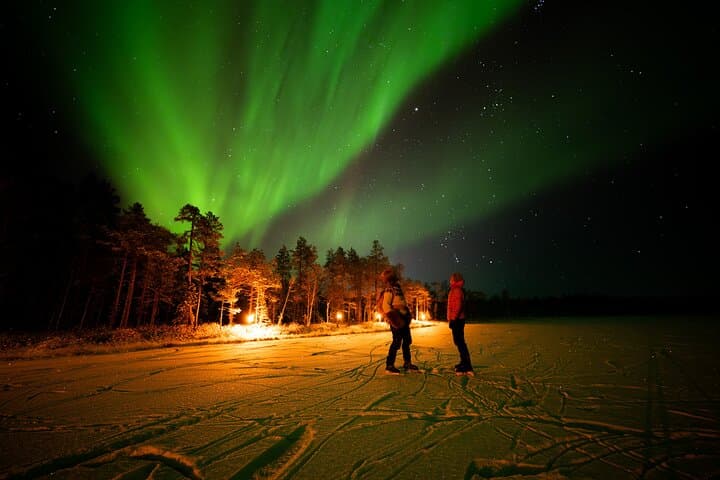
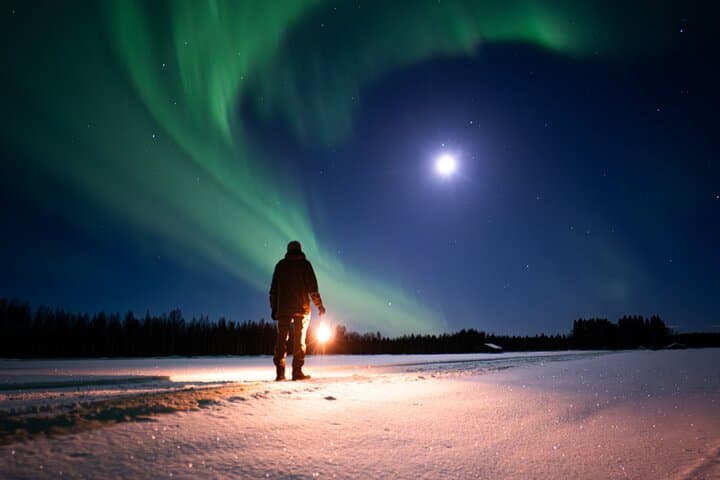
The sky in Ranua opens like a slow-breathing ceiling—first a pale wash, then ribbons of green and violet unfurling above snow-dark trees. On this guided aurora hunt you leave town lights behind and follow a local guide into silent forests and frozen clearings, where the stars feel nearer and the aurora dares you to look up.
Verified experiences and guided adventures in the surrounding area.
Operated by Lupland Adventures · Ranua, Lapland
The sky in Ranua opens like a slow-breathing ceiling—first a pale wash, then ribbons of green and violet unfurling above snow-dark trees. On this guided aurora hunt you leave town lights behind and follow a local guide into silent forests and frozen clearings, where the stars feel nearer and the aurora dares you to look up.
Ranua sits in southern Lapland, a landscape carved by ice and defined by peatlands and small lakes that freeze solid through winter. Sámi and Finnish northern traditions treat the lights with respectful stories—ominous for some, wondrous for others—reflecting centuries of watching the sky for signs. Geologically the region is flat to gently rolling, with glacially-scoured soils that make for quiet, open vantage points.
Expect a practical, low-effort outing: short walks from warm vehicle stops, a campfire to warm hands, and hot drinks while you wait. Guides read the forecast and move to darker sites to maximize viewing chances; patience and clear skies are the real ticket. Photographing the aurora usually means a tripod, a camera with manual exposure, and an understanding that lights can appear suddenly and vanish just as quickly.
Plan layers, limit screen time, and give your eyes 20–30 minutes to adapt to darkness. Even when the display is modest, the experience of the Arctic night—crisp air, the smell of smoke, the hush of forest—stays with you. For many visitors this 3–5 hour chase is less a technical expedition than a deliberate pause under a living sky.
easy.
3–5 hours.
Low fitness required; participants should be able to walk short distances over snow and stand for extended periods.
Sightings depend on solar activity and clear skies; guides pick dark locations to improve odds, but sightings are never guaranteed.
Many tours offer pickup points in Rovaniemi or nearby; check your booking confirmation for pickup options and meeting locations.
Children need the same cold-weather layers as adults—insulated boots, hats, gloves—and should be supervised near the campfire and frozen surfaces.
This excursion involves short, mostly flat walks and time standing; notify the operator of mobility needs so guides can suggest accessible meeting points.
Ranua sits in a region shaped by glacial retreat; local culture blends Finnish and Sámi traditions, many of which include aurora lore.
Tours favor locations away from populated areas to reduce light pollution; visitors are asked to follow leave-no-trace practices and minimize wood gathering.
Lupland Adventures operates guided outdoor trips and adventures with an emphasis on safety, stewardship, and memorable experiences.


The sky in Ranua opens like a slow-breathing ceiling—first a pale wash, then ribbons of green and violet unfurling above snow-dark trees. On this guided aurora hunt you leave town lights behind and follow a local guide into silent forests and frozen clearings, where the stars feel nearer and the aurora dares you to look up.
The sky in Ranua opens like a slow-breathing ceiling—first a pale wash, then ribbons of green and violet unfurling above snow-dark trees. On this guided aurora hunt you leave town lights behind and follow a local guide into silent forests and frozen clearings, where the stars feel nearer and the aurora dares you to look up.
Ranua sits in southern Lapland, a landscape carved by ice and defined by peatlands and small lakes that freeze solid through winter. Sámi and Finnish northern traditions treat the lights with respectful stories—ominous for some, wondrous for others—reflecting centuries of watching the sky for signs. Geologically the region is flat to gently rolling, with glacially-scoured soils that make for quiet, open vantage points.
Expect a practical, low-effort outing: short walks from warm vehicle stops, a campfire to warm hands, and hot drinks while you wait. Guides read the forecast and move to darker sites to maximize viewing chances; patience and clear skies are the real ticket. Photographing the aurora usually means a tripod, a camera with manual exposure, and an understanding that lights can appear suddenly and vanish just as quickly.
Plan layers, limit screen time, and give your eyes 20–30 minutes to adapt to darkness. Even when the display is modest, the experience of the Arctic night—crisp air, the smell of smoke, the hush of forest—stays with you. For many visitors this 3–5 hour chase is less a technical expedition than a deliberate pause under a living sky.