THE ADVENTURE COLLECTIVE® · Independent discovery and booking for outdoor travel
Set out from Jaipur for a full-day safari to Ranthambore National Park, an accessible and well-managed reserve where open-jeep drives and government naturalists maximise your chance to see Bengal tigers and rich birdlife. Expect a long day, rugged roads, and classic Rajasthani forest scenery.
Set out from Jaipur for a full-day safari to Ranthambore National Park, an accessible and well-managed reserve where open-jeep drives and government naturalists maximise your chance to see Bengal tigers and rich birdlife. Expect a long day, rugged roads, and classic Rajasthani forest scenery.
You leave Jaipur before dawn, the city’s sandstone glow sliding behind as scrubland and farms take over. The road to Sawai Madhopur is a slow reveal—dusty roadside villages, acacia silhouettes and isolated granite outcrops—until the gate of Ranthambore National Park opens and the landscape tightens into dry deciduous forest.
Verified experiences and guided adventures in the surrounding area.
Operated by Joyful Holidays · Sawai Madhopur, Rajasthan
You leave Jaipur before dawn, the city’s sandstone glow sliding behind as scrubland and farms take over. The road to Sawai Madhopur is a slow reveal—dusty roadside villages, acacia silhouettes and isolated granite outcrops—until the gate of Ranthambore National Park opens and the landscape tightens into dry deciduous forest.
A former royal hunting ground anchored by the 10th–16th century Ranthambore Fort, the park sits on ancient Vindhyan and Aravalli geology: rocky outcrops punctuate teak and khejri stands and form chequered vantage points where predators and prey meet. Declared a protected area under India’s Project Tiger conservation effort, Ranthambore now balances tourism with conservation; local culture still carries the legacy of royal safaris and temple ruins scattered inside the reserve.
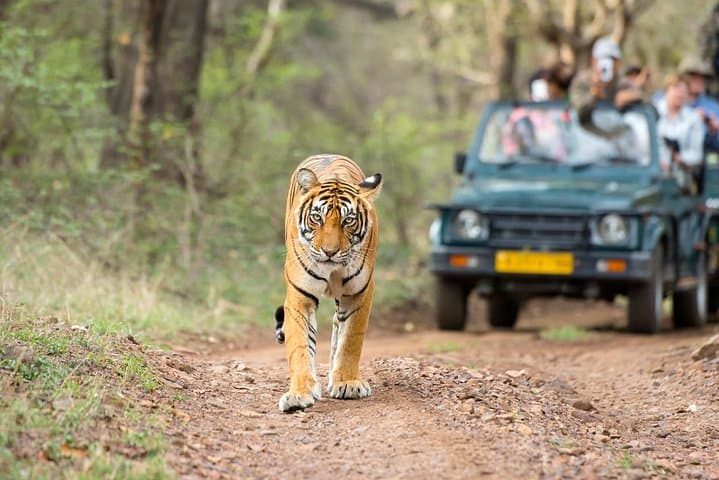
On an afternoon safari you ride in an open Jeep or larger canter with a government naturalist. Expect slow, patient tracking: follow pug marks, listen for alarm calls and watch waterholes—Padam Talao and Raj Bagh are classic stakeouts. Sightings aren’t guaranteed but the park regularly hosts Bengal tigers, leopards, sloth bears and hundreds of resident and migratory birds.
Practical edge: the trip is a long day—roughly 10–12 hours round trip with 3–4 hours driving each way and a 3–4 hour safari block. Carry water, sun protection and a compact binocular; dress in neutral, breathable layers and keep noise low. Respect park rules, follow your guide’s direction and budget for tips and modest local purchases—responsible tourism helps sustain both wildlife and communities here.
Sightings are never guaranteed, but Ranthambore has a healthy tiger population and good odds—experienced guides use tracks and waterholes to seek them out; multiple safaris increase chances.
This trip typically includes round-trip private transport from Jaipur, park entrance fees and the afternoon jeep/canter safari; confirm details and tipping policy at booking.
Yes—safaris are low-impact and vehicles are accessible, but long travel times and bumpy roads can be tiring; infants may be required to sit on laps.
Keep a safe distance, remain in the vehicle unless instructed, avoid loud noises, and don’t feed or attempt to attract animals; drones are prohibited.
Joyful Holidays operates guided outdoor trips and adventures with an emphasis on safety, stewardship, and memorable experiences.

You leave Jaipur before dawn, the city’s sandstone glow sliding behind as scrubland and farms take over. The road to Sawai Madhopur is a slow reveal—dusty roadside villages, acacia silhouettes and isolated granite outcrops—until the gate of Ranthambore National Park opens and the landscape tightens into dry deciduous forest.
You leave Jaipur before dawn, the city’s sandstone glow sliding behind as scrubland and farms take over. The road to Sawai Madhopur is a slow reveal—dusty roadside villages, acacia silhouettes and isolated granite outcrops—until the gate of Ranthambore National Park opens and the landscape tightens into dry deciduous forest.
A former royal hunting ground anchored by the 10th–16th century Ranthambore Fort, the park sits on ancient Vindhyan and Aravalli geology: rocky outcrops punctuate teak and khejri stands and form chequered vantage points where predators and prey meet. Declared a protected area under India’s Project Tiger conservation effort, Ranthambore now balances tourism with conservation; local culture still carries the legacy of royal safaris and temple ruins scattered inside the reserve.
On an afternoon safari you ride in an open Jeep or larger canter with a government naturalist. Expect slow, patient tracking: follow pug marks, listen for alarm calls and watch waterholes—Padam Talao and Raj Bagh are classic stakeouts. Sightings aren’t guaranteed but the park regularly hosts Bengal tigers, leopards, sloth bears and hundreds of resident and migratory birds.
Practical edge: the trip is a long day—roughly 10–12 hours round trip with 3–4 hours driving each way and a 3–4 hour safari block. Carry water, sun protection and a compact binocular; dress in neutral, breathable layers and keep noise low. Respect park rules, follow your guide’s direction and budget for tips and modest local purchases—responsible tourism helps sustain both wildlife and communities here.
