THE ADVENTURE COLLECTIVE® · Independent discovery and booking for outdoor travel

Drive from Jaipur into the dry sal forests and granite ridges of Ranthambore for a focused, same-day wildlife safari. Accompanied by a government naturalist, the 3‑hour jeep or canter safari targets Royal Bengal tigers, sloth bears, and rich birdlife — ideal for photographers and wildlife enthusiasts on a tight schedule.
Drive from Jaipur into the dry sal forests and granite ridges of Ranthambore for a focused, same-day wildlife safari. Accompanied by a government naturalist, the 3‑hour jeep or canter safari targets Royal Bengal tigers, sloth bears, and rich birdlife — ideal for photographers and wildlife enthusiasts on a tight schedule.
A low sun slides across dry sal trees as your vehicle rumbles toward a ragged line of granite hills — Ranthambore’s ridges watchful and patient. The road out of Jaipur softens into villages and mustard fields; by the time the park gates yaw open, the air smells of dust, grass, and possibility.
Verified experiences and guided adventures in the surrounding area.
Operated by Pink City Tour · Sawai Madhopur, Rajasthan
A low sun slides across dry sal trees as your vehicle rumbles toward a ragged line of granite hills — Ranthambore’s ridges watchful and patient. The road out of Jaipur softens into villages and mustard fields; by the time the park gates yaw open, the air smells of dust, grass, and possibility.
Ranthambore Tiger Reserve sits on the threshold between the Aravalli range and the alluvial plains, its rocky outcrops carved by ancient rivers and jagged granite that once formed fortress walls. The area was a royal hunting ground before being designated a national park and later a core area for India’s Project Tiger; cultural traces remain in stone temples and the imposing Ranthambore Fort above the canopy.
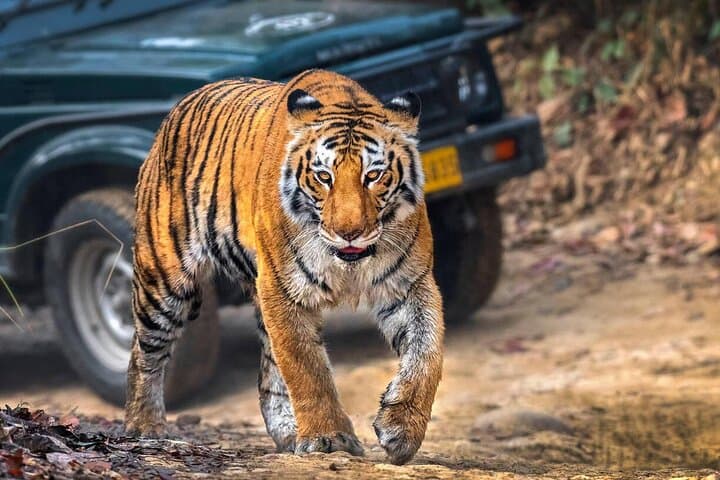
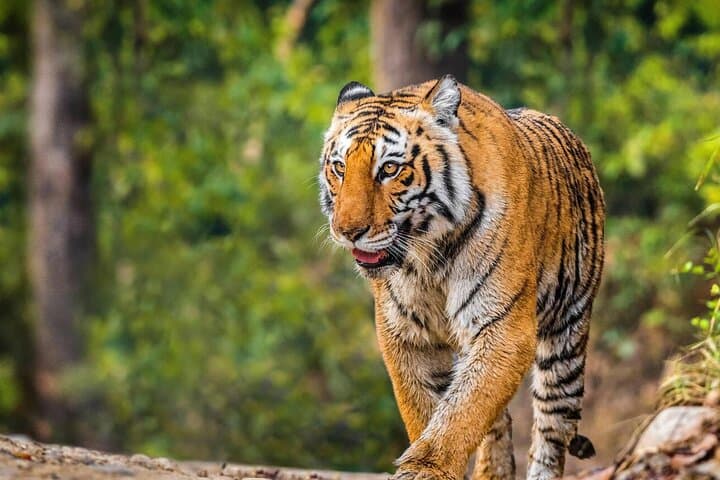
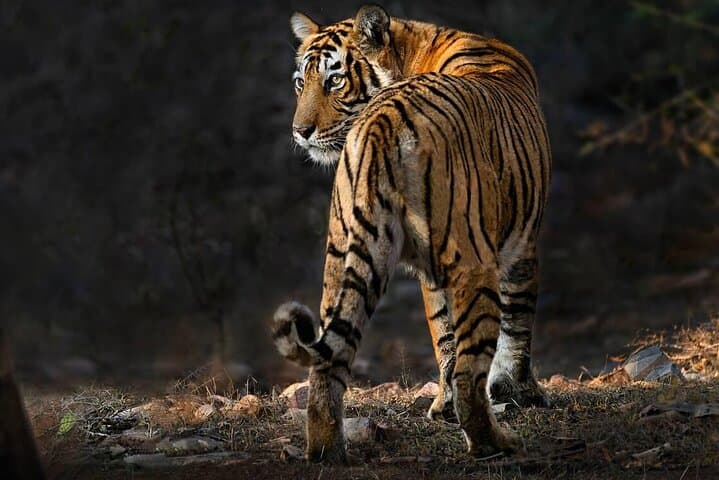
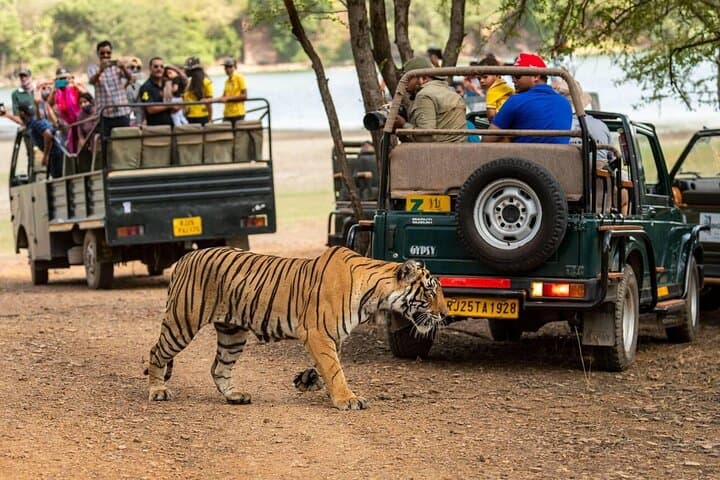
On a three-hour jungle safari in an open Gypsy or Canter, a government-approved naturalist interprets tracks, calls and behavior — a tiger’s gaze might hold you at a distance while chital and nilgai graze unabashedly. Birds call from wetlands; the park’s lakes and rock pools give the dry forest a seasonal pulse. Nature here tests and tempts: the forest will make you patient, the light will reward the persistent.
Practical side: bring original photo ID for registration, pack sun protection and water, and expect a roughly 3–4 hour drive each way from Jaipur with a 3-hour safari slot. Morning and afternoon safaris differ in wildlife activity; time your trip for cooler hours for better sightings. Respect park rules, keep noise low, and follow your guide’s directions — in Ranthambore the wild writes the day’s schedule.
easy.
10–11 hours (including transfers).
Suitable for most fitness levels; expect bumpy roads and brief walks at checkpoints.
Expect about 3–4 hours one way depending on traffic and the exact pickup point in Jaipur.
No; sightings depend on animal movement and luck. Naturalists improve your chances but cannot guarantee sightings.
Original government-issued photo ID (passport, voter ID, or Aadhaar for Indian citizens; passport for foreigners) is mandatory.
Cameras are allowed; tripods are generally impractical in open jeeps but monopods or sturdy zoom lenses work best for photography.
Ranthambore was once a princely hunting reserve and later protected as one of India’s first national parks; it became a Project Tiger stronghold in the 1970s.
The reserve enforces regulated safari zones, vehicle quotas and trained guides to minimize disturbance; stay on designated tracks and follow park rules to support conservation.
Pink City Tour operates guided outdoor trips and adventures with an emphasis on safety, stewardship, and memorable experiences.
A low sun slides across dry sal trees as your vehicle rumbles toward a ragged line of granite hills — Ranthambore’s ridges watchful and patient. The road out of Jaipur softens into villages and mustard fields; by the time the park gates yaw open, the air smells of dust, grass, and possibility.
A low sun slides across dry sal trees as your vehicle rumbles toward a ragged line of granite hills — Ranthambore’s ridges watchful and patient. The road out of Jaipur softens into villages and mustard fields; by the time the park gates yaw open, the air smells of dust, grass, and possibility.
Ranthambore Tiger Reserve sits on the threshold between the Aravalli range and the alluvial plains, its rocky outcrops carved by ancient rivers and jagged granite that once formed fortress walls. The area was a royal hunting ground before being designated a national park and later a core area for India’s Project Tiger; cultural traces remain in stone temples and the imposing Ranthambore Fort above the canopy.
On a three-hour jungle safari in an open Gypsy or Canter, a government-approved naturalist interprets tracks, calls and behavior — a tiger’s gaze might hold you at a distance while chital and nilgai graze unabashedly. Birds call from wetlands; the park’s lakes and rock pools give the dry forest a seasonal pulse. Nature here tests and tempts: the forest will make you patient, the light will reward the persistent.
Practical side: bring original photo ID for registration, pack sun protection and water, and expect a roughly 3–4 hour drive each way from Jaipur with a 3-hour safari slot. Morning and afternoon safaris differ in wildlife activity; time your trip for cooler hours for better sightings. Respect park rules, keep noise low, and follow your guide’s directions — in Ranthambore the wild writes the day’s schedule.