THE ADVENTURE COLLECTIVE® · Independent discovery and booking for outdoor travel

Choose a 20‑seater canter or a 6‑seater gypsy to explore Ranthambore’s lakes, ridges, and sal forests where tigers and leopards still roam. This practical guide outlines what to expect on a 3.5‑hour safari, how to prepare, and how to increase your chances of sightings.
Choose a 20‑seater canter or a 6‑seater gypsy to explore Ranthambore’s lakes, ridges, and sal forests where tigers and leopards still roam. This practical guide outlines what to expect on a 3.5‑hour safari, how to prepare, and how to increase your chances of sightings.
Dawn arrives low and copper over dry sal forests as a 20‑seater canter idles beside a six‑seater gypsy. The canter feels communal—rows of elbows and binocular straps—while the gypsy promises nimble turns down scrubby tracks. Both push into Ranthambore’s mosaic of lakes, ridgelines, and thorny valleys where scent and sound announce the reserve long before the animal does.
Verified experiences and guided adventures in the surrounding area.
Operated by ovez · Sawai Madhopur, Rajasthan
Dawn arrives low and copper over dry sal forests as a 20‑seater canter idles beside a six‑seater gypsy. The canter feels communal—rows of elbows and binocular straps—while the gypsy promises nimble turns down scrubby tracks. Both push into Ranthambore’s mosaic of lakes, ridgelines, and thorny valleys where scent and sound announce the reserve long before the animal does.
Ranthambore’s history is visible in stone: centuries‑old Ranthambore Fort crowns a granite ridge, a reminder that this landscape has been a royal hunting ground and a cultural crossroads for Rajput rulers. Geologically, the park sits on ancient Vindhyan sandstone and pockets of volcanic rock that shape waterholes and escarpments, creating natural ambush points for predators. Culturally, nearby Sawai Madhopur is a pragmatic travel hub—markets, modest lodges, and guides who translate forest behavior into plain advice.
On safari you’ll move by zone with licensed guides; vehicles are limited per zone, so sightings are as much about timing and patience as luck. Expect to see deer and langur herds, wary leopards in rocky folds, and, with luck, a tiger moving between waterholes. Photography opportunities vary—early and late light are best.
Practical tips: book zone, vehicle type, and morning/afternoon slot in advance; arrive early for briefing; wear neutral layers, quiet footwear, and bring water and a sunhat. Respect distance rules, follow your guide, and keep engines and voices low—conservation and courtesy preserve both the view and future sightings.
easy.
3–4 hours.
Minimal fitness required—short periods of standing and getting on/off vehicles; suitable for most travelers.
Canters seat more people and are good for a social, panoramic view; gypsies are smaller and more maneuverable—choose based on group size and desire for flexibility.
Early morning and late afternoon are most active for larger predators; the cooler months (October–March) tend to increase daylight sightings.
Safaris are generally family‑friendly and listed as accessible, but boarding steps and bumpy tracks may challenge some—confirm vehicle accessibility when booking.
Most tours include pickup and drop; confirm your pickup point and any additional transfer details when booking.
Ranthambore served as a royal hunting ground for Rajput rulers; the adjacent fort dates to medieval periods and influences local settlement patterns.
Ranthambore is a key site in India’s tiger conservation program—stay zones and limits on vehicles are enforced to reduce disturbance and protect habitat.
ovez operates guided outdoor trips and adventures with an emphasis on safety, stewardship, and memorable experiences.



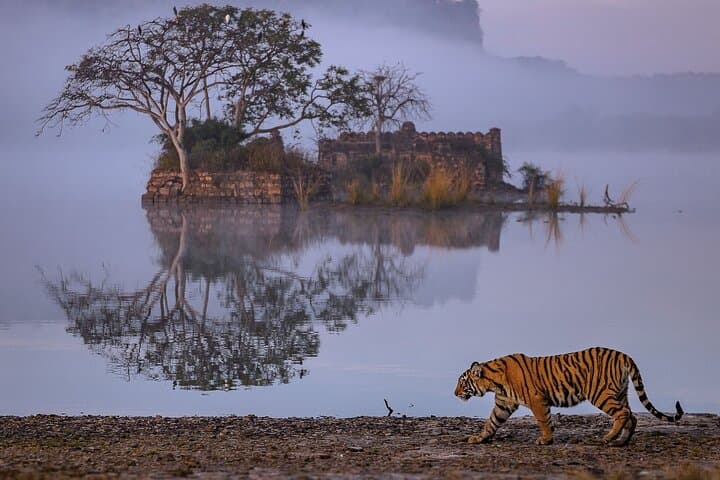
Dawn arrives low and copper over dry sal forests as a 20‑seater canter idles beside a six‑seater gypsy. The canter feels communal—rows of elbows and binocular straps—while the gypsy promises nimble turns down scrubby tracks. Both push into Ranthambore’s mosaic of lakes, ridgelines, and thorny valleys where scent and sound announce the reserve long before the animal does.
Dawn arrives low and copper over dry sal forests as a 20‑seater canter idles beside a six‑seater gypsy. The canter feels communal—rows of elbows and binocular straps—while the gypsy promises nimble turns down scrubby tracks. Both push into Ranthambore’s mosaic of lakes, ridgelines, and thorny valleys where scent and sound announce the reserve long before the animal does.
Ranthambore’s history is visible in stone: centuries‑old Ranthambore Fort crowns a granite ridge, a reminder that this landscape has been a royal hunting ground and a cultural crossroads for Rajput rulers. Geologically, the park sits on ancient Vindhyan sandstone and pockets of volcanic rock that shape waterholes and escarpments, creating natural ambush points for predators. Culturally, nearby Sawai Madhopur is a pragmatic travel hub—markets, modest lodges, and guides who translate forest behavior into plain advice.
On safari you’ll move by zone with licensed guides; vehicles are limited per zone, so sightings are as much about timing and patience as luck. Expect to see deer and langur herds, wary leopards in rocky folds, and, with luck, a tiger moving between waterholes. Photography opportunities vary—early and late light are best.
Practical tips: book zone, vehicle type, and morning/afternoon slot in advance; arrive early for briefing; wear neutral layers, quiet footwear, and bring water and a sunhat. Respect distance rules, follow your guide, and keep engines and voices low—conservation and courtesy preserve both the view and future sightings.