THE ADVENTURE COLLECTIVE® · Independent discovery and booking for outdoor travel

Make a long day from Jaipur worth the miles with a Ranthambore jeep or canter safari. This practical guide explains what to expect on a 10‑hour tiger hunt—terrain, timings, and how to maximize your chances of a sighting.
Make a long day from Jaipur worth the miles with a Ranthambore jeep or canter safari. This practical guide explains what to expect on a 10‑hour tiger hunt—terrain, timings, and how to maximize your chances of a sighting.
A pre-dawn highway unfurls from Jaipur as your private driver takes the wheel toward Ranthambore; dust-colored scrub gives way to low granite hills and waterholes that glint like small mirrors. By the time the park gates open, the jungle has already begun to stir: langurs calling from trees, a sambar lingering at a pond, and the tracks of larger predators pressed into soft soil.
Verified experiences and guided adventures in the surrounding area.
Operated by Jaipur City Tour Travels · Sawai Madhopur, Rajasthan
A pre-dawn highway unfurls from Jaipur as your private driver takes the wheel toward Ranthambore; dust-colored scrub gives way to low granite hills and waterholes that glint like small mirrors. By the time the park gates open, the jungle has already begun to stir: langurs calling from trees, a sambar lingering at a pond, and the tracks of larger predators pressed into soft soil.
Ranthambore’s landscape is a mix of deciduous dry forest and rocky outcrops carved from Aravalli-age granite. A 10th-century fort perches above the reserve, a reminder that these plains were once royal hunting grounds before modern conservation reshaped them into protected habitat. Birdlife concentrates around seasonal lakes; mammals gather where water is reliable—this spatial logic governs sightings more than luck.
Safaris run in open-roof gypsies and larger canters, each offering different views and dynamics; zones are allotted by forest authorities and sightings depend on animal movement, water, and time of day. Expect a roughly three-hour game drive, often scheduled as a morning or afternoon session; travel from Jaipur is about 3–4 hours each way.
Practical pointers: carry ID and the passport copy required for booking, dress in muted colors, bring binoculars and a long-lens camera, and follow guide and park rules—stay seated, keep voices low, and remain on designated tracks. Hydrate, layer for early-morning chill, and plan for long drives between sightings. Ranthambore delivers dramatic wildlife encounters when preparation meets patience.
easy.
10 hours (including travel).
Light fitness required—mostly sitting in vehicle with short stretches to board and disembark
Yes—passport details and a photo are required at booking and the same ID must be presented at park entry.
No—sightings are not guaranteed; tiger movements depend on prey, water, and time of day, though mornings/late afternoons are best.
Safaris use open-roof gypsies (4x4 jeeps) or larger canters; gypsies offer greater mobility for closer approaches when permitted.
Ranthambore typically closes during the monsoon season (roughly July–September); check current park notifications before booking.
The landscape contains a centuries-old fort and was long used by regional rulers for hunting before being brought under modern protection to preserve large mammals and their habitat.
Ranthambore faces pressure from tourism and habitat change; stick to designated routes, avoid feeding or approaching animals, and support operators who follow park regulations.
Jaipur City Tour Travels operates guided outdoor trips and adventures with an emphasis on safety, stewardship, and memorable experiences.

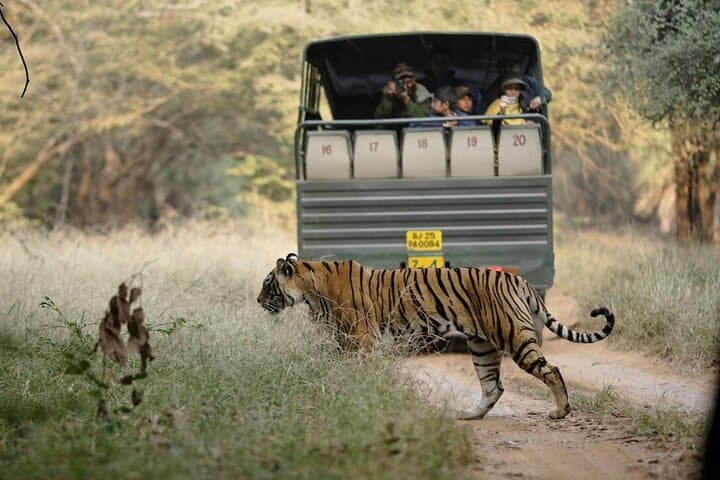


A pre-dawn highway unfurls from Jaipur as your private driver takes the wheel toward Ranthambore; dust-colored scrub gives way to low granite hills and waterholes that glint like small mirrors. By the time the park gates open, the jungle has already begun to stir: langurs calling from trees, a sambar lingering at a pond, and the tracks of larger predators pressed into soft soil.
A pre-dawn highway unfurls from Jaipur as your private driver takes the wheel toward Ranthambore; dust-colored scrub gives way to low granite hills and waterholes that glint like small mirrors. By the time the park gates open, the jungle has already begun to stir: langurs calling from trees, a sambar lingering at a pond, and the tracks of larger predators pressed into soft soil.
Ranthambore’s landscape is a mix of deciduous dry forest and rocky outcrops carved from Aravalli-age granite. A 10th-century fort perches above the reserve, a reminder that these plains were once royal hunting grounds before modern conservation reshaped them into protected habitat. Birdlife concentrates around seasonal lakes; mammals gather where water is reliable—this spatial logic governs sightings more than luck.
Safaris run in open-roof gypsies and larger canters, each offering different views and dynamics; zones are allotted by forest authorities and sightings depend on animal movement, water, and time of day. Expect a roughly three-hour game drive, often scheduled as a morning or afternoon session; travel from Jaipur is about 3–4 hours each way.
Practical pointers: carry ID and the passport copy required for booking, dress in muted colors, bring binoculars and a long-lens camera, and follow guide and park rules—stay seated, keep voices low, and remain on designated tracks. Hydrate, layer for early-morning chill, and plan for long drives between sightings. Ranthambore delivers dramatic wildlife encounters when preparation meets patience.