THE ADVENTURE COLLECTIVE® · Independent discovery and booking for outdoor travel

Travel from Jaipur to Ranthambore for a full-day canter safari through a tiger reserve where rocky ridges, seasonal lakes and dry forest concentrate wildlife. This private, all-inclusive day trip handles logistics so you can focus on spotting tigers, leopards and birds with a government-certified naturalist.
Travel from Jaipur to Ranthambore for a full-day canter safari through a tiger reserve where rocky ridges, seasonal lakes and dry forest concentrate wildlife. This private, all-inclusive day trip handles logistics so you can focus on spotting tigers, leopards and birds with a government-certified naturalist.
Dawn on the highway to Ranthambore feels deliberate: the city falls away and the landscape tightens into rocky ridgelines and dry forest, lakes catching the pale light. By mid-morning the canter’s engine hums through a gate and the forest takes on a presence—trees that seem to lean in, scrub that parts as if to let wildlife pass. The open-top canter gives a theatre-seat view of plains, waterholes, and boulder-strewn escarpments where tigers and leopards still move at will.
Verified experiences and guided adventures in the surrounding area.
Operated by Visit Jaipur Tour · Sawai Madhopur, Rajasthan
Dawn on the highway to Ranthambore feels deliberate: the city falls away and the landscape tightens into rocky ridgelines and dry forest, lakes catching the pale light. By mid-morning the canter’s engine hums through a gate and the forest takes on a presence—trees that seem to lean in, scrub that parts as if to let wildlife pass. The open-top canter gives a theatre-seat view of plains, waterholes, and boulder-strewn escarpments where tigers and leopards still move at will.
Ranthambore’s stone fort above the park marks centuries of Rajput history; the reserve later became a core area for Project Tiger, transforming royal hunting grounds into protected habitat. Geologically the park is defined by uneven rocky outcrops, seasonal lakes and patches of dry-deciduous forest that concentrate animals around water in the dry season. Local communities in Sawai Madhopur still maintain cultural links to the land through small-scale agriculture and heritage around the fort.
Practically, this is a long but accessible day: expect a 3–4 hour drive each way from Jaipur, a required ID check at the gate, and a roughly three-hour canter safari guided by a government-certified naturalist. Sightings are weather- and season-dependent—tigers are elusive, not guaranteed—but the ride offers reliable views of deer, langur, and a rich bird list. Bring binoculars, sun protection, and patience; follow forest department rules, keep noise low and cameras ready. The tour is an efficient, low-hassle way to access one of India’s premier tiger reserves in a single day.
easy.
10–11 hours.
Minimal walking required; suitable for most fitness levels but expect long periods seated and multiple hours of travel.
Yes—original government-issued photo ID (passport, Aadhaar or voter ID) is required for entry and verification at the park gate.
No—tigers are wild and sightings depend on many factors; the canter safari maximizes opportunities but cannot guarantee sightings.
The canter safari is about three hours; the total door-to-door duration from Jaipur runs roughly 10–11 hours including driving time.
Yes—this tour is classified as physically easy, but children under certain ages may face vehicle restrictions and long drives can be tiring for older guests.
Ranthambore was part of princely hunting grounds and the medieval Ranthambore Fort sits within the park; it later became a core site for Project Tiger protection in the 1970s.
The reserve operates under strict vehicle quotas and guided zones to reduce disturbance; visitors should follow park rules, avoid litter and use registered guides to support conservation efforts.
Visit Jaipur Tour operates guided outdoor trips and adventures with an emphasis on safety, stewardship, and memorable experiences.
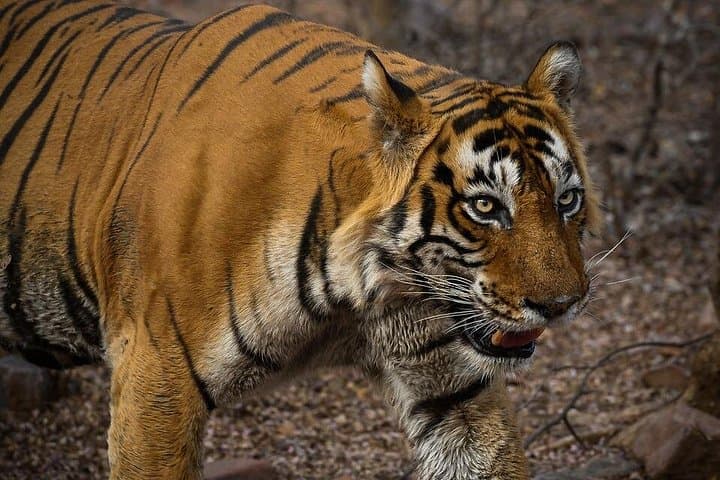
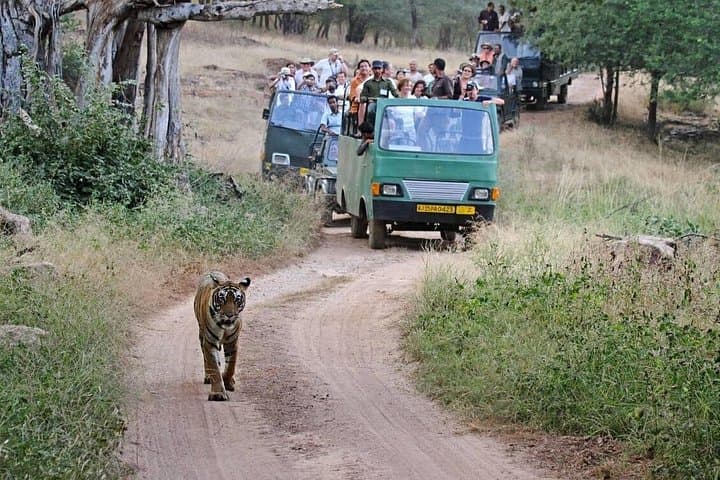
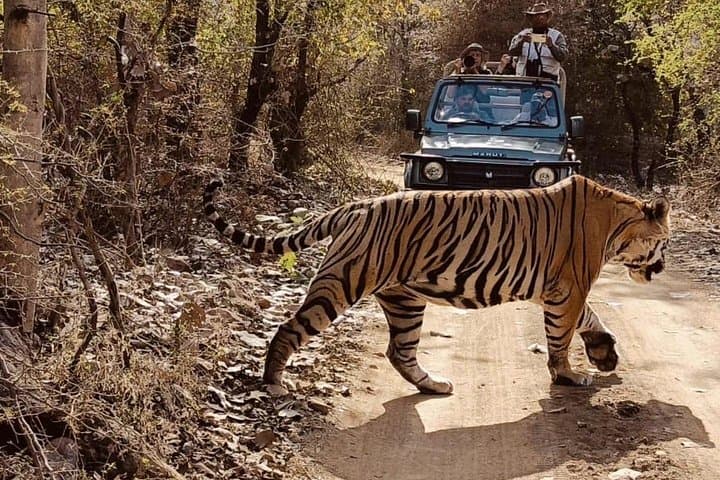

Dawn on the highway to Ranthambore feels deliberate: the city falls away and the landscape tightens into rocky ridgelines and dry forest, lakes catching the pale light. By mid-morning the canter’s engine hums through a gate and the forest takes on a presence—trees that seem to lean in, scrub that parts as if to let wildlife pass. The open-top canter gives a theatre-seat view of plains, waterholes, and boulder-strewn escarpments where tigers and leopards still move at will.
Dawn on the highway to Ranthambore feels deliberate: the city falls away and the landscape tightens into rocky ridgelines and dry forest, lakes catching the pale light. By mid-morning the canter’s engine hums through a gate and the forest takes on a presence—trees that seem to lean in, scrub that parts as if to let wildlife pass. The open-top canter gives a theatre-seat view of plains, waterholes, and boulder-strewn escarpments where tigers and leopards still move at will.
Ranthambore’s stone fort above the park marks centuries of Rajput history; the reserve later became a core area for Project Tiger, transforming royal hunting grounds into protected habitat. Geologically the park is defined by uneven rocky outcrops, seasonal lakes and patches of dry-deciduous forest that concentrate animals around water in the dry season. Local communities in Sawai Madhopur still maintain cultural links to the land through small-scale agriculture and heritage around the fort.
Practically, this is a long but accessible day: expect a 3–4 hour drive each way from Jaipur, a required ID check at the gate, and a roughly three-hour canter safari guided by a government-certified naturalist. Sightings are weather- and season-dependent—tigers are elusive, not guaranteed—but the ride offers reliable views of deer, langur, and a rich bird list. Bring binoculars, sun protection, and patience; follow forest department rules, keep noise low and cameras ready. The tour is an efficient, low-hassle way to access one of India’s premier tiger reserves in a single day.