THE ADVENTURE COLLECTIVE® · Independent discovery and booking for outdoor travel

Walk the rim of Rano Kau and tour the stone houses of Orongo in a timed, private half-day that sidesteps the crowds. Expect dramatic crater views, coastal wind, and a focused briefing on the island’s Birdman ceremonies.
Walk the rim of Rano Kau and tour the stone houses of Orongo in a timed, private half-day that sidesteps the crowds. Expect dramatic crater views, coastal wind, and a focused briefing on the island’s Birdman ceremonies.
Standing on the wind-cut rim of Rano Kau, the Atlantic hurls a salt breath at you and the island drops away into a bowl of freshwater marsh and greening reeds. The crater’s inner wetland sits like an inland sea, while the rim’s trail offers panoramic views where cliffs meet the ocean and the ceremonial village of Orongo perches on a promontory beyond.
Verified experiences and guided adventures in the surrounding area.
Operated by Rapanui Pioneers Society (RPS) · Hanga Roa, Valparaíso Region
Standing on the wind-cut rim of Rano Kau, the Atlantic hurls a salt breath at you and the island drops away into a bowl of freshwater marsh and greening reeds. The crater’s inner wetland sits like an inland sea, while the rim’s trail offers panoramic views where cliffs meet the ocean and the ceremonial village of Orongo perches on a promontory beyond.
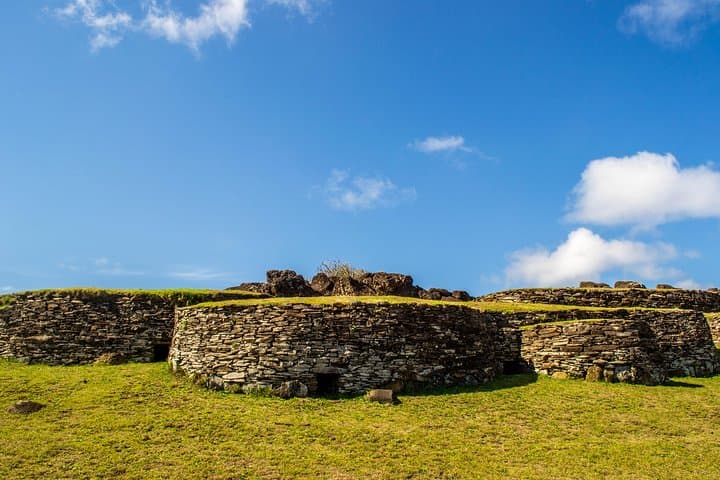
Geologically, Rano Kau is one of Rapa Nui’s largest volcanic cones; its caldera holds freshwater and peat soils that contrast with the island’s lava fields. Culturally, Orongo is the stage for the Tangata Manu (Birdman) rites—stone houses and petroglyphs mark where islanders once raced for status and resources. Archaeological remains of roughly fifty stone dwellings cluster along the village circuit, giving a clear line of sight into ceremonial layout and seafaring relationships.
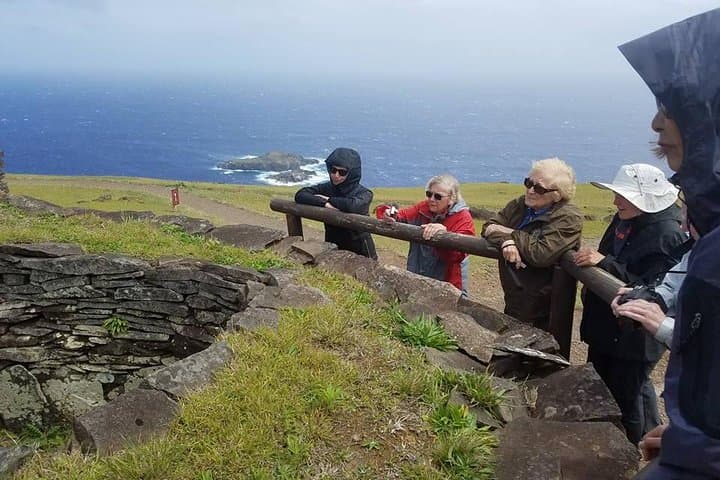
This half-day private tour times the route to avoid crowds and moves at a measured pace, combining short walks on uneven volcanic rock with interpretive stops. Expect strong coastal winds—guides often relocate or delay entry to Orongo when conditions make cliffside access unsafe.
Practical guidance: wear sturdy footwear with grip, bring windproof layers, and carry water and sun protection. Photography is excellent in low-angle morning or late afternoon light. Pickup and drop-off in Hanga Roa simplify logistics; tours typically run about three hours and suit most fitness levels. Respect fenced areas and follow your guide—these protections preserve fragile soils, archaeological features, and nesting seabird habitat. The experience balances dramatic geology, precise history, and direct contact with one of the Pacific’s most singular landscapes.
easy.
2–3 hours.
Light fitness—able to walk on uneven ground and short inclines; suitable for most ages.
The private half-day runs about three hours with a measured walking pace and interpretive stops at Rano Kau and Orongo.
No—entry to Orongo is subject to wind conditions for safety; guides will alter the plan or reschedule if winds make the cliffs unsafe.
The walk is relatively short but includes uneven terrain—children and mobility-limited visitors can participate but should note some sections are rocky and may be challenging.
The tour includes guide and transport; however, park access rules and any local charges are managed by operators—confirm specifics when booking.
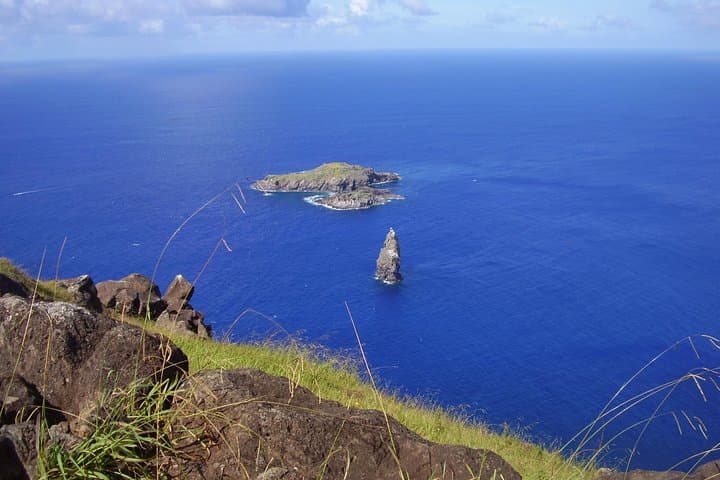
Orongo was the focal point for the Tangata Manu (Birdman) ceremonies, a late-period ritual where representatives competed to retrieve the first manutara egg from offshore islets.
Visits are regulated to protect fragile soils, archaeological sites, and seabird nesting areas; staying on marked trails and following guide instructions reduces erosion and cultural damage.
Rapanui Pioneers Society (RPS) operates guided outdoor trips and adventures with an emphasis on safety, stewardship, and memorable experiences.
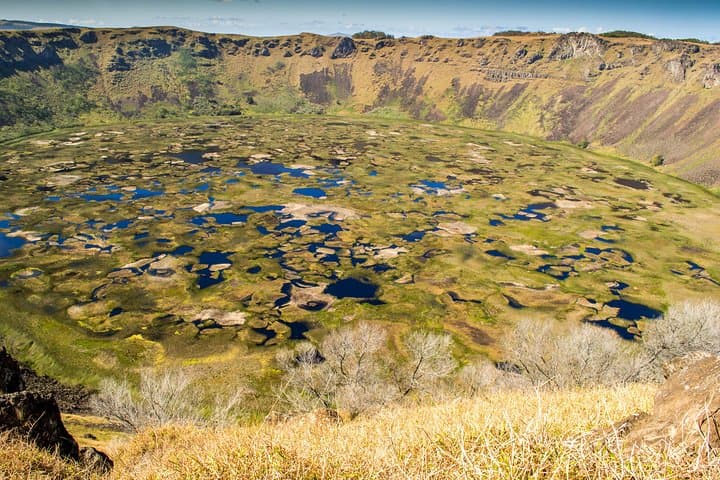
Standing on the wind-cut rim of Rano Kau, the Atlantic hurls a salt breath at you and the island drops away into a bowl of freshwater marsh and greening reeds. The crater’s inner wetland sits like an inland sea, while the rim’s trail offers panoramic views where cliffs meet the ocean and the ceremonial village of Orongo perches on a promontory beyond.
Standing on the wind-cut rim of Rano Kau, the Atlantic hurls a salt breath at you and the island drops away into a bowl of freshwater marsh and greening reeds. The crater’s inner wetland sits like an inland sea, while the rim’s trail offers panoramic views where cliffs meet the ocean and the ceremonial village of Orongo perches on a promontory beyond.
Geologically, Rano Kau is one of Rapa Nui’s largest volcanic cones; its caldera holds freshwater and peat soils that contrast with the island’s lava fields. Culturally, Orongo is the stage for the Tangata Manu (Birdman) rites—stone houses and petroglyphs mark where islanders once raced for status and resources. Archaeological remains of roughly fifty stone dwellings cluster along the village circuit, giving a clear line of sight into ceremonial layout and seafaring relationships.
This half-day private tour times the route to avoid crowds and moves at a measured pace, combining short walks on uneven volcanic rock with interpretive stops. Expect strong coastal winds—guides often relocate or delay entry to Orongo when conditions make cliffside access unsafe.
Practical guidance: wear sturdy footwear with grip, bring windproof layers, and carry water and sun protection. Photography is excellent in low-angle morning or late afternoon light. Pickup and drop-off in Hanga Roa simplify logistics; tours typically run about three hours and suit most fitness levels. Respect fenced areas and follow your guide—these protections preserve fragile soils, archaeological features, and nesting seabird habitat. The experience balances dramatic geology, precise history, and direct contact with one of the Pacific’s most singular landscapes.