THE ADVENTURE COLLECTIVE® · Independent discovery and booking for outdoor travel

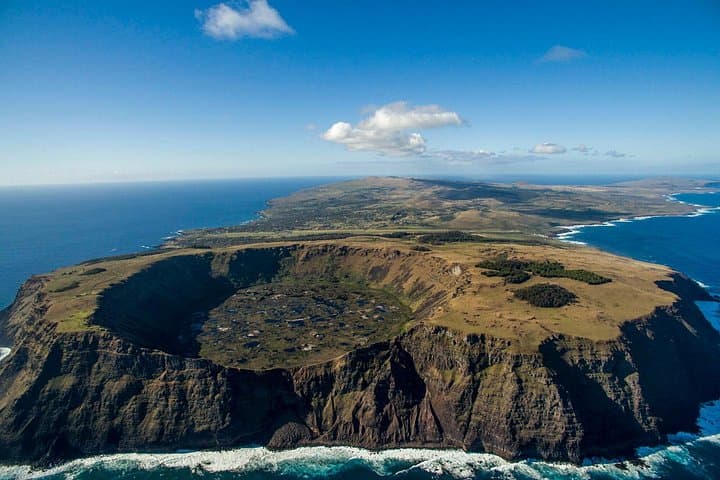
Walk the rim of Rano Kau to peer into a kilometer-wide crater lagoon and coastal cliffs that frame Motu Nui. This guided trek blends geology, birdman history, and a surprising agricultural microclimate into a 3–4 hour island experience.
Walk the rim of Rano Kau to peer into a kilometer-wide crater lagoon and coastal cliffs that frame Motu Nui. This guided trek blends geology, birdman history, and a surprising agricultural microclimate into a 3–4 hour island experience.
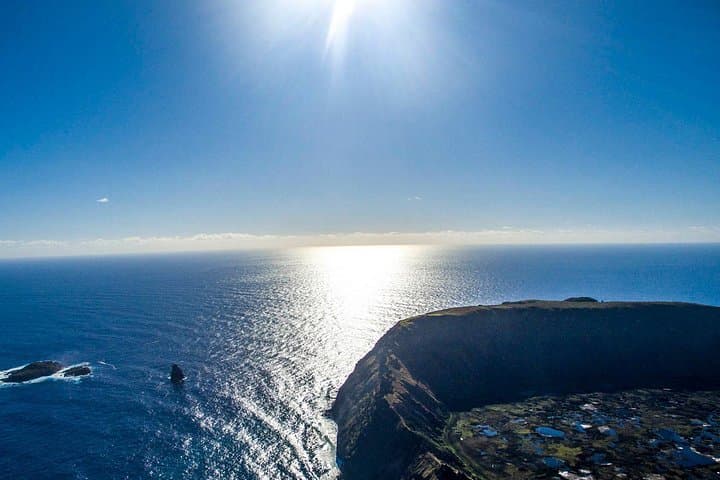
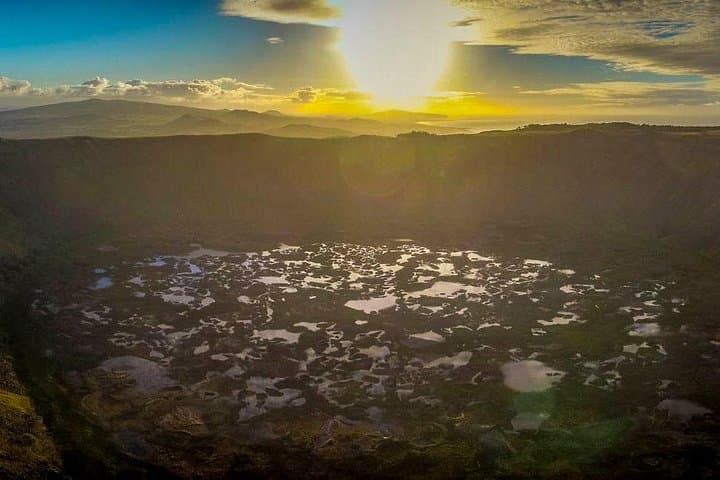
You step onto sharp volcanic rock and the wind immediately answers—cold, salty, insistent—pushing you toward the island’s southwestern lip. The trail threads along Rano Kau’s rim, where cliff drops open to the Pacific and the crater’s inner lagoon sits calm, ringed by reeds and unexpected banana plants that speak to the crater’s unique microclimate.
Verified experiences and guided adventures in the surrounding area.
Operated by Kava Kava Tours · Hanga Roa, Valparaíso Region
You step onto sharp volcanic rock and the wind immediately answers—cold, salty, insistent—pushing you toward the island’s southwestern lip. The trail threads along Rano Kau’s rim, where cliff drops open to the Pacific and the crater’s inner lagoon sits calm, ringed by reeds and unexpected banana plants that speak to the crater’s unique microclimate.
Geology here is plain and old: Rano Kau is one of Rapa Nui’s three extinct volcanoes, its bowl more than a kilometer across. The crater’s sheltered humidity allowed early cultivators to grow tubers and fruit; archaeologists link the manavai—circular walled gardens—to ideas inspired by these natural hollows. Nearby Orongo, the stone ceremonial village, anchors the birdman histories that shaped local culture and ritual.
Expect a mix of hard-packed trail, loose scoria, and limestone shelves at viewpoints. The full experience, including short interpretive stops, lasts roughly 3–4 hours and covers a few kilometers of walking at gentle to uneven grade — not high gain, but pay attention to cliff edges.
Practical guidance: bring windproof layers, sturdy walking shoes with good traction, and sun protection; pack at least 1–2 liters of water per person. Morning light softens the crags and reduces wind; late afternoon offers dramatic silhouettes of Motu Nui, Motu Iti and Motu Kao Kao.
Respect the plants and stay on marked paths—this crater holds both cultural artifacts and fragile ecology. A local certified guide will add context that turns views into stories and a short walk into a fuller understanding of Rapa Nui’s landscape and people.
moderate.
3–4 hours.
Light to moderate fitness; able to walk uneven ground for several kilometers and manage short climbs/descents.
The guided outing typically runs 3–4 hours including transport and stops; the walking distance on the rim itself is a few kilometers with minimal elevation gain.
The route is suitable for most ages in reasonable health, but cliff exposure and uneven surfaces mean close supervision of children and caution for those with mobility limits.
Yes—most itineraries include stops at Orongo, where petroglyphs and stone houses explain the island’s birdman traditions; allow extra time for photography and exploration.
No separate hiking permit is required beyond standard park or island entry rules, but always follow local guidelines and stay on marked trails to protect archaeological sites.
Rano Kau sits beside Orongo, a ceremonial village central to the island’s birdman cult; the crater’s microclimate influenced ancient cultivation methods such as manavai.
The crater’s fragile soils and unique plants are vulnerable to trampling—stay on established trails and follow guide instructions to reduce erosion and protect archaeological features.
Kava Kava Tours operates guided outdoor trips and adventures with an emphasis on safety, stewardship, and memorable experiences.
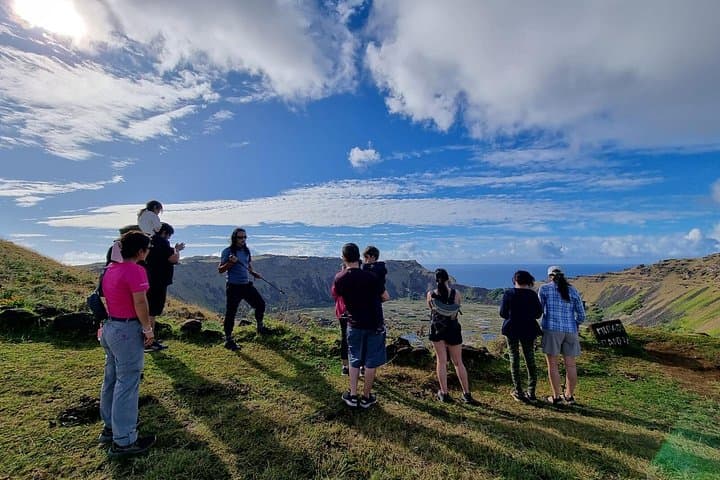
You step onto sharp volcanic rock and the wind immediately answers—cold, salty, insistent—pushing you toward the island’s southwestern lip. The trail threads along Rano Kau’s rim, where cliff drops open to the Pacific and the crater’s inner lagoon sits calm, ringed by reeds and unexpected banana plants that speak to the crater’s unique microclimate.
You step onto sharp volcanic rock and the wind immediately answers—cold, salty, insistent—pushing you toward the island’s southwestern lip. The trail threads along Rano Kau’s rim, where cliff drops open to the Pacific and the crater’s inner lagoon sits calm, ringed by reeds and unexpected banana plants that speak to the crater’s unique microclimate.
Geology here is plain and old: Rano Kau is one of Rapa Nui’s three extinct volcanoes, its bowl more than a kilometer across. The crater’s sheltered humidity allowed early cultivators to grow tubers and fruit; archaeologists link the manavai—circular walled gardens—to ideas inspired by these natural hollows. Nearby Orongo, the stone ceremonial village, anchors the birdman histories that shaped local culture and ritual.
Expect a mix of hard-packed trail, loose scoria, and limestone shelves at viewpoints. The full experience, including short interpretive stops, lasts roughly 3–4 hours and covers a few kilometers of walking at gentle to uneven grade — not high gain, but pay attention to cliff edges.
Practical guidance: bring windproof layers, sturdy walking shoes with good traction, and sun protection; pack at least 1–2 liters of water per person. Morning light softens the crags and reduces wind; late afternoon offers dramatic silhouettes of Motu Nui, Motu Iti and Motu Kao Kao.
Respect the plants and stay on marked paths—this crater holds both cultural artifacts and fragile ecology. A local certified guide will add context that turns views into stories and a short walk into a fuller understanding of Rapa Nui’s landscape and people.