THE ADVENTURE COLLECTIVE® · Independent discovery and booking for outdoor travel

A full-day excursion from Udaipur that pairs a scenic drive through the Aravalli foothills with a focused visit to Ranakpur’s 15th-century Jain temple complex. Perfect for travelers who want cultural depth without a multi-day commitment.
A full-day excursion from Udaipur that pairs a scenic drive through the Aravalli foothills with a focused visit to Ranakpur’s 15th-century Jain temple complex. Perfect for travelers who want cultural depth without a multi-day commitment.
A morning drive out of Udaipur unfolds along the scrubby folds of the Aravalli foothills, the road easing toward a forested hollow where stone and light collide. Travelers arrive to a cool marble courtyard: columns crowd the eye, carving shadow into lace, while the distant hills keep watch. The Ranakpur complex rewards calm inspection; its carved pillars and open pavilions invite slow steps and steady attention.
Verified experiences and guided adventures in the surrounding area.
Operated by Udaipur Taxi Cab Service · Ranakpur, Rajasthan
A morning drive out of Udaipur unfolds along the scrubby folds of the Aravalli foothills, the road easing toward a forested hollow where stone and light collide. Travelers arrive to a cool marble courtyard: columns crowd the eye, carving shadow into lace, while the distant hills keep watch. The Ranakpur complex rewards calm inspection; its carved pillars and open pavilions invite slow steps and steady attention.
Built in the 15th century by a wealthy Jain patron, the Chaumukha and adjoining temples at Ranakpur are an architectural statement in white stone—marble that reflects the sun and the slow erosion of centuries. Geologically the site sits on the southern slopes of the Aravalli Range, where ancient rocky ridges channel seasonal streams and scrub forest. Culturally, Ranakpur remains an active pilgrimage site for Jains: rituals and quiet prayer coexist with the hum of tourist cameras, and modest dress and removed shoes are part of the etiquette.
Practically, expect an 8-hour day from Udaipur: roughly 2 hours each way by AC vehicle and 2–3 hours on-site for the temples and surrounding shrines (Parsvanath, Neminath, Amba Mata, Surya). Paths are paved but include uneven stone steps and low thresholds; bring water, sun protection, and a scarf or shawl for temple entry. Photography is generally allowed in courtyards but restricted inside sanctums—follow signs and the guide. The trip is straightforward for moderately fit travelers and offers a compact window into Rajasthan’s religious architecture and the quieter landscapes beyond Udaipur.
moderate.
7–8 hours.
Moderately fit: able to walk on uneven surfaces for 2–3 hours and tolerate a 2-hour drive each way.
Plan for about a 2-hour drive each way (roughly 80–100 km depending on route and traffic), making this an 8-hour round-trip including time at the temples.
This tour’s admission is generally not included for temple entry—check booking details; local guides and donations may be extra on site.
Ranakpur’s courtyards are uneven stone and include steps; full accessibility is limited—contact the operator ahead for arrangements or vehicle drop-off options.
Basic refreshments and tea stalls are available nearby, but plan meals in Udaipur or bring snacks; the tour often includes bottled water and hotel pickup/drop-off.
The main Ranakpur temples date to the 15th century, commissioned by a Jain patron and built in white marble during a flourishing period of regional temple construction.
Ranakpur is both a living religious site and a heritage monument—visitors are encouraged to avoid plastic litter, respect restricted areas, and support local conservation and guide services.
Udaipur Taxi Cab Service operates guided outdoor trips and adventures with an emphasis on safety, stewardship, and memorable experiences.
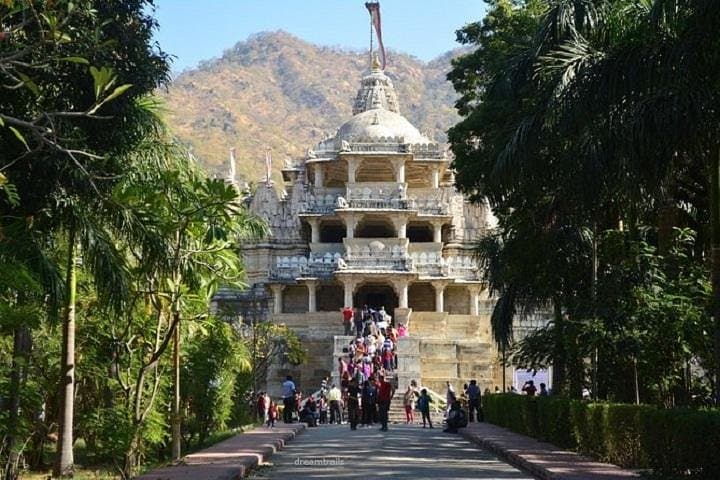
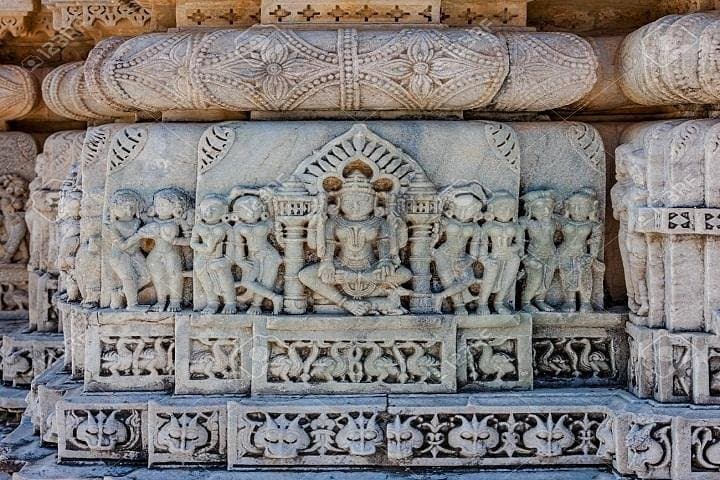
A morning drive out of Udaipur unfolds along the scrubby folds of the Aravalli foothills, the road easing toward a forested hollow where stone and light collide. Travelers arrive to a cool marble courtyard: columns crowd the eye, carving shadow into lace, while the distant hills keep watch. The Ranakpur complex rewards calm inspection; its carved pillars and open pavilions invite slow steps and steady attention.
A morning drive out of Udaipur unfolds along the scrubby folds of the Aravalli foothills, the road easing toward a forested hollow where stone and light collide. Travelers arrive to a cool marble courtyard: columns crowd the eye, carving shadow into lace, while the distant hills keep watch. The Ranakpur complex rewards calm inspection; its carved pillars and open pavilions invite slow steps and steady attention.
Built in the 15th century by a wealthy Jain patron, the Chaumukha and adjoining temples at Ranakpur are an architectural statement in white stone—marble that reflects the sun and the slow erosion of centuries. Geologically the site sits on the southern slopes of the Aravalli Range, where ancient rocky ridges channel seasonal streams and scrub forest. Culturally, Ranakpur remains an active pilgrimage site for Jains: rituals and quiet prayer coexist with the hum of tourist cameras, and modest dress and removed shoes are part of the etiquette.
Practically, expect an 8-hour day from Udaipur: roughly 2 hours each way by AC vehicle and 2–3 hours on-site for the temples and surrounding shrines (Parsvanath, Neminath, Amba Mata, Surya). Paths are paved but include uneven stone steps and low thresholds; bring water, sun protection, and a scarf or shawl for temple entry. Photography is generally allowed in courtyards but restricted inside sanctums—follow signs and the guide. The trip is straightforward for moderately fit travelers and offers a compact window into Rajasthan’s religious architecture and the quieter landscapes beyond Udaipur.