THE ADVENTURE COLLECTIVE® · Independent discovery and booking for outdoor travel

Walk through working tea terraces, tour a small factory and stand at the viewing point above Ramboda Falls. This half‑day private tour from Nuwara Eliya mixes cultural history, light walking and close‑up tea tasting.
Walk through working tea terraces, tour a small factory and stand at the viewing point above Ramboda Falls. This half‑day private tour from Nuwara Eliya mixes cultural history, light walking and close‑up tea tasting.
You step off the minivan into highland air that smells faintly of cut grass and steaming tea; mist lifts from terraces while a distant roar promises Ramboda Falls. The route threads between emerald rows of Camellia sinensis—bushes pruned into green waves—and the factory’s tin roof flashes in the sunlight as workers sort leaves.
Verified experiences and guided adventures in the surrounding area.
Operated by Titan Tours Sri Lanka · Nuwara Eliya, Central Province
You step off the minivan into highland air that smells faintly of cut grass and steaming tea; mist lifts from terraces while a distant roar promises Ramboda Falls. The route threads between emerald rows of Camellia sinensis—bushes pruned into green waves—and the factory’s tin roof flashes in the sunlight as workers sort leaves.
The region’s story is colonial and geological: 19th‑century British planters converted former montane forest into tea terraces on ancient, weathered slopes carved by rivers. Nuwara Eliya itself grew as a hill station where cooler temperatures and heavy mist produce teas prized for brisk flavor. Ramboda Falls drops through layered basalt and metamorphic rock, a visible seam where upland drainage accelerates toward the lowlands.
Locally, tea is both livelihood and ritual—small vendors sell freshly brewed cups and factory tours finish with tastings and demonstrations of rolling and withering. You’ll feel the work in the terraces underfoot and hear the falls dare you to step closer.
Practical guide: tours typically run 4–5 hours from Nuwara Eliya hotels and include hotel pickup, a factory walkthrough and a short viewing walk at Ramboda. Terrain is short paved and dirt walks with slippery steps near the falls—sturdy shoes and a light rain layer are smart. Bring cash for local snacks, a camera with zoom for birds and a reusable bottle; plastic waste is discouraged. If you want more time among tea fields, ask about the longer “tea safari” option (adds 1–2 hours). Morning departures give the clearest vistas; afternoons can be misty and wet.
easy.
4–5 hours.
Suitable for most fitness levels; requires short walks on uneven, sometimes wet surfaces and standing during factory demonstrations.
Yes—most departures include hotel pickup within Nuwara Eliya; confirm your exact pickup point when booking.
Standard tours run about 4–5 hours; a longer ‘tea safari’ option that explores more plantation tracks typically adds 1–2 hours for an extra charge.
Yes—infants and small children can usually ride in strollers, but expect stairs and uneven ground; staff can advise on access at specific factory stops.
Most factories offer free tastings and sell packaged tea; bring local currency for purchases and consider buying directly to support local producers.
Tea arrived in Sri Lanka under British colonial administration in the late 1800s; Nuwara Eliya’s cool climate made it a center for high‑grown Ceylon tea and a hill station for colonial elites.
Tea cultivation altered native montane forests; choose tours that respect trails, minimize plastic use and support estates practicing soil and water conservation.
Titan Tours Sri Lanka operates guided outdoor trips and adventures with an emphasis on safety, stewardship, and memorable experiences.
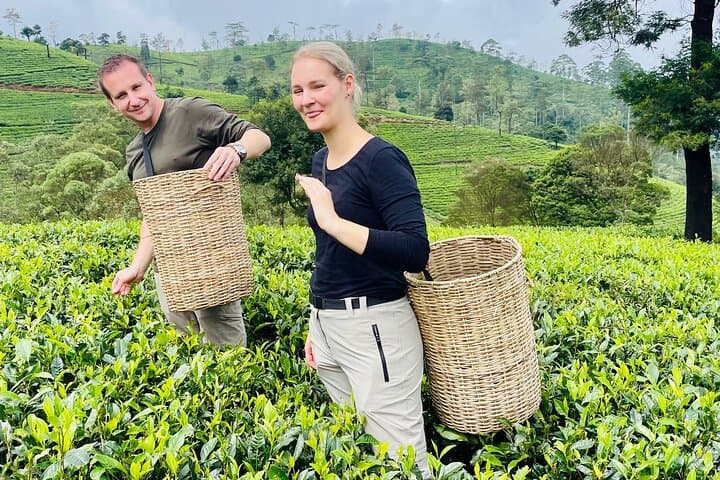


You step off the minivan into highland air that smells faintly of cut grass and steaming tea; mist lifts from terraces while a distant roar promises Ramboda Falls. The route threads between emerald rows of Camellia sinensis—bushes pruned into green waves—and the factory’s tin roof flashes in the sunlight as workers sort leaves.
You step off the minivan into highland air that smells faintly of cut grass and steaming tea; mist lifts from terraces while a distant roar promises Ramboda Falls. The route threads between emerald rows of Camellia sinensis—bushes pruned into green waves—and the factory’s tin roof flashes in the sunlight as workers sort leaves.
The region’s story is colonial and geological: 19th‑century British planters converted former montane forest into tea terraces on ancient, weathered slopes carved by rivers. Nuwara Eliya itself grew as a hill station where cooler temperatures and heavy mist produce teas prized for brisk flavor. Ramboda Falls drops through layered basalt and metamorphic rock, a visible seam where upland drainage accelerates toward the lowlands.
Locally, tea is both livelihood and ritual—small vendors sell freshly brewed cups and factory tours finish with tastings and demonstrations of rolling and withering. You’ll feel the work in the terraces underfoot and hear the falls dare you to step closer.
Practical guide: tours typically run 4–5 hours from Nuwara Eliya hotels and include hotel pickup, a factory walkthrough and a short viewing walk at Ramboda. Terrain is short paved and dirt walks with slippery steps near the falls—sturdy shoes and a light rain layer are smart. Bring cash for local snacks, a camera with zoom for birds and a reusable bottle; plastic waste is discouraged. If you want more time among tea fields, ask about the longer “tea safari” option (adds 1–2 hours). Morning departures give the clearest vistas; afternoons can be misty and wet.