THE ADVENTURE COLLECTIVE® · Independent discovery and booking for outdoor travel

Step into Ram-szakadék for a half-day of ladders, spring-fed streams and volcanic rock faces just an hour from Budapest. This 8 km guided hike combines hands-on scrambling with shady beech forest and striking views of the Visegrád Hills.
Step into Ram-szakadék for a half-day of ladders, spring-fed streams and volcanic rock faces just an hour from Budapest. This 8 km guided hike combines hands-on scrambling with shady beech forest and striking views of the Visegrád Hills.
A narrow ribbon of trail threads through beech and oak, the gorge walls rising like old black teeth as hikers step into the cool throat of Ram-szakadék. Damp stone and the steady clatter of small waterfalls set the pace; ladders pinned to rock demand attention and reward with sudden viewpoints over the Danube bend.
Verified experiences and guided adventures in the surrounding area.
Operated by Gyorgy Kulcsar · Dömös, Pest
A narrow ribbon of trail threads through beech and oak, the gorge walls rising like old black teeth as hikers step into the cool throat of Ram-szakadék. Damp stone and the steady clatter of small waterfalls set the pace; ladders pinned to rock demand attention and reward with sudden viewpoints over the Danube bend.
The gorge is carved into ancient volcanic rock—steep columns and 20–30 meter faces that hint at the Miocene-era eruptions that shaped the Visegrád Hills. Local villages have long used these forested slopes for charcoal, timber and seasonal grazing, and today the trail carries the echo of that working landscape alongside modern conservation efforts.
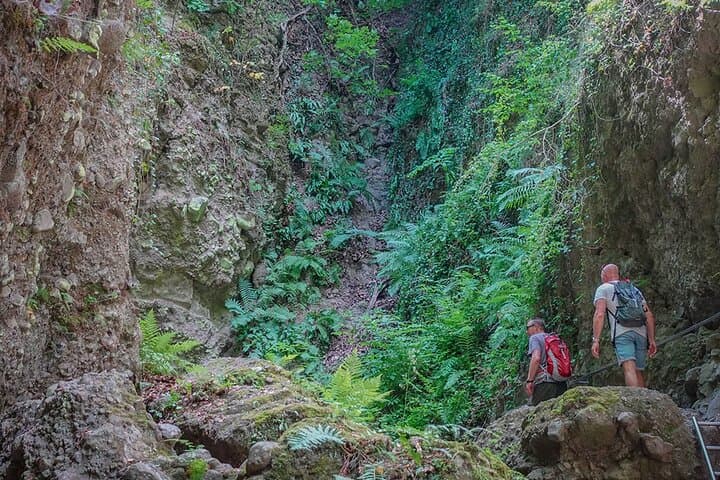
Wildlife is tangible: the knocking of the black woodpecker and the flash of passerines; spring-fed streams support mosses and ferns along the route. Cultural touchstones are simple—stone markers, pastoral fields beyond the gorge—and the experience feels both rugged and immediate.
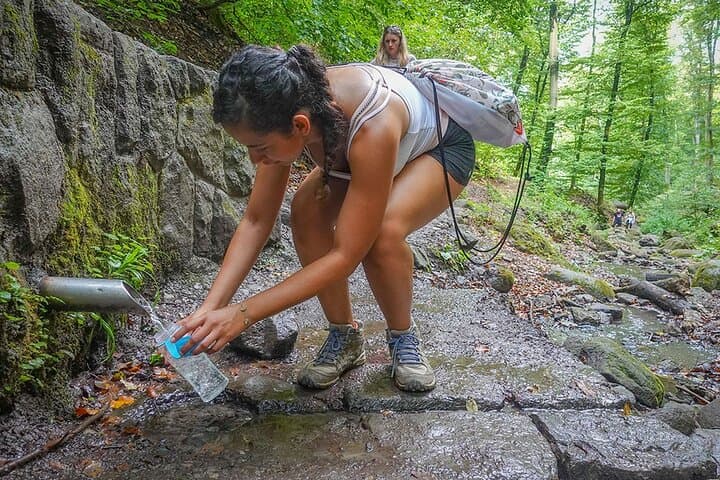
Practically, expect an 8 km loop with roughly 300 m of elevation gain; ladders and short steep pitches require sure footing and a head for heights. Guides typically pick up in Budapest and drive about an hour to Dömös. Carry sturdy, grippy footwear, a refillable bottle (there’s a cold spring on route), and a light shell. Start mid-morning for balanced light and to avoid afternoon heat in summer.
For fit hikers seeking a half-day, Ram Gorge is kinetic and compact: hands-on scrambling, shaded forest passages, and abrupt, volcanic panoramas that reward steady, careful movement.
moderate.
4–5 hours.
Suitable for hikers with a moderate level of fitness; good balance and ankle stability help on uneven, wet terrain.
The route is moderate: 8 km with about 300 m of elevation gain, short steep sections and ladders—good balance and a reasonable level of fitness are required.
Guides commonly advise refilling from the cold spring; most hikers drink it without issue, but those with sensitive stomachs should use a filter or boil it.
Most tours include pickup in Budapest and drive roughly one hour to Dömös, the typical trailhead for Ram Gorge.
Families can join, but children should be steady on uneven ground; infants are required to sit on an adult's lap according to booking notes.
The gorge sits on volcanic formations shaped millions of years ago; local communities historically used the hills for timber and grazing, shaping the cultural landscape.
Trails run through sensitive forest and stream habitats—stay on marked paths, pack out waste, and avoid disturbing nesting birds to support local conservation efforts.
Gyorgy Kulcsar operates guided outdoor trips and adventures with an emphasis on safety, stewardship, and memorable experiences.
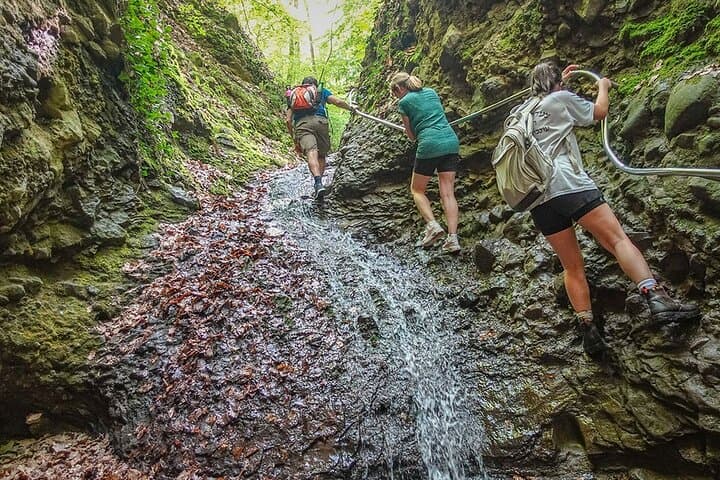
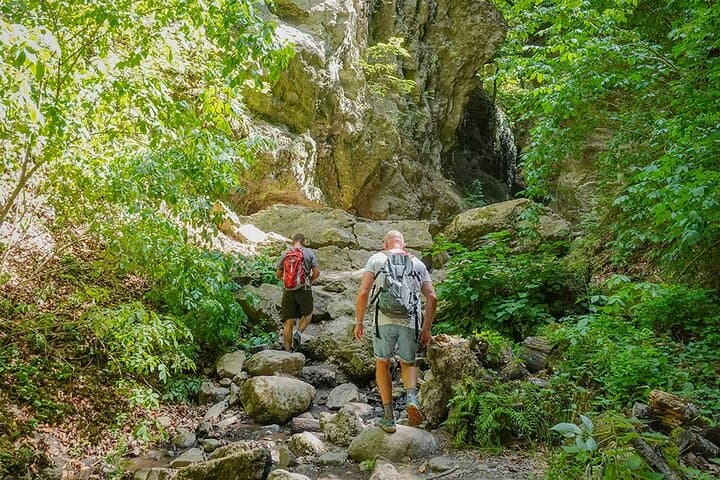
A narrow ribbon of trail threads through beech and oak, the gorge walls rising like old black teeth as hikers step into the cool throat of Ram-szakadék. Damp stone and the steady clatter of small waterfalls set the pace; ladders pinned to rock demand attention and reward with sudden viewpoints over the Danube bend.
A narrow ribbon of trail threads through beech and oak, the gorge walls rising like old black teeth as hikers step into the cool throat of Ram-szakadék. Damp stone and the steady clatter of small waterfalls set the pace; ladders pinned to rock demand attention and reward with sudden viewpoints over the Danube bend.
The gorge is carved into ancient volcanic rock—steep columns and 20–30 meter faces that hint at the Miocene-era eruptions that shaped the Visegrád Hills. Local villages have long used these forested slopes for charcoal, timber and seasonal grazing, and today the trail carries the echo of that working landscape alongside modern conservation efforts.
Wildlife is tangible: the knocking of the black woodpecker and the flash of passerines; spring-fed streams support mosses and ferns along the route. Cultural touchstones are simple—stone markers, pastoral fields beyond the gorge—and the experience feels both rugged and immediate.
Practically, expect an 8 km loop with roughly 300 m of elevation gain; ladders and short steep pitches require sure footing and a head for heights. Guides typically pick up in Budapest and drive about an hour to Dömös. Carry sturdy, grippy footwear, a refillable bottle (there’s a cold spring on route), and a light shell. Start mid-morning for balanced light and to avoid afternoon heat in summer.
For fit hikers seeking a half-day, Ram Gorge is kinetic and compact: hands-on scrambling, shaded forest passages, and abrupt, volcanic panoramas that reward steady, careful movement.