THE ADVENTURE COLLECTIVE® · Independent discovery and booking for outdoor travel

Walk suspended bridges over a living rainforest canopy, then glide along the Tarcoles River to watch one of the densest American crocodile populations in the wild. This half-day shore excursion combines an active skywalk with a wildlife-rich boat cruise.
Walk suspended bridges over a living rainforest canopy, then glide along the Tarcoles River to watch one of the densest American crocodile populations in the wild. This half-day shore excursion combines an active skywalk with a wildlife-rich boat cruise.
You step off the pier into heat that presses like a living thing; the air smells of wet leaf and warm earth. Within an hour you’re walking across a system of hanging bridges — three spans more than 180 feet above the forest floor — each one stretching 300 feet through emergent crowns where toucans and macaws thread the canopy. The rainforest below moves, a low mechanical hum of insects and distant monkey calls.
Verified experiences and guided adventures in the surrounding area.
Operated by Greenway Nature Day Tours · Puntarenas, Puntarenas
You step off the pier into heat that presses like a living thing; the air smells of wet leaf and warm earth. Within an hour you’re walking across a system of hanging bridges — three spans more than 180 feet above the forest floor — each one stretching 300 feet through emergent crowns where toucans and macaws thread the canopy. The rainforest below moves, a low mechanical hum of insects and distant monkey calls.
This corridor sits at the edge of Carara National Park where Pacific dry forest meets humid rainforest. Geologically the area is a mosaic of river sediments and old coastal terraces; the Tárcoles River has carved mangrove-lined channels that concentrate fish and, famously, crocodiles. Culturally the Puntarenas coast grew from a 19th-century port economy; today its economy pivots on eco-tourism and artisanal souvenirs, visible in small roadside stalls near tour exits.
Expect roughly 1.5 miles (2.5 km) of guided walking with some steep stretches and brief stairs, followed by a one-hour boat ride along Tárcoles to watch large American crocodiles sun on banks and herons quarter the mudflats. Guides are naturalists who point out up to 400 bird species and common mammals like white-faced capuchins and howler monkeys.
Practical notes: wear closed, grippy shoes and bring sunscreen, insect repellent and a refillable water bottle. Timing early in the morning is best for bird activity and cooler air; the boat is calm but keep camera straps secure. The tour suits travelers with moderate fitness and allows time to return to the ship afterwards.
moderate.
6 hours.
Suitable for travelers with moderate fitness; includes some uphill sections and 1.5 miles (2.5 km) of walking over uneven terrain
Yes—this tour is designed for cruise passengers with meeting at the pier entrance; follow pickup instructions and provide ship details at booking.
Most boat tours reliably observe large American crocodiles along the river banks, though sightings cannot be absolutely guaranteed—season and river levels affect visibility.
Children are welcome but must be accompanied by an adult; some bridge heights and river proximity require attentive guardianship.
The trail includes steps and uneven surfaces and is rated moderate; guests with limited mobility may find parts inaccessible—contact the operator to discuss accommodations.
Puntarenas developed as Costa Rica’s main Pacific port in the 19th century; the coastal corridor now balances fishing heritage with growing eco-tourism.
Carara and the Tárcoles estuary are sensitive habitats; stick to designated trails, avoid single-use plastics, and follow guide instructions to reduce disturbance.
Greenway Nature Day Tours operates guided outdoor trips and adventures with an emphasis on safety, stewardship, and memorable experiences.
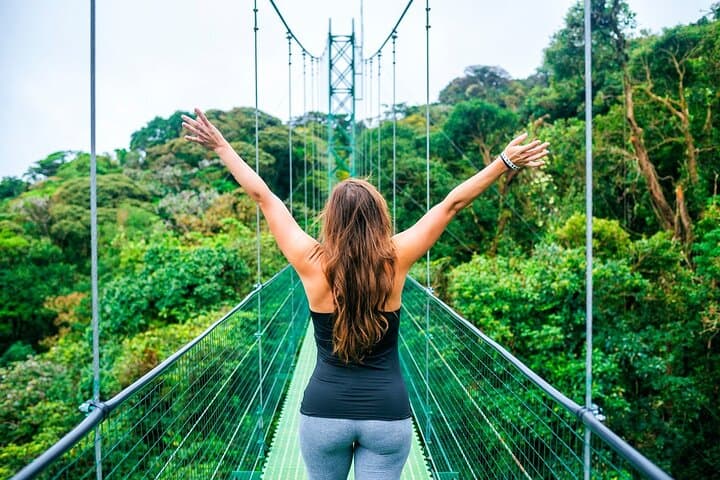
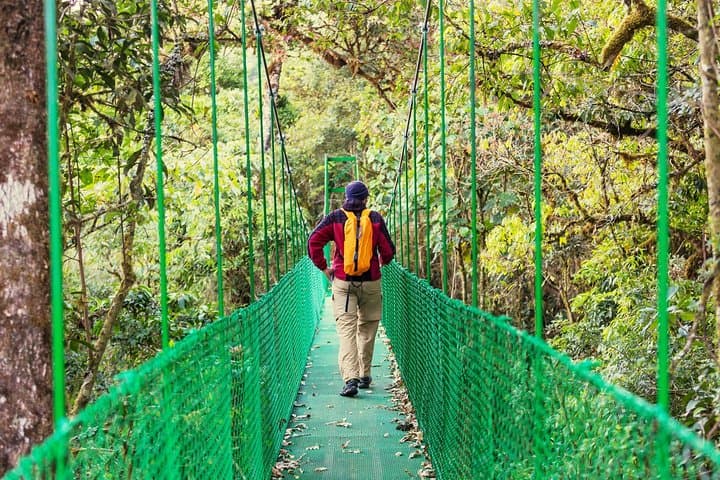
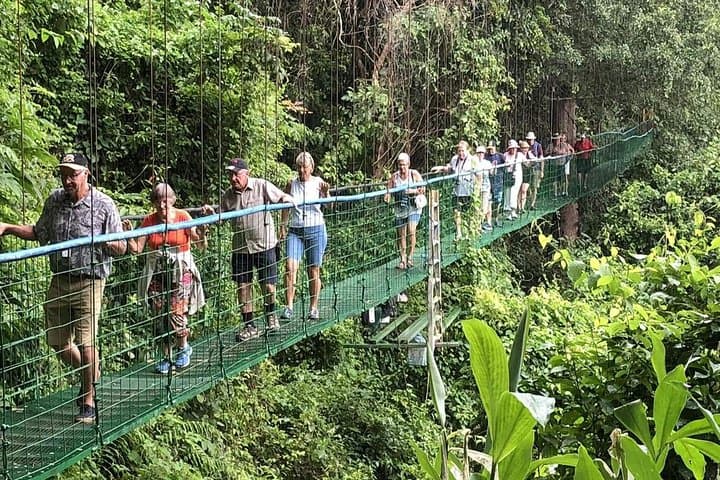
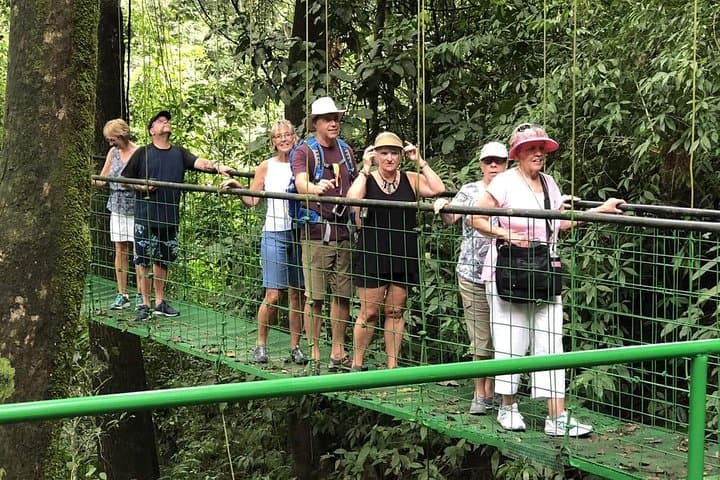
You step off the pier into heat that presses like a living thing; the air smells of wet leaf and warm earth. Within an hour you’re walking across a system of hanging bridges — three spans more than 180 feet above the forest floor — each one stretching 300 feet through emergent crowns where toucans and macaws thread the canopy. The rainforest below moves, a low mechanical hum of insects and distant monkey calls.
You step off the pier into heat that presses like a living thing; the air smells of wet leaf and warm earth. Within an hour you’re walking across a system of hanging bridges — three spans more than 180 feet above the forest floor — each one stretching 300 feet through emergent crowns where toucans and macaws thread the canopy. The rainforest below moves, a low mechanical hum of insects and distant monkey calls.
This corridor sits at the edge of Carara National Park where Pacific dry forest meets humid rainforest. Geologically the area is a mosaic of river sediments and old coastal terraces; the Tárcoles River has carved mangrove-lined channels that concentrate fish and, famously, crocodiles. Culturally the Puntarenas coast grew from a 19th-century port economy; today its economy pivots on eco-tourism and artisanal souvenirs, visible in small roadside stalls near tour exits.
Expect roughly 1.5 miles (2.5 km) of guided walking with some steep stretches and brief stairs, followed by a one-hour boat ride along Tárcoles to watch large American crocodiles sun on banks and herons quarter the mudflats. Guides are naturalists who point out up to 400 bird species and common mammals like white-faced capuchins and howler monkeys.
Practical notes: wear closed, grippy shoes and bring sunscreen, insect repellent and a refillable water bottle. Timing early in the morning is best for bird activity and cooler air; the boat is calm but keep camera straps secure. The tour suits travelers with moderate fitness and allows time to return to the ship afterwards.