THE ADVENTURE COLLECTIVE® · Independent discovery and booking for outdoor travel

Walk the rainforest at night beneath Tenorio’s shadow where frogs chorus and tapir trails cross. This private, easy two-hour tour in Bijagua maximizes chances to see rare nocturnal wildlife while providing local natural-history insight.
Walk the rainforest at night beneath Tenorio’s shadow where frogs chorus and tapir trails cross. This private, easy two-hour tour in Bijagua maximizes chances to see rare nocturnal wildlife while providing local natural-history insight.
Dusk falls across the foothills of Tenorio and the forest exhales a cooler, damp air; the trail swallows the last of the light and the rainforest begins to move. On a night walk at Tapir Home Bijagua a guide’s headlamp shapes the path while frogs answer each other from the leaf litter and the forest seems to breathe with intent.
Verified experiences and guided adventures in the surrounding area.
Operated by Costa Rica Excursions Travel · Bijagua, Alajuela
Dusk falls across the foothills of Tenorio and the forest exhales a cooler, damp air; the trail swallows the last of the light and the rainforest begins to move. On a night walk at Tapir Home Bijagua a guide’s headlamp shapes the path while frogs answer each other from the leaf litter and the forest seems to breathe with intent.
This private, two-hour walk explores primary rainforest at the base of Tenorio Volcano, an area shaped by volcanic soils and high rainfall that supports dense understory, bromeliads, and stream-fed hollows. The region’s geology—young volcanic tuff and rich alluvial deposits—creates the wet, muddy corridors tapirs favor for resting and bathing. Culturally, Bijagua sits between rural farming communities and conservation areas; local guides often combine natural history with stories about traditional land use and the long local effort to protect tapir habitat.
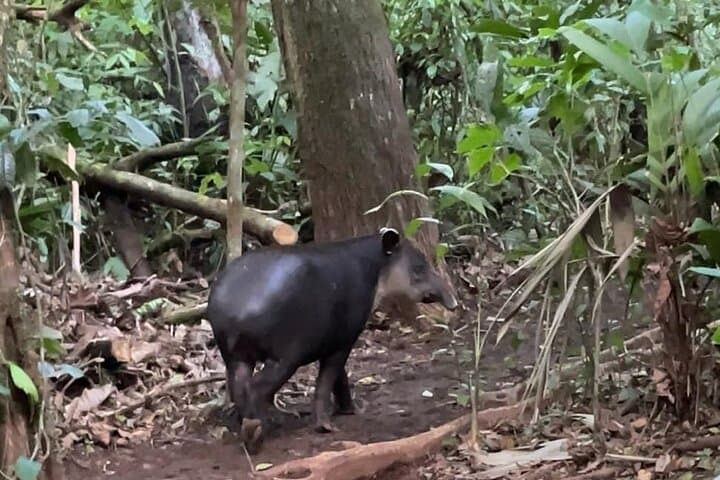
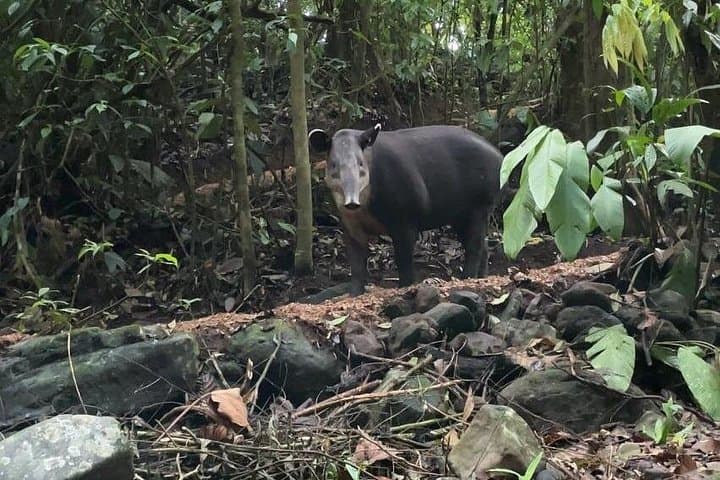
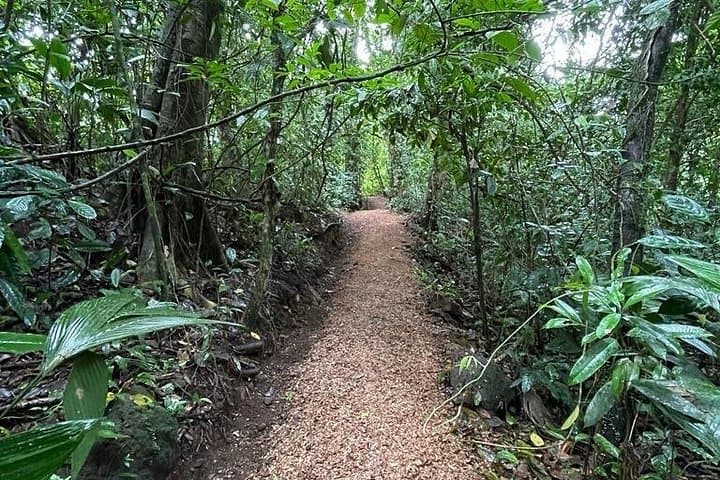
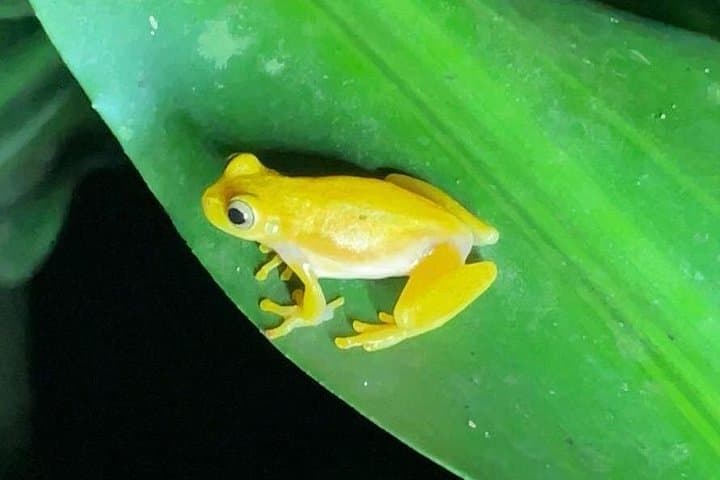
Expect low, uneven forest trails, close sightings of frogs (glass and red-eyed), insects, nocturnal birds, spiders, and, with luck, the Baird’s tapir moving through game trails. Wildlife is most active after dark; your guide will stop frequently and listen—the forest communicates as much as it reveals.
Practical notes: wear closed-toe shoes with good traction and a lightweight waterproof layer; bring a headlamp with red filter or a dimmable low-beam to reduce disturbance. Stay on trails, keep voices low, and follow guide instructions to maximize wildlife sightings and reduce impact. Tours run about 1–2 hours and are accessible to most fitness levels, making this a low-effort, high-reward way to meet Costa Rica’s night life.
easy.
1–2 hours.
Light walking on mostly flat but uneven rainforest trails; suitable for most fitness levels.
Tapirs are shy and nocturnal; this site is one of the better places to see them, but sightings are not guaranteed—your chance improves with a patient, quiet group and an experienced guide.
The operator lists the walk as suitable for most fitness levels and wheelchair accessible in parts; contact the provider ahead to confirm accessibility for specific mobility needs.
Wear closed-toe shoes, long pants, a light waterproof layer, insect repellent, and a dimmable headlamp; avoid bright white lights and loud noises.
Yes—heavy rain may cancel or modify the experience for safety and animal welfare; the cancellation policy typically allows a refund if canceled 24 hours in advance.
The forest around Bijagua bridges historically agricultural lands and protected areas; local communities have long worked with conservation groups to maintain wildlife corridors for large mammals like tapirs.
Remain on trails and minimize light and noise; small groups and local guides reduce disturbance and support community-based conservation efforts.
Costa Rica Excursions Travel operates guided outdoor trips and adventures with an emphasis on safety, stewardship, and memorable experiences.
Dusk falls across the foothills of Tenorio and the forest exhales a cooler, damp air; the trail swallows the last of the light and the rainforest begins to move. On a night walk at Tapir Home Bijagua a guide’s headlamp shapes the path while frogs answer each other from the leaf litter and the forest seems to breathe with intent.
Dusk falls across the foothills of Tenorio and the forest exhales a cooler, damp air; the trail swallows the last of the light and the rainforest begins to move. On a night walk at Tapir Home Bijagua a guide’s headlamp shapes the path while frogs answer each other from the leaf litter and the forest seems to breathe with intent.
This private, two-hour walk explores primary rainforest at the base of Tenorio Volcano, an area shaped by volcanic soils and high rainfall that supports dense understory, bromeliads, and stream-fed hollows. The region’s geology—young volcanic tuff and rich alluvial deposits—creates the wet, muddy corridors tapirs favor for resting and bathing. Culturally, Bijagua sits between rural farming communities and conservation areas; local guides often combine natural history with stories about traditional land use and the long local effort to protect tapir habitat.
Expect low, uneven forest trails, close sightings of frogs (glass and red-eyed), insects, nocturnal birds, spiders, and, with luck, the Baird’s tapir moving through game trails. Wildlife is most active after dark; your guide will stop frequently and listen—the forest communicates as much as it reveals.
Practical notes: wear closed-toe shoes with good traction and a lightweight waterproof layer; bring a headlamp with red filter or a dimmable low-beam to reduce disturbance. Stay on trails, keep voices low, and follow guide instructions to maximize wildlife sightings and reduce impact. Tours run about 1–2 hours and are accessible to most fitness levels, making this a low-effort, high-reward way to meet Costa Rica’s night life.