THE ADVENTURE COLLECTIVE® · Independent discovery and booking for outdoor travel

Depart Cusco at dawn for Vinicunca (Rainbow Mountain), a high‑altitude day hike that culminates in vividly banded slopes and sweeping Andean views. This guide explains what to expect—terrain, culture, and practical prep—for the full 8–10 hour experience.
Depart Cusco at dawn for Vinicunca (Rainbow Mountain), a high‑altitude day hike that culminates in vividly banded slopes and sweeping Andean views. This guide explains what to expect—terrain, culture, and practical prep—for the full 8–10 hour experience.
Morning light slices the Andes as the van rolls out of Cusco at 7:00 a.m., condensation on windows, passengers folding scarves into their palms. By the time the road levels and puna grass opens, the air is thinner and the peaks wear a raw, high-altitude silence. Hikers step off at the trailhead and begin the steady climb toward Vinicunca—known to most as Rainbow Mountain—where banded mineral strata dye the slopes in stripes of rust, ochre and mint.
Verified experiences and guided adventures in the surrounding area.
Operated by Inca Town Travel · Cusco, Cusco Region
Morning light slices the Andes as the van rolls out of Cusco at 7:00 a.m., condensation on windows, passengers folding scarves into their palms. By the time the road levels and puna grass opens, the air is thinner and the peaks wear a raw, high-altitude silence. Hikers step off at the trailhead and begin the steady climb toward Vinicunca—known to most as Rainbow Mountain—where banded mineral strata dye the slopes in stripes of rust, ochre and mint.
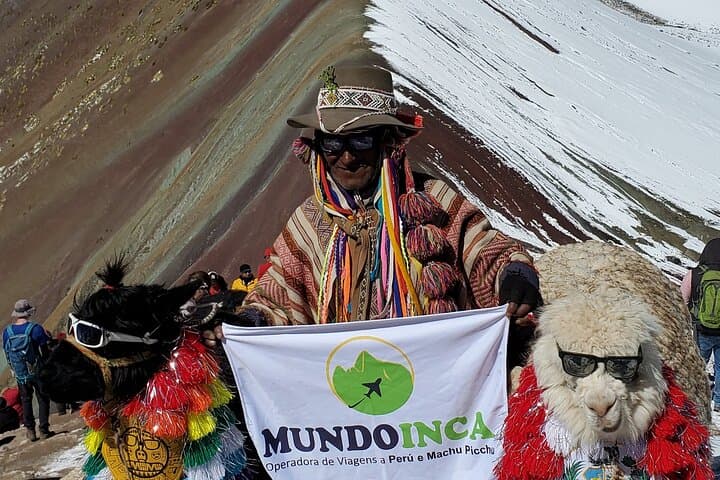
Geology here is legible: iron, copper and other minerals oxidized and uplifted by Andean tectonics, then scoured by wind and frost into the layered ridges you see from the summit. The route threads past grazing llamas and small Andean communities whose Quechua traditions tie the landscape to ritual and pastoral life. On the return the guide often stops at Rumicolca, an Inca-era gate on the old imperial road that speaks to the region’s role in pre-Columbian logistics.
Practically speaking, plan for a full 8–10 hour day including 3-hour drives each way and a 2-hour uphill hike. Expect thin air—pacing and hydration beat ambition. Footwear should be sturdy and waterproof; weather swings fast so layer for sun, wind and sudden rain. Bring cash for small purchases and tip the local guide if they carried your extra weight. If you’re short on acclimatization, consider extra time in Cusco or a mule option offered locally. The summit rewards patience: a 360-degree panorama where the Andes push and shift beneath your feet, and the striped slopes stand very much alive under the high sky.
challenging.
8–10 hours.
Good cardiovascular fitness recommended; acclimatization to 3,400–4,500 m required; steady hiking ability for uphill sections.
The summit sits above 5,000 m (around 16,400 ft) depending on route; most visitors feel altitude effects—shortness of breath, headache—so acclimatize in Cusco and ascend slowly.
Expect roughly 2 hours uphill and 1–1.5 hours down; total round‑trip hiking is typically 4–6 km depending on exact route and side trips.
Local operators may offer mule transport for part of the ascent or shorter viewpoint stops, but availability varies—request options when booking.
This tour is not recommended for pregnant travelers or those with significant cardiovascular/spinal issues; for children, evaluate high-altitude tolerance and stamina.
The area sits along Andean routes used since pre-Inca and Inca times; local Quechua communities maintain ritual ties to nearby peaks.
Tourism pressures cause trail erosion and litter; stick to established paths, avoid feeding wildlife, and use local services that reinvest in community conservation.
Inca Town Travel operates guided outdoor trips and adventures with an emphasis on safety, stewardship, and memorable experiences.
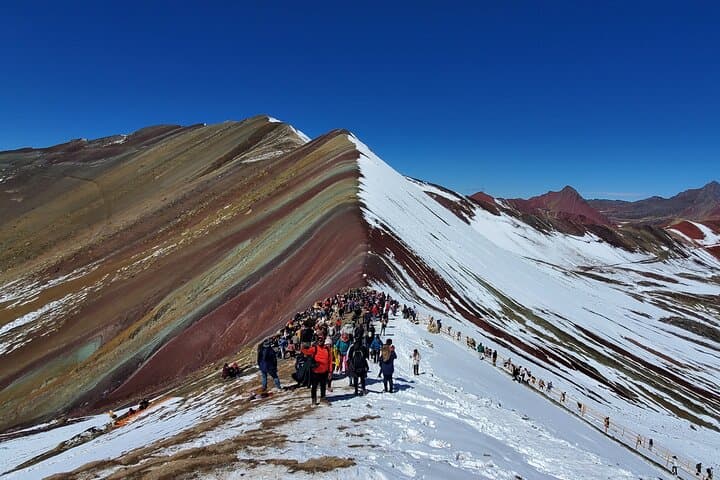
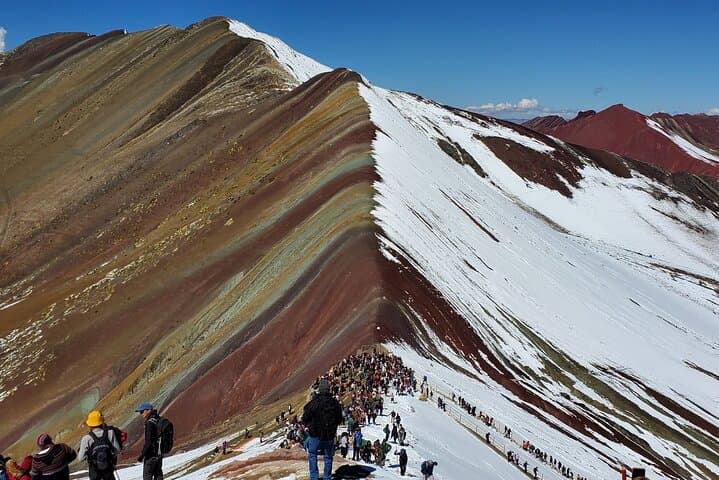
Morning light slices the Andes as the van rolls out of Cusco at 7:00 a.m., condensation on windows, passengers folding scarves into their palms. By the time the road levels and puna grass opens, the air is thinner and the peaks wear a raw, high-altitude silence. Hikers step off at the trailhead and begin the steady climb toward Vinicunca—known to most as Rainbow Mountain—where banded mineral strata dye the slopes in stripes of rust, ochre and mint.
Morning light slices the Andes as the van rolls out of Cusco at 7:00 a.m., condensation on windows, passengers folding scarves into their palms. By the time the road levels and puna grass opens, the air is thinner and the peaks wear a raw, high-altitude silence. Hikers step off at the trailhead and begin the steady climb toward Vinicunca—known to most as Rainbow Mountain—where banded mineral strata dye the slopes in stripes of rust, ochre and mint.
Geology here is legible: iron, copper and other minerals oxidized and uplifted by Andean tectonics, then scoured by wind and frost into the layered ridges you see from the summit. The route threads past grazing llamas and small Andean communities whose Quechua traditions tie the landscape to ritual and pastoral life. On the return the guide often stops at Rumicolca, an Inca-era gate on the old imperial road that speaks to the region’s role in pre-Columbian logistics.
Practically speaking, plan for a full 8–10 hour day including 3-hour drives each way and a 2-hour uphill hike. Expect thin air—pacing and hydration beat ambition. Footwear should be sturdy and waterproof; weather swings fast so layer for sun, wind and sudden rain. Bring cash for small purchases and tip the local guide if they carried your extra weight. If you’re short on acclimatization, consider extra time in Cusco or a mule option offered locally. The summit rewards patience: a 360-degree panorama where the Andes push and shift beneath your feet, and the striped slopes stand very much alive under the high sky.