THE ADVENTURE COLLECTIVE® · Independent discovery and booking for outdoor travel

A high-altitude day hike to Vinicunca (Rainbow Mountain) from Cusco that brings you through Andean pastures to vividly striped slopes. Expect a steep 1.5‑hour ascent, cultural encounters with Quechua communities, and operator-included services like meals and oxygen assistance.
A high-altitude day hike to Vinicunca (Rainbow Mountain) from Cusco that brings you through Andean pastures to vividly striped slopes. Expect a steep 1.5‑hour ascent, cultural encounters with Quechua communities, and operator-included services like meals and oxygen assistance.
You arrive before dawn on a bus that hums toward the high puna, the road unraveling into a patchwork of highland farms and grazing llamas. By the time the trail opens you are already above 4,200 meters; the air tastes like old metal and the wind dares you to move faster. The mountain’s bands—rust, ochre, mint and rose—sit like a geological sketchbook turned upright, each stripe a mineral note left behind by ancient seas and compressed sediments.
Verified experiences and guided adventures in the surrounding area.
Operated by Peru Like · Cusco, Cusco Region
You arrive before dawn on a bus that hums toward the high puna, the road unraveling into a patchwork of highland farms and grazing llamas. By the time the trail opens you are already above 4,200 meters; the air tastes like old metal and the wind dares you to move faster. The mountain’s bands—rust, ochre, mint and rose—sit like a geological sketchbook turned upright, each stripe a mineral note left behind by ancient seas and compressed sediments.
Geology here is recent and theatrical: iron oxides, copper, and magnesium create the colors, while retreating glaciers revealed the slopes only in the last century. The massif sits in the shadow of Ausangate, a peak sacred to Quechua communities whose shepherding culture still shapes the landscape; local families run simple services at trailheads and herds of alpaca and viscacha appear on talus slopes.
Practically, this is a high-altitude day hike: expect 1.5 hours uphill from the highway, a 30–40 minute summit window, and a return that rewards slow pacing. The trail is a mix of packed earth and loose scree; mornings are cold and clear in the dry season, while afternoons in the wet season bring drizzle and mud. Operators often include hotel pickup, buffet meals, oxygen assistance and walking sticks—use them.
Plan for layers, steady hydration, and 48–72 hours of acclimatization in Cusco to reduce altitude risk. Hike slowly, respect local property and keep to established paths—both for safety and to protect an environment still healing from increasing visitor numbers. From the rim, the range will feel alive: the wind constant, the colors stubbornly real, and the walk home an earned quiet.
challenging.
6 hours (total); 3–4 hours hiking.
Good aerobic base and ability to sustain uphill hiking for 1–2 hours at >4,000 m; prior light high-altitude experience helps.
Typical inclusions: hotel pickup and drop-off in Cusco, buffet breakfast and lunch, entrance fees, bilingual guide, walking sticks, oxygen assistance and transport in an air‑conditioned vehicle.
The uphill segment is about 1–1.5 hours from the highway with a similar return; the full tour runs ~6 hours. The difficulty comes from altitude rather than technical terrain.
Altitude sickness is common; acclimatize in Cusco, hydrate, avoid alcohol the day before, and descend if symptoms worsen—operators may carry oxygen for assistance.
The dry season (May–September) offers the most stable weather and clear views; the wet season (November–March) brings mud, limited visibility and occasional trail closures.
The colorful strata became exposed after glacier retreat; local Quechua communities around Ausangate maintain pastoral traditions and regard the area as culturally significant.
Trail erosion and waste are growing concerns—stick to marked paths, pack out trash, and support operators who contribute to local stewardship and community fees.
Peru Like operates guided outdoor trips and adventures with an emphasis on safety, stewardship, and memorable experiences.


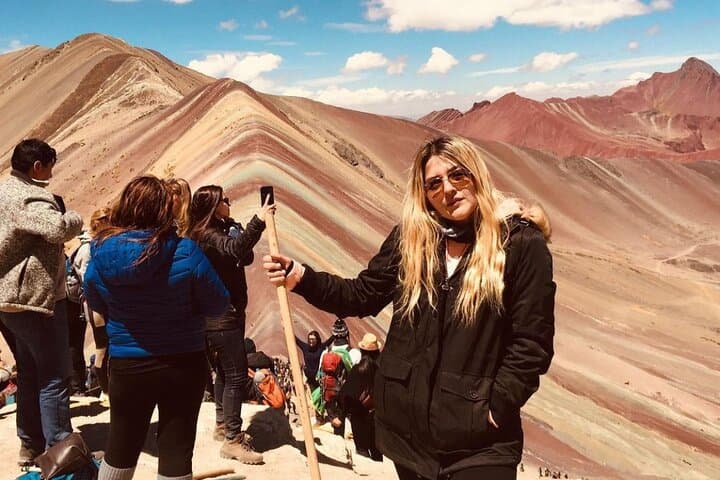

You arrive before dawn on a bus that hums toward the high puna, the road unraveling into a patchwork of highland farms and grazing llamas. By the time the trail opens you are already above 4,200 meters; the air tastes like old metal and the wind dares you to move faster. The mountain’s bands—rust, ochre, mint and rose—sit like a geological sketchbook turned upright, each stripe a mineral note left behind by ancient seas and compressed sediments.
You arrive before dawn on a bus that hums toward the high puna, the road unraveling into a patchwork of highland farms and grazing llamas. By the time the trail opens you are already above 4,200 meters; the air tastes like old metal and the wind dares you to move faster. The mountain’s bands—rust, ochre, mint and rose—sit like a geological sketchbook turned upright, each stripe a mineral note left behind by ancient seas and compressed sediments.
Geology here is recent and theatrical: iron oxides, copper, and magnesium create the colors, while retreating glaciers revealed the slopes only in the last century. The massif sits in the shadow of Ausangate, a peak sacred to Quechua communities whose shepherding culture still shapes the landscape; local families run simple services at trailheads and herds of alpaca and viscacha appear on talus slopes.
Practically, this is a high-altitude day hike: expect 1.5 hours uphill from the highway, a 30–40 minute summit window, and a return that rewards slow pacing. The trail is a mix of packed earth and loose scree; mornings are cold and clear in the dry season, while afternoons in the wet season bring drizzle and mud. Operators often include hotel pickup, buffet meals, oxygen assistance and walking sticks—use them.
Plan for layers, steady hydration, and 48–72 hours of acclimatization in Cusco to reduce altitude risk. Hike slowly, respect local property and keep to established paths—both for safety and to protect an environment still healing from increasing visitor numbers. From the rim, the range will feel alive: the wind constant, the colors stubbornly real, and the walk home an earned quiet.