THE ADVENTURE COLLECTIVE® · Independent discovery and booking for outdoor travel

A single-day high‑altitude hike from Cusco brings you to Vinicunca, the famed ‘Rainbow Mountain,’ with sweeping views of Ausangate glacier and colorful, mineral‑streaked slopes. Expect a short but strenuous climb where altitude, not distance, shapes the experience.
A single-day high‑altitude hike from Cusco brings you to Vinicunca, the famed ‘Rainbow Mountain,’ with sweeping views of Ausangate glacier and colorful, mineral‑streaked slopes. Expect a short but strenuous climb where altitude, not distance, shapes the experience.
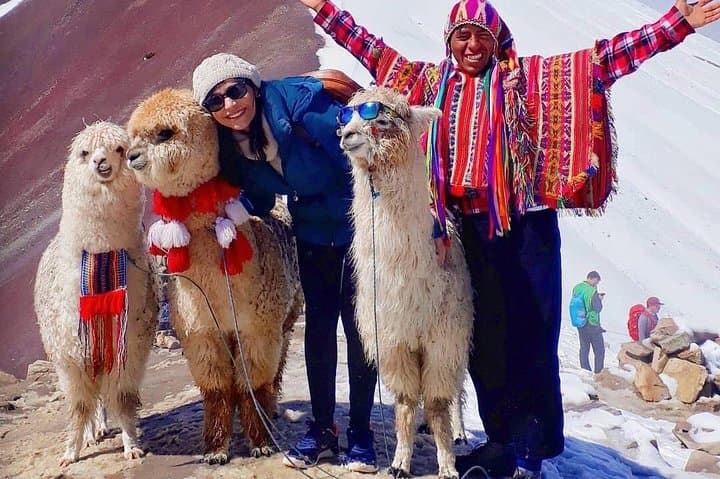
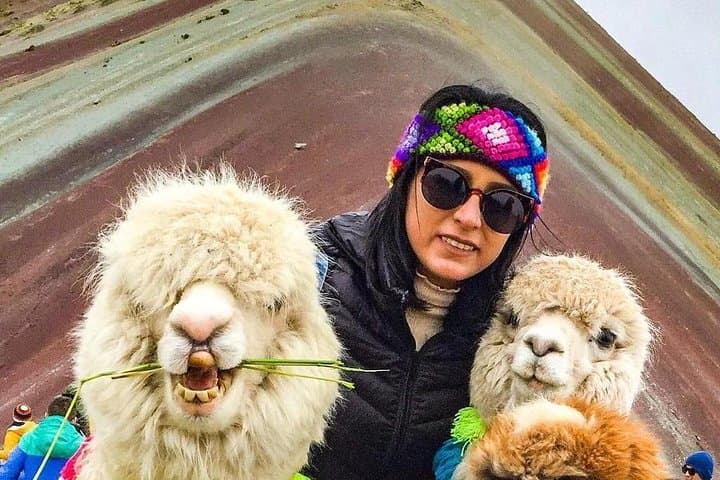
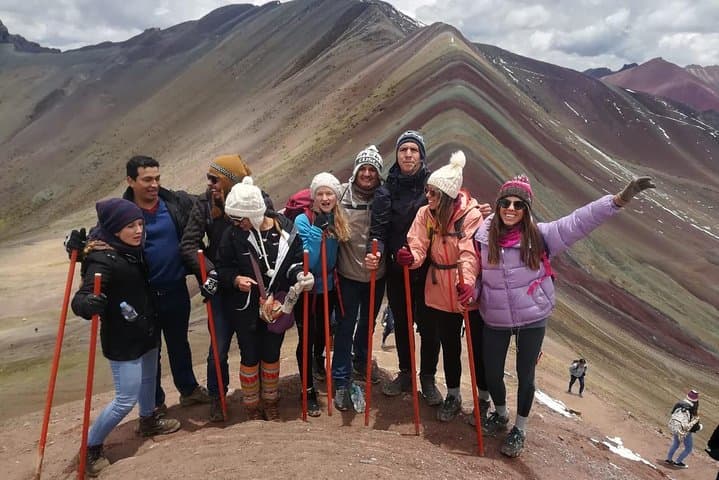
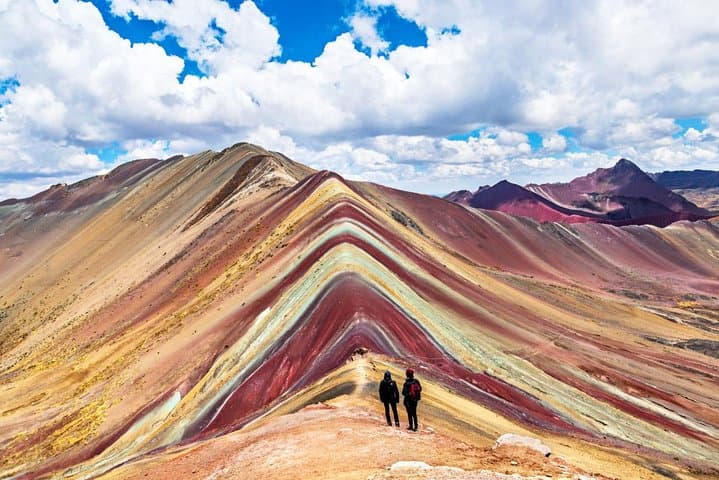
You step out of the van into thin air and a wind that seems to push you forward — the high puna opens, raw and bright. Ahead, the striped flank of Vinicunca glows in bands of rust, ochre, teal and lavender; to one side the white of the Ausangate glacier sits like a cold eye watching the valley. The trail climbs on packed earth and rocky switchbacks, with llamas and herders marking a living human geography.
Verified experiences and guided adventures in the surrounding area.
Operated by PERU CARAL TOURS SAC · Cusco, Cusco Region
You step out of the van into thin air and a wind that seems to push you forward — the high puna opens, raw and bright. Ahead, the striped flank of Vinicunca glows in bands of rust, ochre, teal and lavender; to one side the white of the Ausangate glacier sits like a cold eye watching the valley. The trail climbs on packed earth and rocky switchbacks, with llamas and herders marking a living human geography.
Geology here is recent and visible: mineral-rich strata uplifted and exposed by glacial carving create the painted layers visitors come to see. For local Quechua communities Ausangate is an Apu — a protective mountain — and people still make offerings and hold traditional ceremonies nearby. The route passes high pasture (puna) where sparse vegetation and wind-shaped rocks tell a story of elevation and exposure.
Practically, the hike is short but high: expect 1–2 hours uphill from Cusipata to the viewpoint at roughly 5,000 m (16,400 ft). Altitude, not distance, is the defining challenge — breath will come shorter and pace must slow. Start early to avoid afternoon clouds, carry layers for rapid temperature swings, sun protection for intense UV, and 2–3 liters of water. Guides often include hotel pickup, a stop for breakfast in Cusipata, and a buffet lunch on return.
Respect local culture and fragile tundra: stay on established paths, minimize waste, and follow your guide’s instructions. With basic acclimatization this is a singular high-Andes experience — vivid, immediate, and uncompromising.
challenging.
11–12 hours.
Good cardiovascular fitness and prior acclimatization recommended; be prepared for heavy breathing at altitude.
The uphill section from the common trailhead takes roughly 1–2 hours depending on fitness and acclimatization; the full tour including transport is about 11–12 hours.
Guides are strongly recommended for altitude safety and navigation; entry to the area usually has a small park fee and most tours include admission and transport.
The main viewpoint sits near 5,000 meters (around 16,400 ft), so expect pronounced altitude effects if you haven’t acclimatized.
Dry season months (May–September) offer the clearest skies and most reliable hiking conditions; afternoons can cloud up, so start early.
Ausangate has been venerated by Andean communities for centuries as an Apu (sacred mountain); pilgrimages and offerings continue on seasonal dates.
The puna is ecologically fragile; stick to paths, avoid single‑use plastics, and support community‑run services to keep tourism sustainable.
PERU CARAL TOURS SAC operates guided outdoor trips and adventures with an emphasis on safety, stewardship, and memorable experiences.
You step out of the van into thin air and a wind that seems to push you forward — the high puna opens, raw and bright. Ahead, the striped flank of Vinicunca glows in bands of rust, ochre, teal and lavender; to one side the white of the Ausangate glacier sits like a cold eye watching the valley. The trail climbs on packed earth and rocky switchbacks, with llamas and herders marking a living human geography.
You step out of the van into thin air and a wind that seems to push you forward — the high puna opens, raw and bright. Ahead, the striped flank of Vinicunca glows in bands of rust, ochre, teal and lavender; to one side the white of the Ausangate glacier sits like a cold eye watching the valley. The trail climbs on packed earth and rocky switchbacks, with llamas and herders marking a living human geography.
Geology here is recent and visible: mineral-rich strata uplifted and exposed by glacial carving create the painted layers visitors come to see. For local Quechua communities Ausangate is an Apu — a protective mountain — and people still make offerings and hold traditional ceremonies nearby. The route passes high pasture (puna) where sparse vegetation and wind-shaped rocks tell a story of elevation and exposure.
Practically, the hike is short but high: expect 1–2 hours uphill from Cusipata to the viewpoint at roughly 5,000 m (16,400 ft). Altitude, not distance, is the defining challenge — breath will come shorter and pace must slow. Start early to avoid afternoon clouds, carry layers for rapid temperature swings, sun protection for intense UV, and 2–3 liters of water. Guides often include hotel pickup, a stop for breakfast in Cusipata, and a buffet lunch on return.
Respect local culture and fragile tundra: stay on established paths, minimize waste, and follow your guide’s instructions. With basic acclimatization this is a singular high-Andes experience — vivid, immediate, and uncompromising.