THE ADVENTURE COLLECTIVE® · Independent discovery and booking for outdoor travel

An early-morning drive from Cusco sets the stage for a high-altitude trek to Rainbow Mountain. Expect steep, high-elevation hiking, striking mineral bands on the slopes, and firsthand encounters with Quechua mountain life.
An early-morning drive from Cusco sets the stage for a high-altitude trek to Rainbow Mountain. Expect steep, high-elevation hiking, striking mineral bands on the slopes, and firsthand encounters with Quechua mountain life.
The van slips out of Cusco before dawn, headlights carving through high puna as cold air pushes at the windows. By sunrise, the slopes reveal bands of ochre, rust and mint—stripes of mineral-rich rock that earned this ridge the name Rainbow Mountain. The wind seems to test each step, urging walkers upward toward the 360-degree viewpoint above the painted ridgelines.
Verified experiences and guided adventures in the surrounding area.
Operated by Apu Andino Travel Peru · Cusco, Cusco Region
The van slips out of Cusco before dawn, headlights carving through high puna as cold air pushes at the windows. By sunrise, the slopes reveal bands of ochre, rust and mint—stripes of mineral-rich rock that earned this ridge the name Rainbow Mountain. The wind seems to test each step, urging walkers upward toward the 360-degree viewpoint above the painted ridgelines.
Geology does the heavy lifting here: iron oxides, copper sulfates and other minerals stain layers of sedimentary rock laid down and folded around the glacial shoulders of Ausangate. The massif itself is a cultural landmark for Quechua communities; herders still move llamas and alpaca across the valleys and offer quiet reminders of daily mountain life.
Expect a long day: an early 2:15 a.m. pickup from Cusco, roughly three hours’ drive to the trailhead, then a 3–4 hour ascent to the viewpoint and a 2.5–3 hour descent. Total hiking distance is typically 8–10 km round-trip with about 600–800 m of elevation gain; the high point sits near 5,000–5,200 m (16,400–17,060 ft). Altitude, not technical terrain, is the main challenge—trails are steep but well-trodden.
Practical edge: acclimatize in Cusco for 48–72 hours if possible, drink plenty of fluids, layer for rapid temperature swings and protect skin from strong Andean sun. Guides usually include breakfast, snacks and lunch; they also handle logistics and explain local geology and customs. For travelers prepared for thin air and long transfer times, the view at the top rewards effort with a rare, color-striated panorama and a glimpse into high-Andean life.
challenging.
14–17 hours.
Good cardiovascular fitness and endurance for several hours of uphill hiking at high altitude; prior acclimatization recommended
The trail is non-technical but steep; the combination of long transfer times and 5,000 m elevation makes it physically demanding—expect a full day of effort.
Dry months (May–September) offer the most stable weather and clearer vistas; avoid the heavy rains of December–March for best footing and visibility.
There’s a high risk if you travel straight from low altitude—acclimatize in Cusco, hydrate, eat lightly and consider medication like acetazolamide after consulting a doctor.
Most full-day providers include hotel pickup, breakfast at the trailhead, a guide, snacks and lunch, plus return transport to Cusco.
Ausangate is a sacred mountain in Andean cosmology and local Quechua communities have grazed these high pastures for generations.
The puna is fragile; stick to designated trails, avoid disturbing grazing lands and support local guides who prioritize low-impact practices.
Apu Andino Travel Peru operates guided outdoor trips and adventures with an emphasis on safety, stewardship, and memorable experiences.
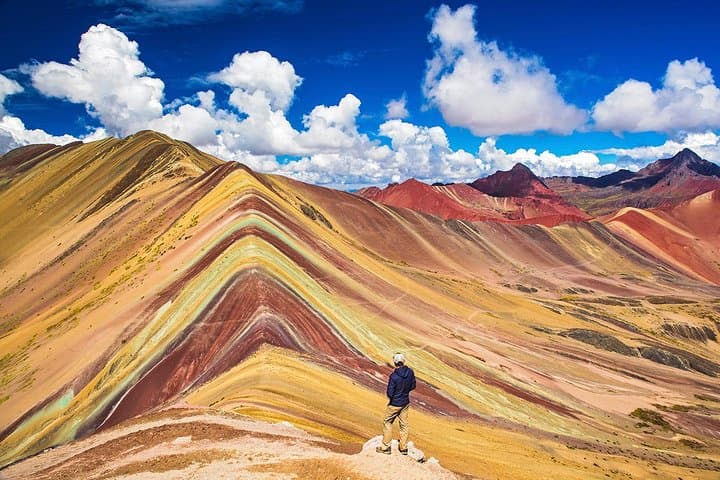
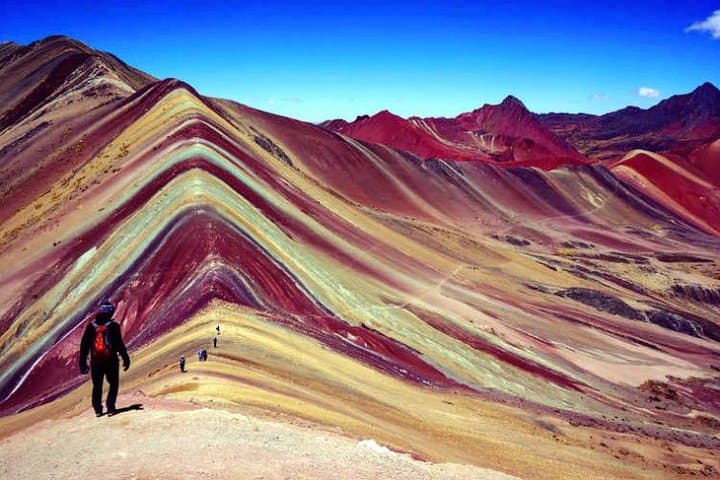
The van slips out of Cusco before dawn, headlights carving through high puna as cold air pushes at the windows. By sunrise, the slopes reveal bands of ochre, rust and mint—stripes of mineral-rich rock that earned this ridge the name Rainbow Mountain. The wind seems to test each step, urging walkers upward toward the 360-degree viewpoint above the painted ridgelines.
The van slips out of Cusco before dawn, headlights carving through high puna as cold air pushes at the windows. By sunrise, the slopes reveal bands of ochre, rust and mint—stripes of mineral-rich rock that earned this ridge the name Rainbow Mountain. The wind seems to test each step, urging walkers upward toward the 360-degree viewpoint above the painted ridgelines.
Geology does the heavy lifting here: iron oxides, copper sulfates and other minerals stain layers of sedimentary rock laid down and folded around the glacial shoulders of Ausangate. The massif itself is a cultural landmark for Quechua communities; herders still move llamas and alpaca across the valleys and offer quiet reminders of daily mountain life.
Expect a long day: an early 2:15 a.m. pickup from Cusco, roughly three hours’ drive to the trailhead, then a 3–4 hour ascent to the viewpoint and a 2.5–3 hour descent. Total hiking distance is typically 8–10 km round-trip with about 600–800 m of elevation gain; the high point sits near 5,000–5,200 m (16,400–17,060 ft). Altitude, not technical terrain, is the main challenge—trails are steep but well-trodden.
Practical edge: acclimatize in Cusco for 48–72 hours if possible, drink plenty of fluids, layer for rapid temperature swings and protect skin from strong Andean sun. Guides usually include breakfast, snacks and lunch; they also handle logistics and explain local geology and customs. For travelers prepared for thin air and long transfer times, the view at the top rewards effort with a rare, color-striated panorama and a glimpse into high-Andean life.