THE ADVENTURE COLLECTIVE® · Independent discovery and booking for outdoor travel

Head into the high Andes for a guided, full-day trek to Vinicunca (Rainbow Mountain). This accessible but altitude-testing hike pairs dramatic mineral-striped slopes with Quechua culture and expansive Ausangate views.
Head into the high Andes for a guided, full-day trek to Vinicunca (Rainbow Mountain). This accessible but altitude-testing hike pairs dramatic mineral-striped slopes with Quechua culture and expansive Ausangate views.
You leave Cusco before dawn, the city lights shrinking behind the van as the Andes swell and the air sharpens. Highland wind nudges at your jacket; llamas dot pasture ridges and the road climbs toward Pitumarca. By the time you step out in Chillihuani the sky feels vast and the trail ahead asks for steady breathing.
Verified experiences and guided adventures in the surrounding area.
Operated by Cusco Aventura · Cusco, Cusco
You leave Cusco before dawn, the city lights shrinking behind the van as the Andes swell and the air sharpens. Highland wind nudges at your jacket; llamas dot pasture ridges and the road climbs toward Pitumarca. By the time you step out in Chillihuani the sky feels vast and the trail ahead asks for steady breathing.
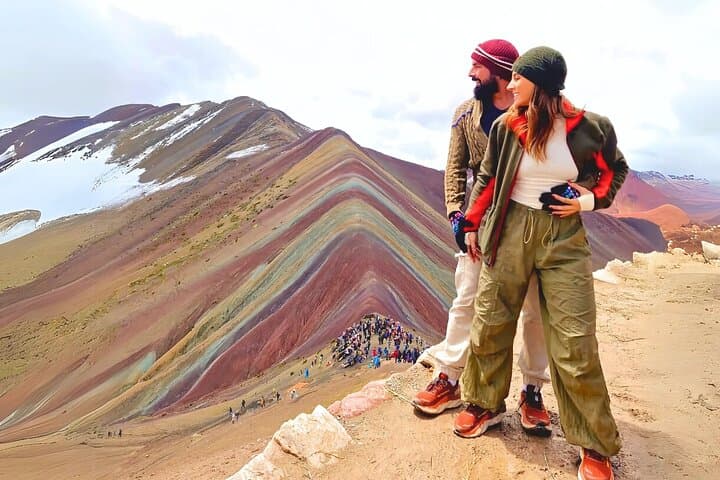
Rainbow Mountain (Vinicunca) rises above 5,000 m, its stripes born of layered sedimentary deposits—iron oxides, copper sulphates and other minerals—laid down, lifted and scoured by glaciers and wind. The massif sits below the massive Ausangate, a mountain long honored in Quechua cosmology; local communities still herd alpacas and maintain festivals tied to the highlands. The Red Valley nearby offers an alternate palette and quieter viewpoints if you want fewer crowds.
Expect a brisk ascent over rolling puna and steep switchbacks: roughly 10 km round trip with about 600–700 m of elevation gain, depending on the route. Thin air, not technical terrain, is the key challenge—sturdy boots and layered insulation matter more than scrambling skills. Guides commonly include walking sticks, oxygen and first aid; they’ll set pace, explain local customs and point out vicuñas, Andean birds, and geological strata.
Practical rhythm: acclimatize in Cusco or nearby for 24–48 hours, start early to beat afternoon clouds and winds, sip water regularly, and carry sun protection. Weather can flip quickly—plan for wind, sun and cold in one day. The hike is short on technical difficulty but long on altitude; respect both and the local communities that steward this landscape.
challenging.
10–14 hours.
Good aerobic fitness recommended with prior acclimatization; able to walk several hours on uphill terrain at high altitude.
Vinicunca sits above 5,000 meters (around 16,400 ft). Most visitors feel the effects of thin air—shortness of breath and slower pace—so acclimatization and a measured pace are important.
Typical routes are about 10 km round-trip with 600–700 m of elevation gain; terrain is non-technical—packed earth, scree and switchbacks—but the altitude makes it physically demanding.
Guides are not strictly required but are strongly recommended; local guides provide navigation, cultural context, safety, walking sticks, and often oxygen or first aid if needed.
The dry season (May–September) offers the most stable weather and clearer views; the rainy season (Nov–Mar) can bring muddy trails and reduced visibility.
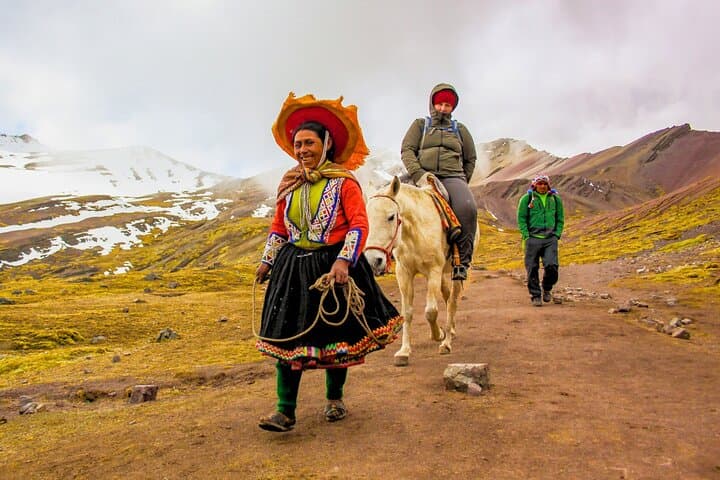
The highlands around Vinicunca are part of Ausangate’s cultural landscape; Quechua communities have grazed these slopes and maintained spiritual ties to the mountain for centuries.
Heavy foot traffic and informal paths accelerate erosion; stay on designated trails, pack out waste, and support guides who work with local communities to manage tourism sustainably.
Cusco Aventura operates guided outdoor trips and adventures with an emphasis on safety, stewardship, and memorable experiences.
You leave Cusco before dawn, the city lights shrinking behind the van as the Andes swell and the air sharpens. Highland wind nudges at your jacket; llamas dot pasture ridges and the road climbs toward Pitumarca. By the time you step out in Chillihuani the sky feels vast and the trail ahead asks for steady breathing.
You leave Cusco before dawn, the city lights shrinking behind the van as the Andes swell and the air sharpens. Highland wind nudges at your jacket; llamas dot pasture ridges and the road climbs toward Pitumarca. By the time you step out in Chillihuani the sky feels vast and the trail ahead asks for steady breathing.
Rainbow Mountain (Vinicunca) rises above 5,000 m, its stripes born of layered sedimentary deposits—iron oxides, copper sulphates and other minerals—laid down, lifted and scoured by glaciers and wind. The massif sits below the massive Ausangate, a mountain long honored in Quechua cosmology; local communities still herd alpacas and maintain festivals tied to the highlands. The Red Valley nearby offers an alternate palette and quieter viewpoints if you want fewer crowds.
Expect a brisk ascent over rolling puna and steep switchbacks: roughly 10 km round trip with about 600–700 m of elevation gain, depending on the route. Thin air, not technical terrain, is the key challenge—sturdy boots and layered insulation matter more than scrambling skills. Guides commonly include walking sticks, oxygen and first aid; they’ll set pace, explain local customs and point out vicuñas, Andean birds, and geological strata.
Practical rhythm: acclimatize in Cusco or nearby for 24–48 hours, start early to beat afternoon clouds and winds, sip water regularly, and carry sun protection. Weather can flip quickly—plan for wind, sun and cold in one day. The hike is short on technical difficulty but long on altitude; respect both and the local communities that steward this landscape.