THE ADVENTURE COLLECTIVE® · Independent discovery and booking for outdoor travel

Head out before dawn from Cusco to hike up to Vinicunca—Rainbow Mountain—where mineral-streaked slopes and high-Andean wildlife await. This day trip involves a multi-hour drive, a 3–4 km ascent at 5,000+ m, and practical preparation for altitude and rapidly changing weather.
Head out before dawn from Cusco to hike up to Vinicunca—Rainbow Mountain—where mineral-streaked slopes and high-Andean wildlife await. This day trip involves a multi-hour drive, a 3–4 km ascent at 5,000+ m, and practical preparation for altitude and rapidly changing weather.
A pre-dawn bus rolls out of Cusco and the Andes yawns open—cold air, low clouds skimming terraced hills, and the long road south toward Qollasuyo. By the time you reach Pampachiri the valley is waking: alpacas graze, villagers tend fields, and the trailhead points upward toward a skyline of striped rock. The final switchbacks push you into thin air where Vinicunca, the so-called Rainbow Mountain, reveals bands of iron, copper and other minerals that catch the sun like painted ridges.
Verified experiences and guided adventures in the surrounding area.
Operated by Grand America · Cusco, Cusco
A pre-dawn bus rolls out of Cusco and the Andes yawns open—cold air, low clouds skimming terraced hills, and the long road south toward Qollasuyo. By the time you reach Pampachiri the valley is waking: alpacas graze, villagers tend fields, and the trailhead points upward toward a skyline of striped rock. The final switchbacks push you into thin air where Vinicunca, the so-called Rainbow Mountain, reveals bands of iron, copper and other minerals that catch the sun like painted ridges.
Geologically the colors are recent revelations: exposed sedimentary layers stained by mineral oxides and weathering above the Ausangate massif. Culturally this is Quechua country—herding routes, stone walls with Inca-era foundations, and communities that still move animals along these high corridors.
Expect a high-altitude day with real climbs: roughly 3–4 km one-way from the common parking area, 400–600 m of ascent, and a summit near 5,100–5,200 m (16,700–17,100 ft). Weather changes quickly—sun, sleet, wind—so pace conservatively and drink often.
Practical notes: tours leave very early (around 4:00 a.m.), include breakfast, buffet lunch, and often oxygen canisters; total round-trip time is 11–12 hours from Cusco. Footwear with solid ankle support, layered insulation, sun protection and trekking poles make the difference above 4,000 m. Arrive in Cusco at least 48–72 hours before the hike to acclimatize; otherwise altitude can turn an iconic view into a hard day. When you reach the rim, let the mountain take a breath too—quiet observation, photos from the designated viewpoint, and then a steady descent back to the valley.
challenging.
11–12 hours.
Good cardiovascular fitness and some experience with sustained uphill hiking; ability to hike at high altitude.
The viewpoint sits around 5,100–5,200 m (16,700–17,100 ft); from common parking it’s about 3–4 km one-way with 400–600 m of ascent—steady but high-altitude work.
Not recommended for young children, pregnant travelers, or people with serious heart or spinal conditions due to altitude and the physical demand.
Most operators include hotel pickup, breakfast, transportation, buffet lunch, guide, basic first-aid and often oxygen canisters; confirm specifics when booking.
Dry season (May–September) offers more stable skies and easier trails; early mornings provide the best light and fewer clouds.
The area lies within traditional Quechua territory and near ancient Inca routes tied to the Ausangate pilgrimage circuit; local communities continue pastoral practices on these slopes.
Visitor pressure causes erosion and trampling; stick to marked paths, pack out waste, and support local guides and community-run conservation initiatives.
Grand America operates guided outdoor trips and adventures with an emphasis on safety, stewardship, and memorable experiences.
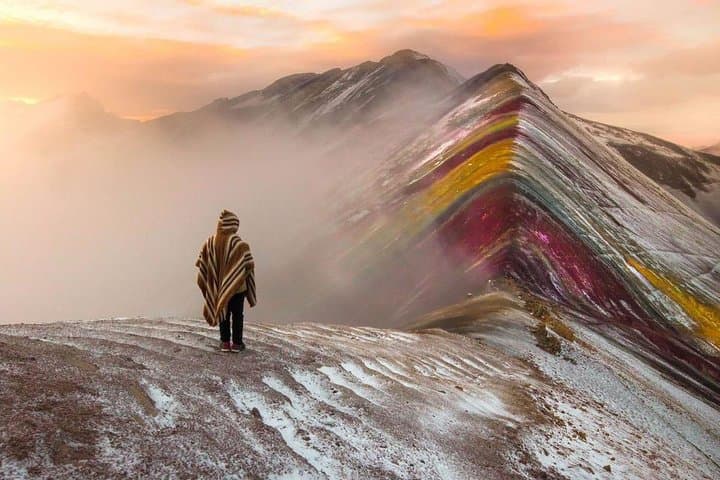
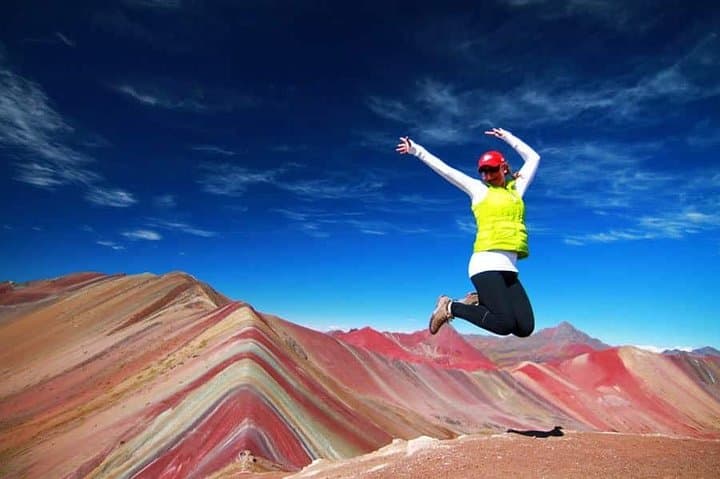
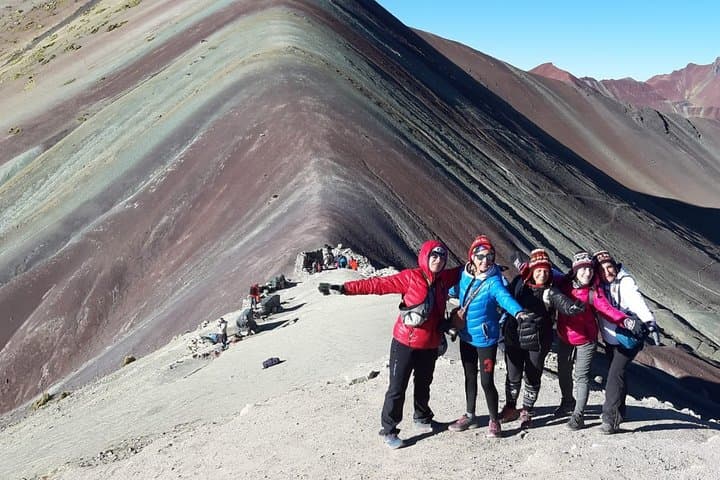
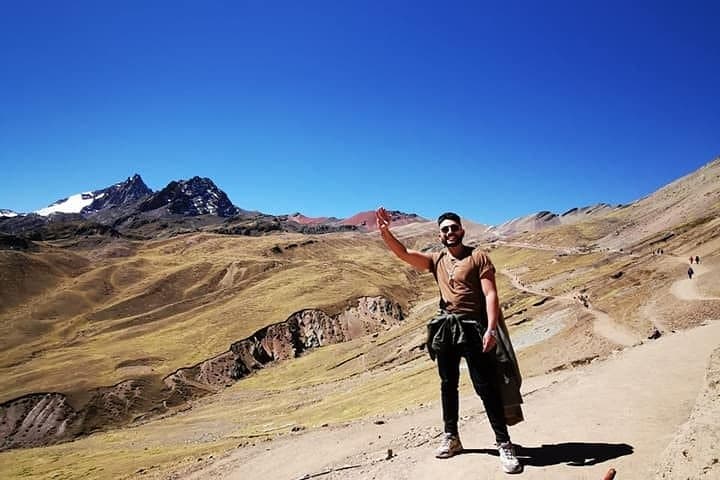
A pre-dawn bus rolls out of Cusco and the Andes yawns open—cold air, low clouds skimming terraced hills, and the long road south toward Qollasuyo. By the time you reach Pampachiri the valley is waking: alpacas graze, villagers tend fields, and the trailhead points upward toward a skyline of striped rock. The final switchbacks push you into thin air where Vinicunca, the so-called Rainbow Mountain, reveals bands of iron, copper and other minerals that catch the sun like painted ridges.
A pre-dawn bus rolls out of Cusco and the Andes yawns open—cold air, low clouds skimming terraced hills, and the long road south toward Qollasuyo. By the time you reach Pampachiri the valley is waking: alpacas graze, villagers tend fields, and the trailhead points upward toward a skyline of striped rock. The final switchbacks push you into thin air where Vinicunca, the so-called Rainbow Mountain, reveals bands of iron, copper and other minerals that catch the sun like painted ridges.
Geologically the colors are recent revelations: exposed sedimentary layers stained by mineral oxides and weathering above the Ausangate massif. Culturally this is Quechua country—herding routes, stone walls with Inca-era foundations, and communities that still move animals along these high corridors.
Expect a high-altitude day with real climbs: roughly 3–4 km one-way from the common parking area, 400–600 m of ascent, and a summit near 5,100–5,200 m (16,700–17,100 ft). Weather changes quickly—sun, sleet, wind—so pace conservatively and drink often.
Practical notes: tours leave very early (around 4:00 a.m.), include breakfast, buffet lunch, and often oxygen canisters; total round-trip time is 11–12 hours from Cusco. Footwear with solid ankle support, layered insulation, sun protection and trekking poles make the difference above 4,000 m. Arrive in Cusco at least 48–72 hours before the hike to acclimatize; otherwise altitude can turn an iconic view into a hard day. When you reach the rim, let the mountain take a breath too—quiet observation, photos from the designated viewpoint, and then a steady descent back to the valley.