THE ADVENTURE COLLECTIVE® · Independent discovery and booking for outdoor travel

Spend a full day from Cusco to Vinicunca (Rainbow Mountain) on a moderate 4 km hike framed by the glaciated Ausangate range. Expect high-altitude walking, vivid mineral bands, local Quechua culture, and a buffet meal on return.
Spend a full day from Cusco to Vinicunca (Rainbow Mountain) on a moderate 4 km hike framed by the glaciated Ausangate range. Expect high-altitude walking, vivid mineral bands, local Quechua culture, and a buffet meal on return.
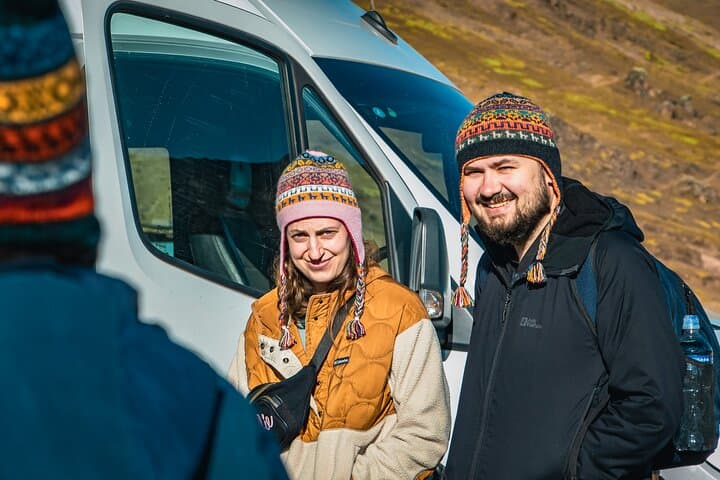
Before first light a minivan eases out of Cusco, and the Andes open like a set of stage curtains: wind-swept puna, distant glaciers, and the hush of a high-altitude morning.
Verified experiences and guided adventures in the surrounding area.
Operated by Peruvian Trips · Cusco, Cusco
Before first light a minivan eases out of Cusco, and the Andes open like a set of stage curtains: wind-swept puna, distant glaciers, and the hush of a high-altitude morning.
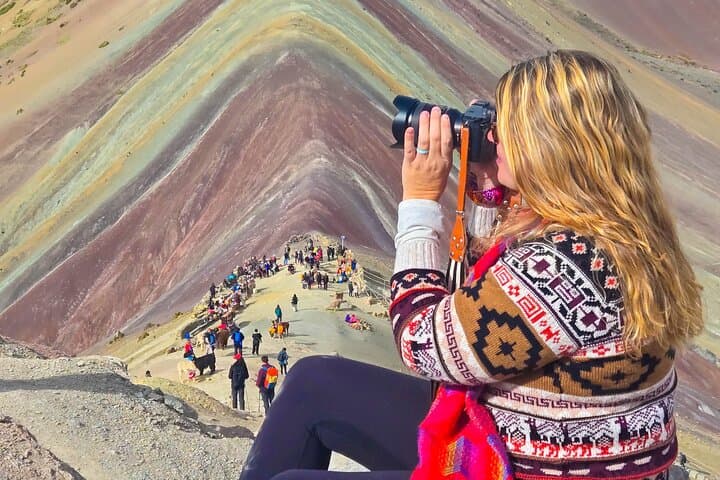
The route climbs toward the Ausangate massif — an Apu (sacred mountain) for local Quechua communities — and deposits you at a trailhead for a steady 4 km hike. The trail threads lichen-coated rocks and tussock grass, with the mountains themselves revealing bands of iron and copper that give Vinicunca its signature stripes. The colors are geological: layered minerals exposed by glacial retreat and erosion over millennia.
Along the way you'll meet shepherds, llamas and alpacas grazing the high meadows; their presence is a reminder that this landscape is lived-in, not just viewed. Local culture shows in coca tea offered at small stops and in the traditional wool garments worn by guide and porter alike.
Practicalities are straightforward: expect a full day (about 11–12 hours door-to-door) with a 4 km hike that climbs to roughly 5,000–5,200 m; altitude, not technical difficulty, is the dominant challenge. Guides typically provide hiking sticks and include breakfast and a buffet lunch on return.
Plan to move deliberately — short steps, regular sips of water, and pauses for breath. Bring high‑quality layers, sun protection, and sturdy boots; weather swings fast at this elevation. If you’ve recently arrived in Cusco, allow at least 24–48 hours to acclimatize. Stay on the trail to limit erosion and pack out any trash: these slopes recover slowly.
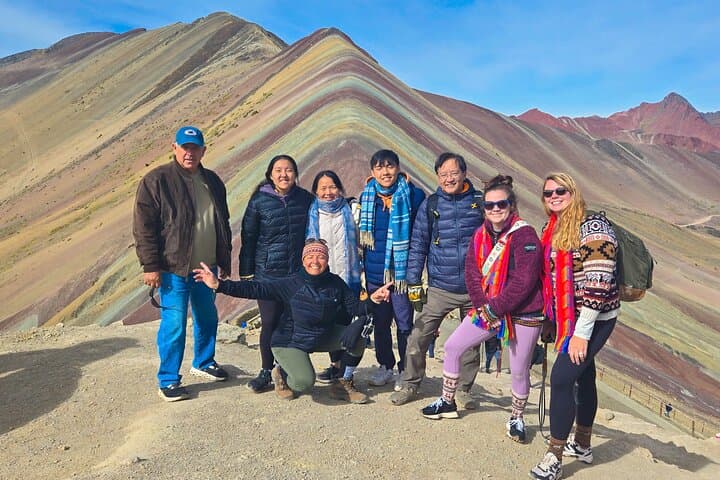
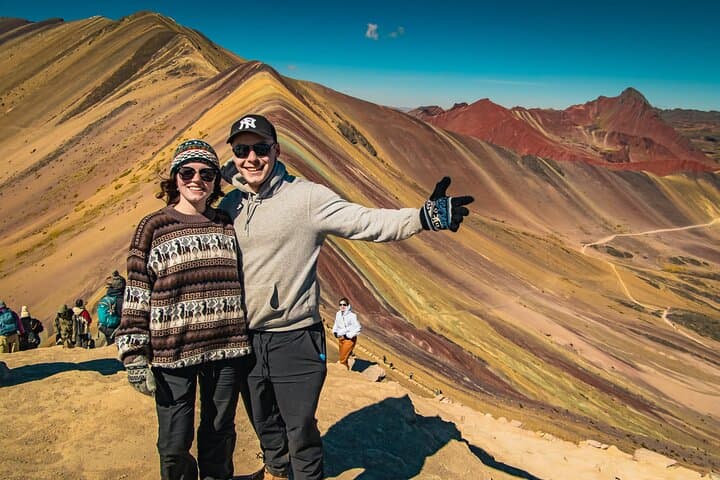
The reward is immediate and photographic — a ridge alive with color, wind shaping the air, and a view that holds the Andes’ long, quiet history in stark stripes of stone.
moderate.
10–12 hours.
Moderate cardiovascular fitness with experience walking on uneven terrain; must handle high altitude.
The guided hike is about 4 km with an endpoint near 5,000–5,200 m; the whole experience is a full day including transport and meals.
The trail is not technically difficult, but high altitude can make even short climbs strenuous; basic fitness and acclimatization are important.
Typical inclusions are round‑trip pick up from Cusco city center, breakfast, buffet lunch, a professional guide, transport, and handmade hiking sticks.
Some local operators offer horse rides for an extra fee, but availability varies and horses are not always recommended above certain steep or windy sections.
The colorful ridges are exposed sedimentary layers altered by mineral oxidation; nearby Ausangate has long cultural significance for Quechua communities as an Apu (sacred mountain).
Heavy visitor traffic accelerates erosion and damages fragile high‑altitude plants; stick to established paths, avoid littering, and support local guides who engage in sustainable practices.
Peruvian Trips operates guided outdoor trips and adventures with an emphasis on safety, stewardship, and memorable experiences.
Before first light a minivan eases out of Cusco, and the Andes open like a set of stage curtains: wind-swept puna, distant glaciers, and the hush of a high-altitude morning.
Before first light a minivan eases out of Cusco, and the Andes open like a set of stage curtains: wind-swept puna, distant glaciers, and the hush of a high-altitude morning.
The route climbs toward the Ausangate massif — an Apu (sacred mountain) for local Quechua communities — and deposits you at a trailhead for a steady 4 km hike. The trail threads lichen-coated rocks and tussock grass, with the mountains themselves revealing bands of iron and copper that give Vinicunca its signature stripes. The colors are geological: layered minerals exposed by glacial retreat and erosion over millennia.
Along the way you'll meet shepherds, llamas and alpacas grazing the high meadows; their presence is a reminder that this landscape is lived-in, not just viewed. Local culture shows in coca tea offered at small stops and in the traditional wool garments worn by guide and porter alike.
Practicalities are straightforward: expect a full day (about 11–12 hours door-to-door) with a 4 km hike that climbs to roughly 5,000–5,200 m; altitude, not technical difficulty, is the dominant challenge. Guides typically provide hiking sticks and include breakfast and a buffet lunch on return.
Plan to move deliberately — short steps, regular sips of water, and pauses for breath. Bring high‑quality layers, sun protection, and sturdy boots; weather swings fast at this elevation. If you’ve recently arrived in Cusco, allow at least 24–48 hours to acclimatize. Stay on the trail to limit erosion and pack out any trash: these slopes recover slowly.
The reward is immediate and photographic — a ridge alive with color, wind shaping the air, and a view that holds the Andes’ long, quiet history in stark stripes of stone.