THE ADVENTURE COLLECTIVE® · Independent discovery and booking for outdoor travel

Set off before dawn from Cusco for a full‑day hike to Vinicunca (Rainbow Mountain). This moderate 4 km trail climbs into high Andean scenery and rewards hikers with vivid mineral stripes, llama sightings and sweeping views of the Ausangate range.
Set off before dawn from Cusco for a full‑day hike to Vinicunca (Rainbow Mountain). This moderate 4 km trail climbs into high Andean scenery and rewards hikers with vivid mineral stripes, llama sightings and sweeping views of the Ausangate range.
Dawn comes hard in the high Andes — headlights cut through thin air as the van climbs away from Cusco and toward the red and ochre ridgelines.
Verified experiences and guided adventures in the surrounding area.
Operated by MC Peru Expeditions · Cusco, Cusco Region
Dawn comes hard in the high Andes — headlights cut through thin air as the van climbs away from Cusco and toward the red and ochre ridgelines.
By midmorning you step out at Pulawasipata and begin a steady 4 km walk across wind‑battered puna toward Vinicunca, the so‑called Rainbow Mountain. The trail moves through stone terraces, tussock grass and intermittent scree; snowpeaks of the Ausangate massif keep watch to the south. Weather here changes fast, and the colors you came for — bands of iron, copper and manganese oxides exposed by erosion — reveal themselves in slashes against sky.
The geology is simple in its drama: uplifted sediment and volcanic minerals exposed by glacial and wind erosion produce the layered hues. Locally, these slopes are part of Andean lifeways; shepherds guide llamas and alpacas across the ridges the same way their ancestors did.
Practicalities matter: the trek gains several hundred meters to a summit near 5,000 m, so acclimatize in Cusco first, pace your breathing, and expect thin air. Guides on this tour provide walking sticks, breakfast and buffet lunch, and a first‑aid kit with oxygen — useful at high elevation.
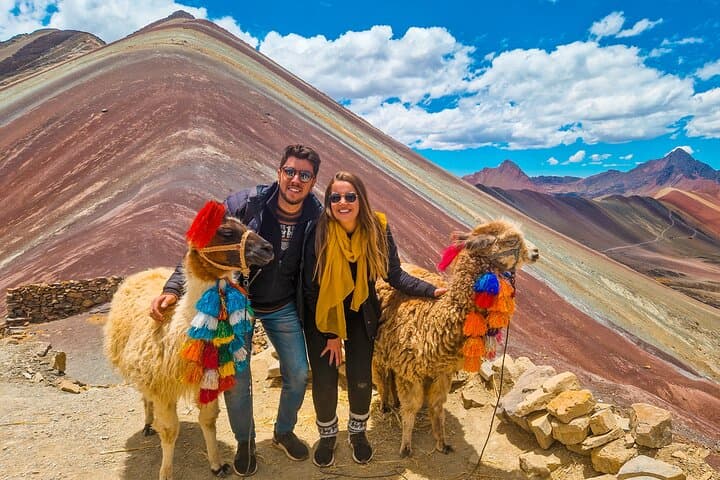
Bring layered clothing, sun protection, snacks and a camera with spare batteries (cold drains cells). Aim for a midweek start to avoid crowds, and plan the hike on day two or three of your stay to reduce altitude discomfort. When you reach the viewpoint, take time: the light shifts the bands within minutes, and the llamas often pose as obliging foreground subjects.
moderate.
11–12 hours.
Moderate fitness with prior short hikes; must be comfortable walking at altitude and on uneven terrain.
The trek is about 4 km one way with several hundred meters of elevation gain; expect 3–4 hours round‑trip on the trail and 11–12 hours total including transport from Cusco.
Yes — spend at least one night in Cusco and avoid strenuous activity the first day; many guides recommend doing the hike on day two or three to adapt to the altitude.
This tour includes hotel pickup in Cusco, transportation, breakfast, buffet lunch, a professional guide (English/Spanish), first‑aid kit with oxygen, and handmade walking sticks.
Weather is variable: sun, wind, and possible snow. Dress in layers, bring waterproof wind protection, sun protection, and extra snacks; battery performance can drop in cold weather.
Vinicunca sits within traditional Andean pastoral territory and became internationally known in recent years after erosion exposed colorful mineral strata; the region remains culturally linked to Ausangate, a sacred mountain in Quechua belief.
The high‑altitude grasslands (puna) are fragile — stick to established trails, avoid disturbing wildlife or livestock, and pack out all trash to minimize impact.
MC Peru Expeditions operates guided outdoor trips and adventures with an emphasis on safety, stewardship, and memorable experiences.
Dawn comes hard in the high Andes — headlights cut through thin air as the van climbs away from Cusco and toward the red and ochre ridgelines.
Dawn comes hard in the high Andes — headlights cut through thin air as the van climbs away from Cusco and toward the red and ochre ridgelines.
By midmorning you step out at Pulawasipata and begin a steady 4 km walk across wind‑battered puna toward Vinicunca, the so‑called Rainbow Mountain. The trail moves through stone terraces, tussock grass and intermittent scree; snowpeaks of the Ausangate massif keep watch to the south. Weather here changes fast, and the colors you came for — bands of iron, copper and manganese oxides exposed by erosion — reveal themselves in slashes against sky.
The geology is simple in its drama: uplifted sediment and volcanic minerals exposed by glacial and wind erosion produce the layered hues. Locally, these slopes are part of Andean lifeways; shepherds guide llamas and alpacas across the ridges the same way their ancestors did.
Practicalities matter: the trek gains several hundred meters to a summit near 5,000 m, so acclimatize in Cusco first, pace your breathing, and expect thin air. Guides on this tour provide walking sticks, breakfast and buffet lunch, and a first‑aid kit with oxygen — useful at high elevation.
Bring layered clothing, sun protection, snacks and a camera with spare batteries (cold drains cells). Aim for a midweek start to avoid crowds, and plan the hike on day two or three of your stay to reduce altitude discomfort. When you reach the viewpoint, take time: the light shifts the bands within minutes, and the llamas often pose as obliging foreground subjects.