THE ADVENTURE COLLECTIVE® · Independent discovery and booking for outdoor travel

Learn top-rope climbing on Railay Beach’s iconic limestone cliffs, explore coastal caves, and rappel from a 150 m viewpoint. This accessible half-day adventure pairs certified instruction with scenic climbs and includes transfers and equipment.
Learn top-rope climbing on Railay Beach’s iconic limestone cliffs, explore coastal caves, and rappel from a 150 m viewpoint. This accessible half-day adventure pairs certified instruction with scenic climbs and includes transfers and equipment.
The morning air off the Andaman has a salt-and-limestone tang that sticks to your lips as the boat threads between karst towers. At Railay Beach, the cliffs rise like hands pulled from the sea—sheer faces scarred with pockets and tufas that catch a climber’s fingers and imagination. Guides lay out ropes on white sand, call out knots, and hand over helmets; by the time the tide drops a little, you’re tied into a top-rope with the ocean as company beneath you.
Verified experiences and guided adventures in the surrounding area.
Operated by Way to Bangkok · Railay Beach, Krabi Province
The morning air off the Andaman has a salt-and-limestone tang that sticks to your lips as the boat threads between karst towers. At Railay Beach, the cliffs rise like hands pulled from the sea—sheer faces scarred with pockets and tufas that catch a climber’s fingers and imagination. Guides lay out ropes on white sand, call out knots, and hand over helmets; by the time the tide drops a little, you’re tied into a top-rope with the ocean as company beneath you.
Railay’s cliffs are the product of millions of years of coral and marine deposits turned to limestone, then lifted and eroded into dramatic karst formations. Once reachable only by longtail boat, the peninsula developed as a small fishing settlement before tourism transformed it into one of Southeast Asia’s climbing hubs. The area’s geology creates a full range of routes—slabby faces, overhangs, and crack lines—so even a first-timer gets a taste of varied movement.
Local culture here moves at sea rhythm: morning markets in Ao Nang, fishermen mending nets, and piers busy with boats ferrying climbers and day-trippers. Guides are often local climbers or bilingual instructors trained in top-rope safety; certification and group size limits keep climbs manageable and secure. Conservation conversations have followed tourism—stick to marked trails, avoid trampling coastal vegetation, and use reef-safe sunscreen to protect nearshore coral.
Practically, the half-day course runs about four hours and is designed for beginners. Expect instruction in belaying, knotwork, basic climbing technique, and a supervised ascent on secure top-rope systems. For full-day participants there’s a picnic lunch, an intro to caving in nearby caverns, and the option to rappel about 33 feet (10 m) from the Railay viewpoint roughly 150 m above sea level. Fitness requirements are moderate: you’ll climb, scramble, and sometimes haul yourself through short cave passages.
Plan on lightweight, quick-dry clothing, sturdy approach shoes or water shoes, and sun protection. Mornings are cooler and give better light for photos; afternoons can be humid and bring brief tropical showers. Guides provide all technical gear—harness, helmet, ropes—and basic accident insurance is included. If you’re carrying valuables ashore, use a dry bag; the route to some crags crosses sand and tide.
Railay delivers a compact adventure: the thrill of ascending limestone cliffs, the hush of cave interiors, and a final view where ocean and rock claim equal attention. For first-time climbers who want a safe, adrenaline-tinged introduction to karst climbing, it’s hard to beat.
moderate.
4 hours.
Moderate fitness—able to scramble, hike short uneven sections, and climb with rest periods
No—this is a beginner-friendly, instructor-led top-rope course; guides teach knots, belaying, and basic technique.
Yes—harnesses, helmets, ropes, and other technical gear are supplied as part of the tour.
Expect moderate exertion: short climbs, scrambling in caves, and standing while learning; good mobility and basic stamina are helpful.
Children can participate but must meet safety criteria; the operator will indicate age and weight limits—check at booking.
Short tropical showers may not cancel the trip, but in unsafe conditions tours can be rescheduled or refunded per the 24-hour cancellation policy.
Round-trip transfers from Ao Nang, Klong Muang, or Krabi Town hotels are included for locations within the specified pickup area; surcharges may apply outside the zone.
Railay was historically accessible only by boat; its karst cliffs formed from ancient coral uplift and have long attracted local fishermen before modern climbing culture developed.
Tour operators encourage small groups and reef-safe products; visitors should avoid trampling vegetation and minimize single-use plastics to reduce impact.
Way to Bangkok operates guided outdoor trips and adventures with an emphasis on safety, stewardship, and memorable experiences.
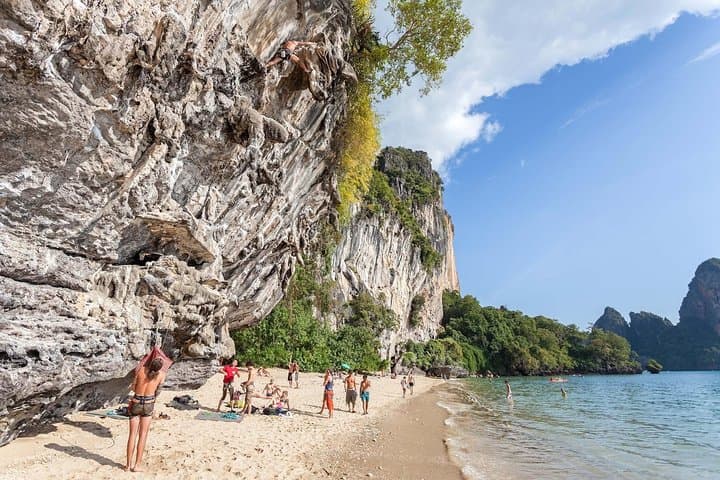
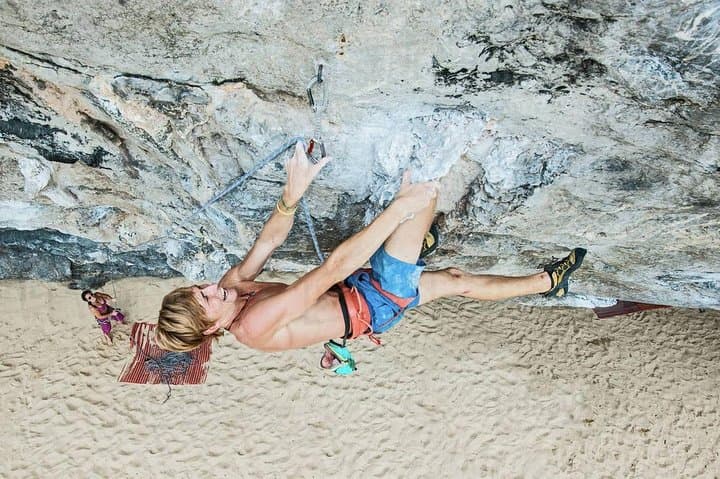
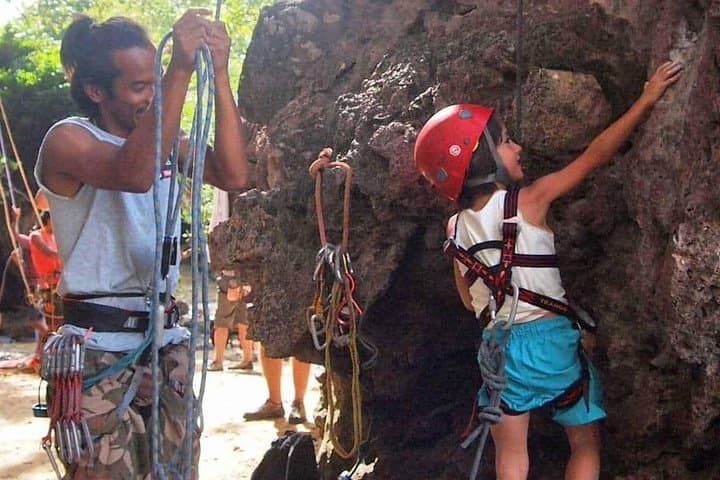
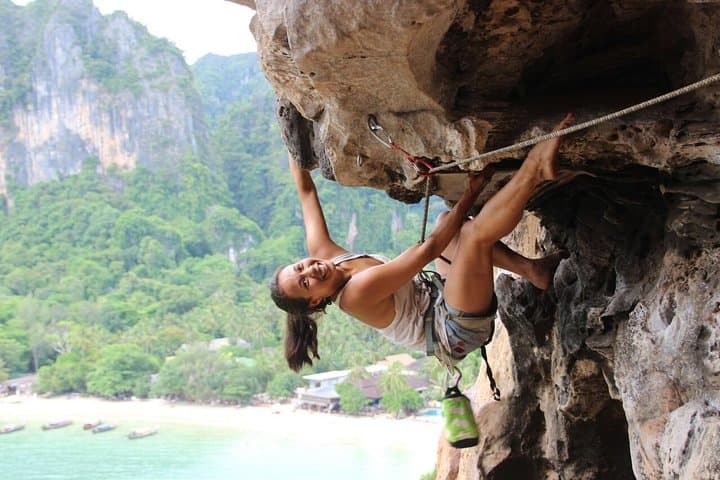
The morning air off the Andaman has a salt-and-limestone tang that sticks to your lips as the boat threads between karst towers. At Railay Beach, the cliffs rise like hands pulled from the sea—sheer faces scarred with pockets and tufas that catch a climber’s fingers and imagination. Guides lay out ropes on white sand, call out knots, and hand over helmets; by the time the tide drops a little, you’re tied into a top-rope with the ocean as company beneath you.
The morning air off the Andaman has a salt-and-limestone tang that sticks to your lips as the boat threads between karst towers. At Railay Beach, the cliffs rise like hands pulled from the sea—sheer faces scarred with pockets and tufas that catch a climber’s fingers and imagination. Guides lay out ropes on white sand, call out knots, and hand over helmets; by the time the tide drops a little, you’re tied into a top-rope with the ocean as company beneath you.
Railay’s cliffs are the product of millions of years of coral and marine deposits turned to limestone, then lifted and eroded into dramatic karst formations. Once reachable only by longtail boat, the peninsula developed as a small fishing settlement before tourism transformed it into one of Southeast Asia’s climbing hubs. The area’s geology creates a full range of routes—slabby faces, overhangs, and crack lines—so even a first-timer gets a taste of varied movement.
Local culture here moves at sea rhythm: morning markets in Ao Nang, fishermen mending nets, and piers busy with boats ferrying climbers and day-trippers. Guides are often local climbers or bilingual instructors trained in top-rope safety; certification and group size limits keep climbs manageable and secure. Conservation conversations have followed tourism—stick to marked trails, avoid trampling coastal vegetation, and use reef-safe sunscreen to protect nearshore coral.
Practically, the half-day course runs about four hours and is designed for beginners. Expect instruction in belaying, knotwork, basic climbing technique, and a supervised ascent on secure top-rope systems. For full-day participants there’s a picnic lunch, an intro to caving in nearby caverns, and the option to rappel about 33 feet (10 m) from the Railay viewpoint roughly 150 m above sea level. Fitness requirements are moderate: you’ll climb, scramble, and sometimes haul yourself through short cave passages.
Plan on lightweight, quick-dry clothing, sturdy approach shoes or water shoes, and sun protection. Mornings are cooler and give better light for photos; afternoons can be humid and bring brief tropical showers. Guides provide all technical gear—harness, helmet, ropes—and basic accident insurance is included. If you’re carrying valuables ashore, use a dry bag; the route to some crags crosses sand and tide.
Railay delivers a compact adventure: the thrill of ascending limestone cliffs, the hush of cave interiors, and a final view where ocean and rock claim equal attention. For first-time climbers who want a safe, adrenaline-tinged introduction to karst climbing, it’s hard to beat.