THE ADVENTURE COLLECTIVE® · Independent discovery and booking for outdoor travel

Scale the famous limestone cliffs of Railay Beach with expert guides who supply gear, instruction, and routes for beginners through advanced climbers. Expect exposed ledges, coastal panoramas, and the raw geology of southern Thailand.
Scale the famous limestone cliffs of Railay Beach with expert guides who supply gear, instruction, and routes for beginners through advanced climbers. Expect exposed ledges, coastal panoramas, and the raw geology of southern Thailand.
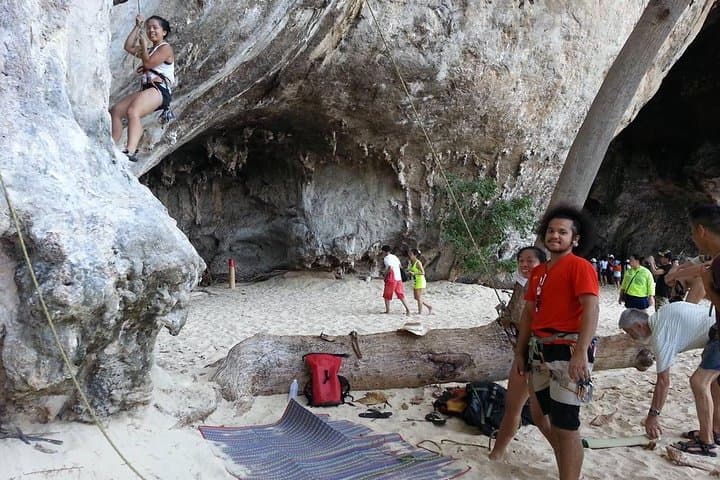
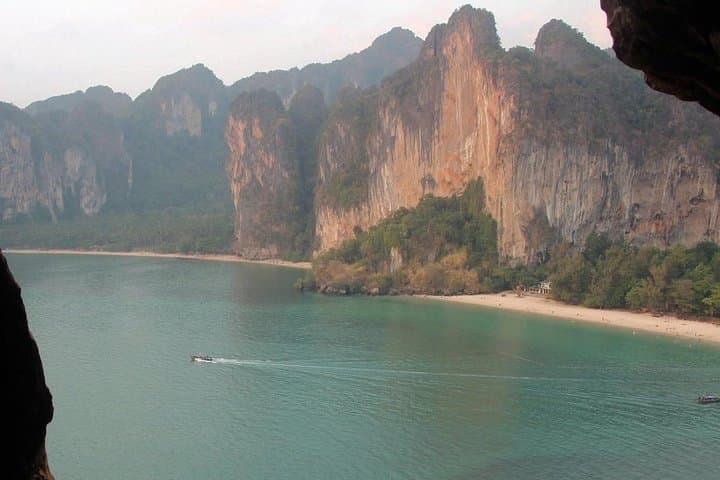
The longtail cuts a wake through turquoise water and Railay’s limestone walls rise up like an amphitheater—pale, rippled, and suddenly vertical. You step ashore and the air shifts: salt and chalk, heat and shadow. Guides check harnesses beneath the shade of casuarina trees while the sea keeps time, daring the climber to move upward where the world opens into exposed ledges and wide coastal views.
Verified experiences and guided adventures in the surrounding area.
Operated by I Asia Thailand · Railay Beach, Krabi Province
The longtail cuts a wake through turquoise water and Railay’s limestone walls rise up like an amphitheater—pale, rippled, and suddenly vertical. You step ashore and the air shifts: salt and chalk, heat and shadow. Guides check harnesses beneath the shade of casuarina trees while the sea keeps time, daring the climber to move upward where the world opens into exposed ledges and wide coastal views.
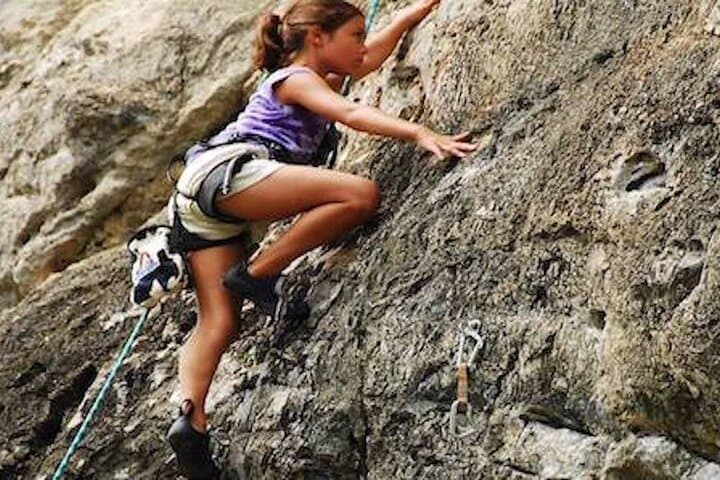
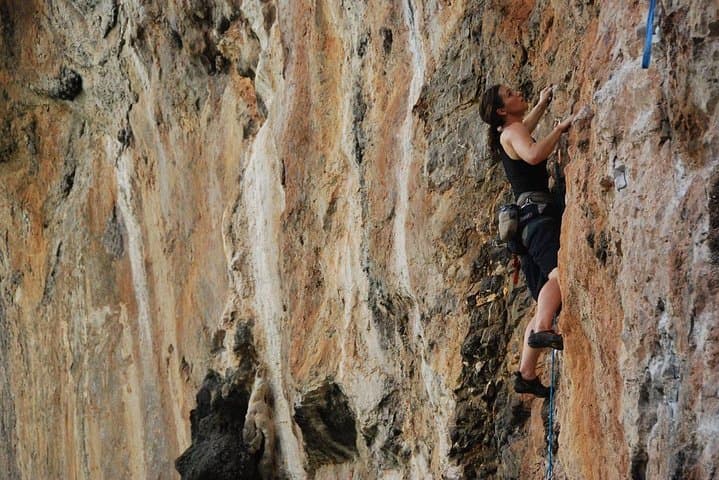
These cliffs are ancient coral and reef limestone, sculpted by millions of years of chemical weathering into the karst spires that make Railay one of the world’s premier single-pitch crags. The faces here are a climber’s grammar of pockets, tufas, and overhangs; routes range from beginner-friendly slabs to steep, technical lines that test finger strength and head game. The area’s climbing history stretches back to local fishermen and intrepid foreign climbers in the 1980s, growing into a community of Thai guides and international instructors who now run daily half- and full-day programs.
Culturally, Railay still feels small—a cluster of guesthouses, low-key bars, and Buddhist shrines tucked beneath the cliffs. Local boat operators and guides are part of that village economy, so conservation and good etiquette matter: avoid leaving chalk in water sources, pack out trash, and be aware that some routes pass above sacred or nesting sites.
If you book a half-day, expect focused instruction and two or three easy climbs; a full day adds scrambling into jungle approaches and longer routes on Railay West and Tonsai. Guides use Black Diamond harnesses, helmets, and Mad Rock shoes for rentals, and they provide all technical gear and on-route belaying instruction. Water is supplied but bring your own bottle; the sun will be relentless on south-facing faces.
Practical notes: arrive with sunscreen, sticky climbing shoes or rent a pair, and a light long-sleeve for sun and rope burn. Pickups run from Ao Nang and Krabi Town in the morning; Railay is walkable once there. The operator issues a return boat ticket after climbing, but hotel drop-off is not guaranteed—most accommodations are close to the boat pier.
Timing matters: mornings are cooler and less crowded; afternoons can be windy or wet during the monsoon (May–October). Fitness wise, a moderate level of conditioning will let you enjoy multiple routes; bring a healthy respect for exposure. Ultimately, Railay doesn’t just test your muscles—it changes how you read rock and sea. The reward is simple: standing on a ledge with palms salty and chalky, the Andaman stretching away like an invitation to come back.
moderate.
4–8 hours.
Moderate cardiovascular fitness and upper-body strength recommended; able to manage exposed single-pitch climbs and short jungle approaches for full-day options.
No—half-day sessions are designed for beginners with on-route instruction; full-day options allow progression under guide supervision.
Yes—harnesses, helmets, ropes, quickdraws, and belay devices are provided and regularly safety-checked; shoe rentals are available.
Most visitors take a longtail boat from Ao Nang or Krabi Pier; hotel pickup from Ao Nang and Krabi Town is offered for morning departures.
Guides are certified and supervise all climbs; the activity isn’t recommended for travelers with spinal, heart, or pregnancy concerns.
Yes—Railay has beaches, caves, and short hikes for non-climbers, but confirm space and logistics with the operator in advance.
Climbing may be canceled for safety in heavy rain or high winds; the cancellation policy allows full refunds if you cancel 24 hours prior.
Railay’s cliffs formed from uplifted coral reef and karst weathering; the area gained international climbing fame in the 1980s when visiting climbers bolted routes and established guiding services.
Climbing here relies on local ecosystems and tourism income—use less chalk, pack out waste, and support local operators who respect nesting and sacred sites.
I Asia Thailand operates guided outdoor trips and adventures with an emphasis on safety, stewardship, and memorable experiences.
The longtail cuts a wake through turquoise water and Railay’s limestone walls rise up like an amphitheater—pale, rippled, and suddenly vertical. You step ashore and the air shifts: salt and chalk, heat and shadow. Guides check harnesses beneath the shade of casuarina trees while the sea keeps time, daring the climber to move upward where the world opens into exposed ledges and wide coastal views.
The longtail cuts a wake through turquoise water and Railay’s limestone walls rise up like an amphitheater—pale, rippled, and suddenly vertical. You step ashore and the air shifts: salt and chalk, heat and shadow. Guides check harnesses beneath the shade of casuarina trees while the sea keeps time, daring the climber to move upward where the world opens into exposed ledges and wide coastal views.
These cliffs are ancient coral and reef limestone, sculpted by millions of years of chemical weathering into the karst spires that make Railay one of the world’s premier single-pitch crags. The faces here are a climber’s grammar of pockets, tufas, and overhangs; routes range from beginner-friendly slabs to steep, technical lines that test finger strength and head game. The area’s climbing history stretches back to local fishermen and intrepid foreign climbers in the 1980s, growing into a community of Thai guides and international instructors who now run daily half- and full-day programs.
Culturally, Railay still feels small—a cluster of guesthouses, low-key bars, and Buddhist shrines tucked beneath the cliffs. Local boat operators and guides are part of that village economy, so conservation and good etiquette matter: avoid leaving chalk in water sources, pack out trash, and be aware that some routes pass above sacred or nesting sites.
If you book a half-day, expect focused instruction and two or three easy climbs; a full day adds scrambling into jungle approaches and longer routes on Railay West and Tonsai. Guides use Black Diamond harnesses, helmets, and Mad Rock shoes for rentals, and they provide all technical gear and on-route belaying instruction. Water is supplied but bring your own bottle; the sun will be relentless on south-facing faces.
Practical notes: arrive with sunscreen, sticky climbing shoes or rent a pair, and a light long-sleeve for sun and rope burn. Pickups run from Ao Nang and Krabi Town in the morning; Railay is walkable once there. The operator issues a return boat ticket after climbing, but hotel drop-off is not guaranteed—most accommodations are close to the boat pier.
Timing matters: mornings are cooler and less crowded; afternoons can be windy or wet during the monsoon (May–October). Fitness wise, a moderate level of conditioning will let you enjoy multiple routes; bring a healthy respect for exposure. Ultimately, Railay doesn’t just test your muscles—it changes how you read rock and sea. The reward is simple: standing on a ledge with palms salty and chalky, the Andaman stretching away like an invitation to come back.