THE ADVENTURE COLLECTIVE® · Independent discovery and booking for outdoor travel

Scale Railay Beach’s famed limestone walls with experienced guides in a small-group setting. Whether you’re trying sport climbing for the first time or sharpening technique, this Krabi climb delivers dramatic routes, safety-first instruction, and Andaman Sea panoramas.
Scale Railay Beach’s famed limestone walls with experienced guides in a small-group setting. Whether you’re trying sport climbing for the first time or sharpening technique, this Krabi climb delivers dramatic routes, safety-first instruction, and Andaman Sea panoramas.
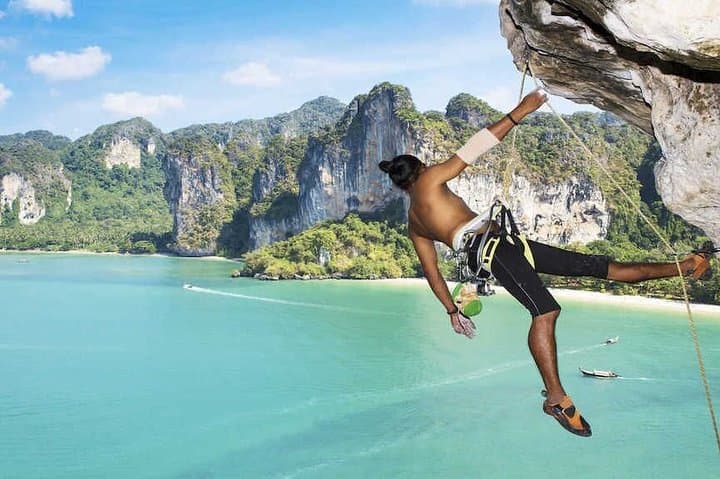
You step off the longtail boat with sand between your toes and a wall of limestone already sizing you up. Railay’s cliffs rise in abrupt vertical plates from the shoreline; the rock smells faintly of salt and warm earth. Guides lay out ropes and gear on the beach while the Andaman Sea hisses at your feet. Within minutes the group — a mix of first-timers and seasoned climbers — is being taught knot work and belay technique under the shade of a casuarina tree. Then the rock calls.
Verified experiences and guided adventures in the surrounding area.
Operated by I Asia Thailand · Krabi, Krabi Province
You step off the longtail boat with sand between your toes and a wall of limestone already sizing you up. Railay’s cliffs rise in abrupt vertical plates from the shoreline; the rock smells faintly of salt and warm earth. Guides lay out ropes and gear on the beach while the Andaman Sea hisses at your feet. Within minutes the group — a mix of first-timers and seasoned climbers — is being taught knot work and belay technique under the shade of a casuarina tree. Then the rock calls.
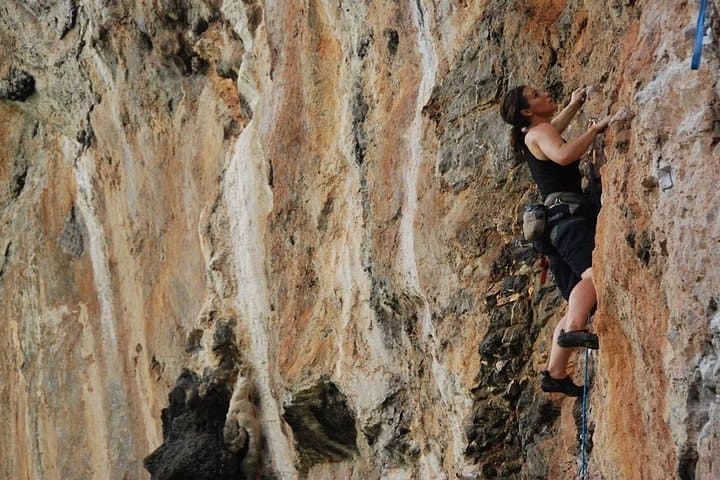
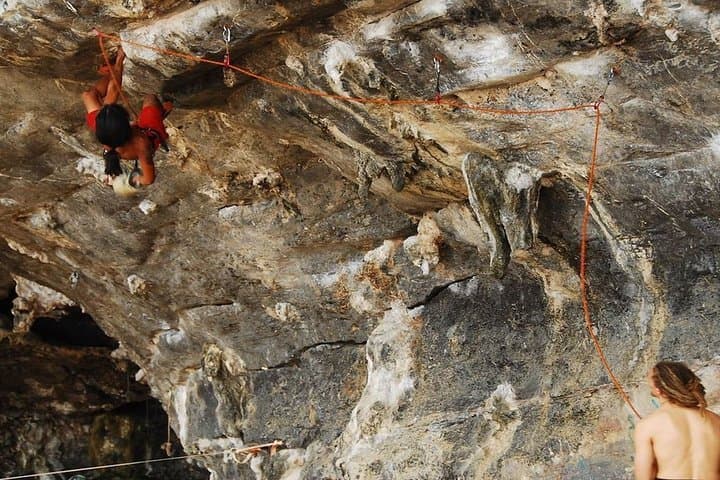
These cliffs are part of southern Thailand’s karst landscape, a landscape carved over millions of years by an undersea limestone platform pushed above the waves. The result is steep, pocketed faces and overhangs—many routes here are sport climbs between roughly 20–40 meters, with more adventurous lines reaching higher. Railay’s climbing scene took shape in the 1980s as foreign climbers and local operators developed bolt-protected routes; today it’s a global magnet where local fishing communities, resort entrepreneurs, and climbers intersect.
Culture is felt in small ways: fishermen mending nets nearby, vendors selling cold coconuts, and the easygoing cadence of southern Thai conversation. Guides are frequently bilingual and trained in emergency first aid; the small-group format here keeps instruction focused while still giving you the social lift of climbing with others. Lunch is included on full-day options, and all technical equipment is provided — harness, helmet, ropes and quickdraws — so you can concentrate on movement and route-reading.
Practicalities matter on a day like this. Climbs are exposed to sun and spray: sunscreen, a refillable water bottle and shoes that grip rock make a tangible difference. Expect a physically demanding few hours: climbing repeatedly, managing your core and grip strength, and moving through humid air. If you choose a half-day, you’ll typically climb for three to four hours; full-day sessions stretch toward six hours and include more route variety and a longer return boat ticket.
For planners: pickups are offered from Ao Nang and Krabi Town in the morning; return is by longtail boat with drop-off near the main Ao Nang pier (hotel drop-offs are not always guaranteed). The best season runs November–April when rains are less frequent and holds are drier; monsoon months reduce available routes and increase closure risk.
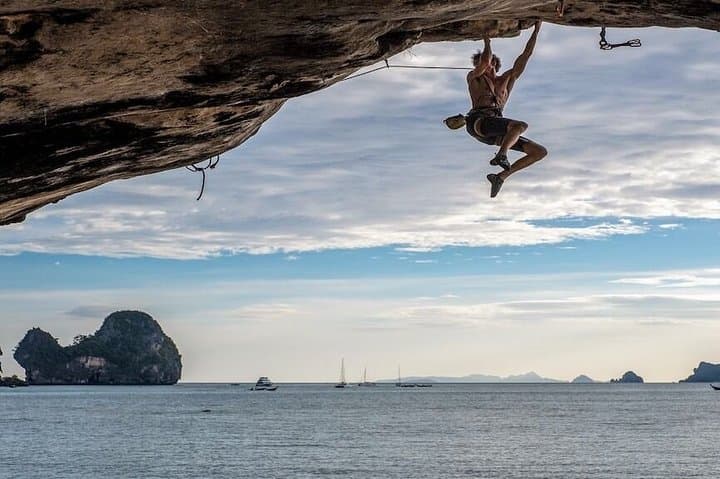
This experience balances thrill and safety: it’s an entry point for newcomers to sport climbing and a technical playground for more experienced climbers seeking short, steep routes with sea views. Come prepared, respect the rock and the local community, and Railay will hand you a vertical playground that dares you to climb higher.
moderate.
3–6 hours.
Should be in good cardiovascular shape with reasonable upper-body and core strength; repeated climbs and humid conditions demand stamina.
No — the small-group experience is designed for beginners and intermediates; guides teach basic knots, belaying and movement skills.
The full-day includes extended climbing time on more routes, a provided lunch, and the same technical equipment and instruction as the half-day.
Most sport routes range from about 20–40 meters, with shorter top-rope options for learners and longer, steeper lines for stronger climbers.
Yes — all necessary rock climbing equipment is supplied and inspected by the operators for safety.
Tours are canceled in heavy rain or unsafe conditions; you can get a full refund if you cancel at least 24 hours before departure or if the operator cancels due to weather.
You’ll receive a boat ticket for the return longtail boat; operators typically don’t provide hotel drop-offs, but the boat landings are close to Ao Nang hotels and piers.
The karst towers formed from reefs and marine sediments uplifted over millions of years; Railay’s climbing culture grew in the 1980s when foreign climbers established bolted routes.
Operators encourage reef-safe sunscreen, minimal plastic use, and sticking to fixed routes to reduce erosion and protect native vegetation.
I Asia Thailand operates guided outdoor trips and adventures with an emphasis on safety, stewardship, and memorable experiences.
You step off the longtail boat with sand between your toes and a wall of limestone already sizing you up. Railay’s cliffs rise in abrupt vertical plates from the shoreline; the rock smells faintly of salt and warm earth. Guides lay out ropes and gear on the beach while the Andaman Sea hisses at your feet. Within minutes the group — a mix of first-timers and seasoned climbers — is being taught knot work and belay technique under the shade of a casuarina tree. Then the rock calls.
You step off the longtail boat with sand between your toes and a wall of limestone already sizing you up. Railay’s cliffs rise in abrupt vertical plates from the shoreline; the rock smells faintly of salt and warm earth. Guides lay out ropes and gear on the beach while the Andaman Sea hisses at your feet. Within minutes the group — a mix of first-timers and seasoned climbers — is being taught knot work and belay technique under the shade of a casuarina tree. Then the rock calls.
These cliffs are part of southern Thailand’s karst landscape, a landscape carved over millions of years by an undersea limestone platform pushed above the waves. The result is steep, pocketed faces and overhangs—many routes here are sport climbs between roughly 20–40 meters, with more adventurous lines reaching higher. Railay’s climbing scene took shape in the 1980s as foreign climbers and local operators developed bolt-protected routes; today it’s a global magnet where local fishing communities, resort entrepreneurs, and climbers intersect.
Culture is felt in small ways: fishermen mending nets nearby, vendors selling cold coconuts, and the easygoing cadence of southern Thai conversation. Guides are frequently bilingual and trained in emergency first aid; the small-group format here keeps instruction focused while still giving you the social lift of climbing with others. Lunch is included on full-day options, and all technical equipment is provided — harness, helmet, ropes and quickdraws — so you can concentrate on movement and route-reading.
Practicalities matter on a day like this. Climbs are exposed to sun and spray: sunscreen, a refillable water bottle and shoes that grip rock make a tangible difference. Expect a physically demanding few hours: climbing repeatedly, managing your core and grip strength, and moving through humid air. If you choose a half-day, you’ll typically climb for three to four hours; full-day sessions stretch toward six hours and include more route variety and a longer return boat ticket.
For planners: pickups are offered from Ao Nang and Krabi Town in the morning; return is by longtail boat with drop-off near the main Ao Nang pier (hotel drop-offs are not always guaranteed). The best season runs November–April when rains are less frequent and holds are drier; monsoon months reduce available routes and increase closure risk.
This experience balances thrill and safety: it’s an entry point for newcomers to sport climbing and a technical playground for more experienced climbers seeking short, steep routes with sea views. Come prepared, respect the rock and the local community, and Railay will hand you a vertical playground that dares you to climb higher.