THE ADVENTURE COLLECTIVE® · Independent discovery and booking for outdoor travel

Take a three-hour rafting run on the glacial Rio de las Vueltas beneath Cerro Fitz Roy. The trip mixes calm, scenic paddling with 10 km of class III–III+ rapids—ideal for fit adventurers who want Patagonia from river level.
Take a three-hour rafting run on the glacial Rio de las Vueltas beneath Cerro Fitz Roy. The trip mixes calm, scenic paddling with 10 km of class III–III+ rapids—ideal for fit adventurers who want Patagonia from river level.
The raft slips forward and the first still kilometers open like a wide, cool mirror—Cerro Fitz Roy looms, its granite spine daring you to look up. Early strokes are calm; the river carries the smell of cold pine and glacial melt. Guides use this quiet to teach commands, and you learn the rhythm of the paddle before the canyon narrows and the water turns insistent.
Verified experiences and guided adventures in the surrounding area.
Operated by Comarka Rafting · El Chaltén, Santa Cruz
The raft slips forward and the first still kilometers open like a wide, cool mirror—Cerro Fitz Roy looms, its granite spine daring you to look up. Early strokes are calm; the river carries the smell of cold pine and glacial melt. Guides use this quiet to teach commands, and you learn the rhythm of the paddle before the canyon narrows and the water turns insistent.
Geology here is recent on a deep timescale: rivers cut by retreating glaciers, moraine-choked valleys and the knife-edge summits that define Los Glaciares National Park. El Chaltén is a young mountain village born out of border disputes and mountaineering, and the Rio de las Vueltas traces that history—born at Lago del Desierto, fed by ice, and shaped by seasonal flood pulses.
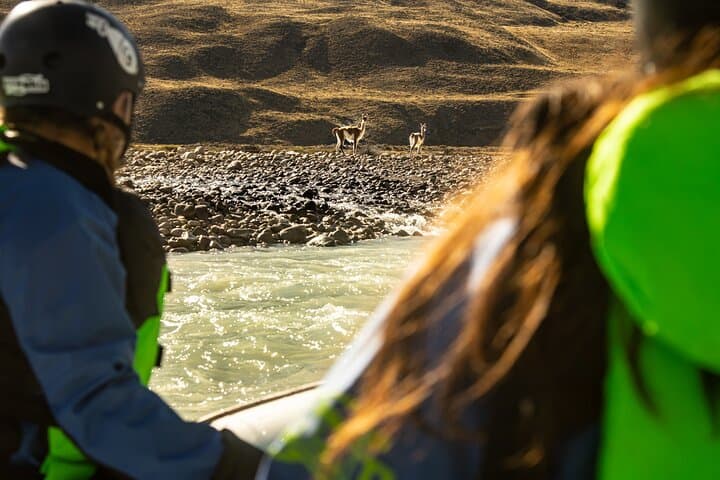
Culture in this corner of Patagonia is practical and outdoor-focused; local guides combine gaucho calm with technical river skills. Wildlife watches from high ledges—guanacos on the steppe, condors circling thermal lifts—while native lenga and ñire forests line quieter bends.
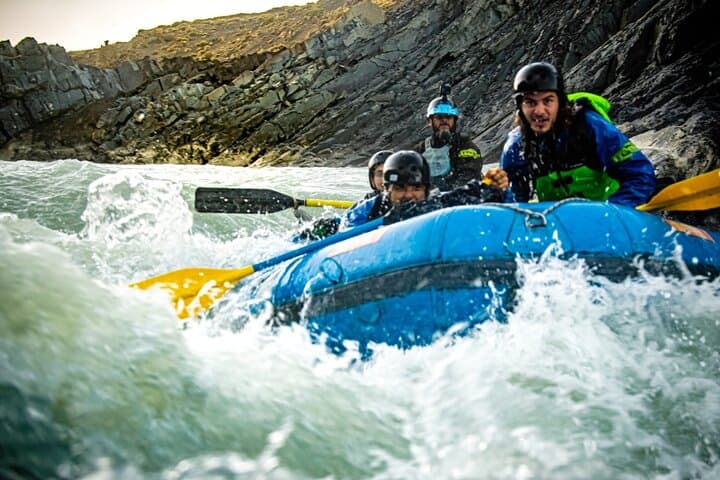
Expect a two-stage run: a 6 km warm-up of placid, scenic water where you practice strokes and safety, then about 10 km of class III to III+ rapids through canyoned sections. The total outing is roughly three hours including transfers, a safety briefing, and a post-run snack. Come prepared for cold spray, sudden wind, and a workout: strong paddling, quick reflexes and baseline fitness make the descent safer and more fun.
Practical tip: arrive hydrated, layered, and ready to move—this stretch of Patagonia rewards attentiveness as much as adrenaline.
challenging.
3 hours.
Requires a high level of cardiovascular fitness and upper-body endurance; participants should be comfortable swimming and following commands under stress.
The full experience runs about 3 hours including transfer, safety briefing, ~16 km on the river (6 km calm, ~10 km rapids), and post-run recovery time.
Operators generally exclude children under 16 and adults over 60 and require participants to be free of serious cardiovascular, respiratory, neurological conditions, and severe obesity—disclose medical details when booking.
No—guides teach paddling and safety on the calm stretch, but you must be able to swim and follow instructions; the rapids are class III to III+ and physically demanding.
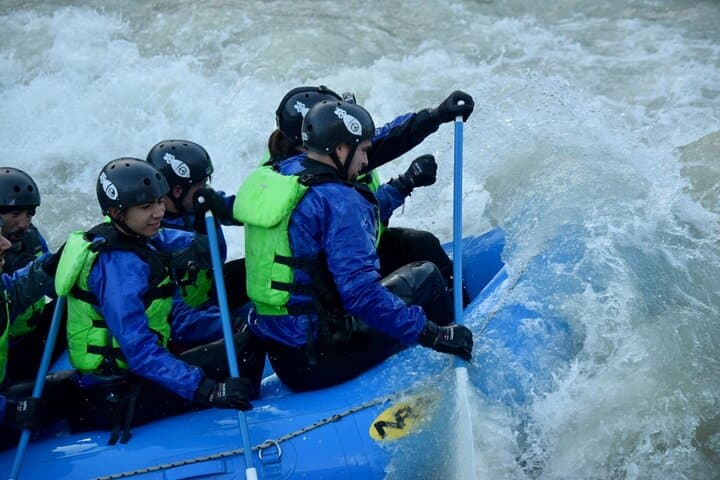
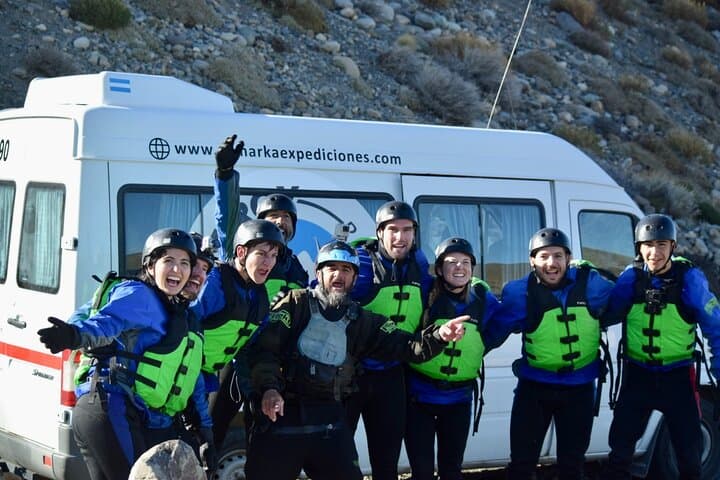
The company supplies technical rafting gear: neoprene suit, thermal shirt, jacket, life jacket, helmet, neoprene boots, mittens, and a paddle, plus snacks and hot drinks after the run.
The Rio de las Vueltas is glacial in origin, draining Lago del Desierto; the surrounding valleys were shaped by repeated ice advances and retreats and later settled as the mountaineering town of El Chaltén.
This section lies within the greater Los Glaciares protected landscape; visitors should follow leave-no-trace principles—avoid trampling vegetation on banks and pack out all waste to limit impacts on fragile alpine-steppe ecosystems.
Comarka Rafting operates guided outdoor trips and adventures with an emphasis on safety, stewardship, and memorable experiences.
The raft slips forward and the first still kilometers open like a wide, cool mirror—Cerro Fitz Roy looms, its granite spine daring you to look up. Early strokes are calm; the river carries the smell of cold pine and glacial melt. Guides use this quiet to teach commands, and you learn the rhythm of the paddle before the canyon narrows and the water turns insistent.
The raft slips forward and the first still kilometers open like a wide, cool mirror—Cerro Fitz Roy looms, its granite spine daring you to look up. Early strokes are calm; the river carries the smell of cold pine and glacial melt. Guides use this quiet to teach commands, and you learn the rhythm of the paddle before the canyon narrows and the water turns insistent.
Geology here is recent on a deep timescale: rivers cut by retreating glaciers, moraine-choked valleys and the knife-edge summits that define Los Glaciares National Park. El Chaltén is a young mountain village born out of border disputes and mountaineering, and the Rio de las Vueltas traces that history—born at Lago del Desierto, fed by ice, and shaped by seasonal flood pulses.
Culture in this corner of Patagonia is practical and outdoor-focused; local guides combine gaucho calm with technical river skills. Wildlife watches from high ledges—guanacos on the steppe, condors circling thermal lifts—while native lenga and ñire forests line quieter bends.
Expect a two-stage run: a 6 km warm-up of placid, scenic water where you practice strokes and safety, then about 10 km of class III to III+ rapids through canyoned sections. The total outing is roughly three hours including transfers, a safety briefing, and a post-run snack. Come prepared for cold spray, sudden wind, and a workout: strong paddling, quick reflexes and baseline fitness make the descent safer and more fun.
Practical tip: arrive hydrated, layered, and ready to move—this stretch of Patagonia rewards attentiveness as much as adrenaline.