THE ADVENTURE COLLECTIVE® · Independent discovery and booking for outdoor travel

Just 20 minutes from Arequipa, a compact 6–7 km run on the Río Chili delivers Class II–IV whitewater suited to families and first-timers alike. One hour on the water, expert local guides, and full river kit make this an efficient, adrenaline-rich half-day outing.
Just 20 minutes from Arequipa, a compact 6–7 km run on the Río Chili delivers Class II–IV whitewater suited to families and first-timers alike. One hour on the water, expert local guides, and full river kit make this an efficient, adrenaline-rich half-day outing.
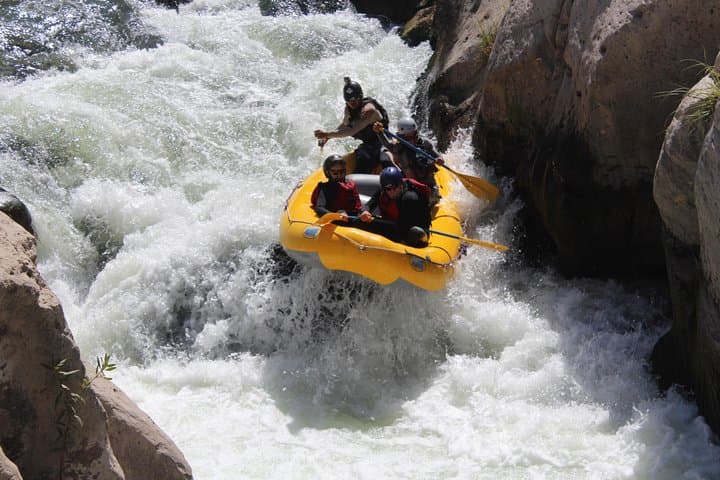
The bus rumbles out of Arequipa before dawn and the city’s white sillar buildings shrink behind you. In under 20 minutes the urban grid gives way to a dry, serrated landscape; the Chili River appears as a bright ribbon cutting through ochre cliffs. When the guides unload the rafts, the river looks small and mischievous—ready to challenge your timing, your paddle strokes and, for a brief hour, your sense of calm.
Verified experiences and guided adventures in the surrounding area.
Operated by Kanuwa Rafting · Arequipa, Arequipa
The bus rumbles out of Arequipa before dawn and the city’s white sillar buildings shrink behind you. In under 20 minutes the urban grid gives way to a dry, serrated landscape; the Chili River appears as a bright ribbon cutting through ochre cliffs. When the guides unload the rafts, the river looks small and mischievous—ready to challenge your timing, your paddle strokes and, for a brief hour, your sense of calm.
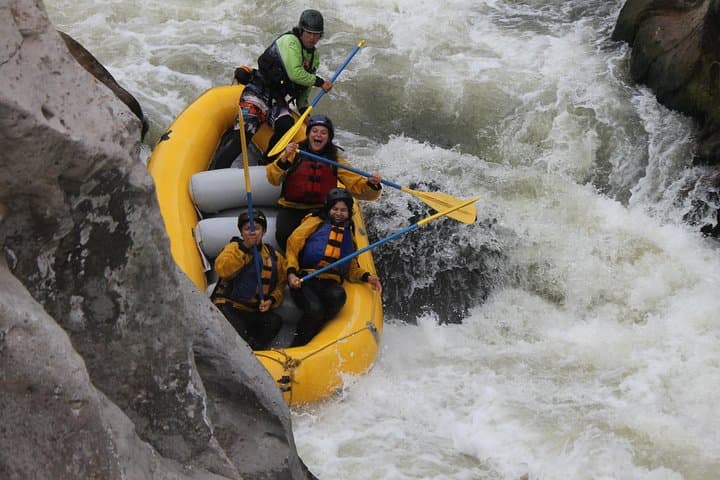
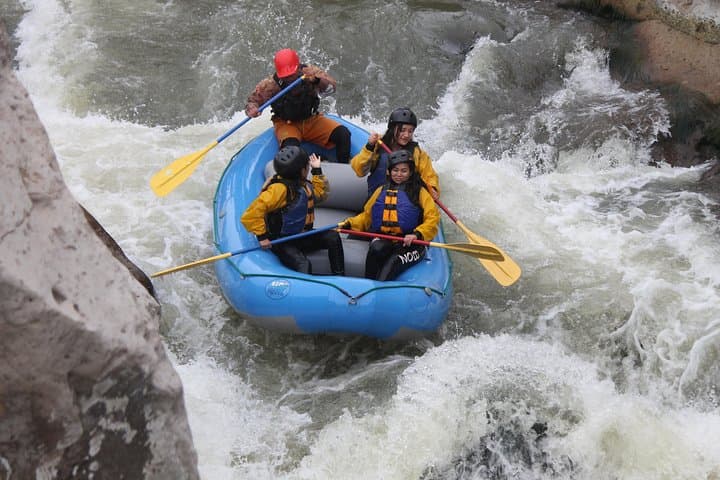
The stretch run here is compact but varied: 6–7 km that packs Class II and III waves with a couple of punchy Class IV sections. Geologically the canyon is young by Andean standards—erosion has chewed away volcanic and sedimentary layers to expose steep banks, creating chutes and holes that rearrange with every rainy season. Culturally, the Chili is the lifeline for Arequipa. Spanish colonists and pre-Hispanic communities alike relied on its limited flows for irrigation; today the river threads modern life to the agricultural terraces and mills downstream.
You’ll notice the landscape’s honesty—sparse scrub, exposed rock and sudden gullies that funnel wind like a testing ground. The guides are local to the valley; they read the river not as a static feature but as an actor that shifts moods. That local knowledge matters: during the rainy season the rapids sharpen, while in the dry months the route exposes rocks and skim-lines that force tighter lines and quicker decisions.
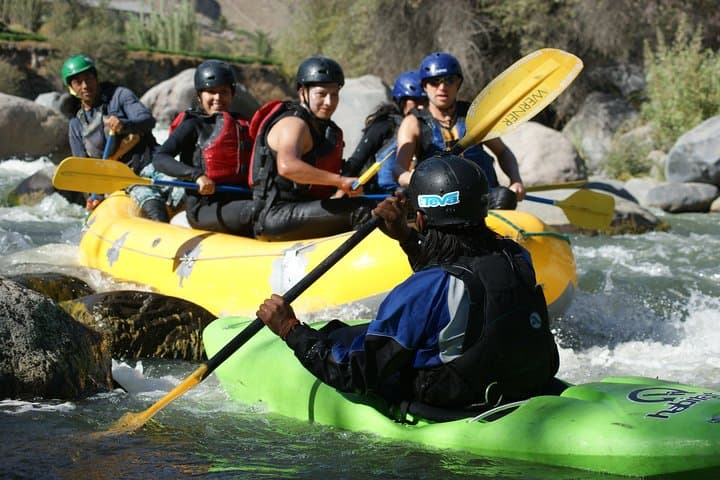
Practicalities are straightforward. The door-to-door timing runs about three hours total, with roughly one hour on the water. Operators supply wetsuits, splash jackets, booties, helmets and life vests—bring a swimsuit underneath and a small daypack for personal items. The route is family-friendly but carries genuine whitewater: expect active paddling, clear safety briefings, and the occasional wet exit. Guides set the pace—novices get coaching, experienced paddlers get steeper lines.
For photographers, low sun in the morning and late afternoon throws the canyon into high contrast—pick a viewpoint above the take-out for sweeping river shots and get a waterproof case for action frames. Hydration and sun protection are small but important details at this altitude; Arequipa sits around 2,300 meters and the sun takes no prisoners.
If you’re planning logistics, arrange hotel pickup (many operators offer this for city-center hotels) and choose earlier runs to avoid midday winds and higher crowds. Respect the river: carry out all trash, follow guide instructions, and consider booking with operators that contribute to local conservation or community initiatives. In an hour the Chili will test your edge; when you step back onto land, the valley will hand you a snack and a grin—proof that a short, well-run river trip can be a whole-day memory.
moderate.
3 hours (approx.).
Suitable for people in average fitness who can paddle and follow instructions; expect bursts of exertion during rapids.
The river run covers about 6–7 km with roughly one hour on the water; total door-to-door time is about three hours.
The route includes Class II and III rapids with a few Class IV sections; guides tailor lines to group skill and safety.
No—this trip is suitable for beginners and children when accompanied by an adult; guides coach paddling and safety techniques.
Operators typically provide hotel pickup (city center hotels), river gear (wetsuit, helmet, life vest, booties, splash jacket), snacks, and professional guides.
Children are allowed but must be accompanied by an adult; the trip is not recommended for travelers with serious cardiovascular conditions.
Yes, but secure them in a waterproof case or dry bag—operators recommend protecting electronics from spray and accidental drops.
The Chili River has long supported Arequipa’s agriculture and settlements; colonial-era irrigation channels and mills along its banks reflect centuries of human reliance on scarce water.
The valley is semi-arid—pack-in/pack-out is essential. Choose operators who minimize group sizes and engage in local watershed conservation efforts.
Kanuwa Rafting operates guided outdoor trips and adventures with an emphasis on safety, stewardship, and memorable experiences.
The bus rumbles out of Arequipa before dawn and the city’s white sillar buildings shrink behind you. In under 20 minutes the urban grid gives way to a dry, serrated landscape; the Chili River appears as a bright ribbon cutting through ochre cliffs. When the guides unload the rafts, the river looks small and mischievous—ready to challenge your timing, your paddle strokes and, for a brief hour, your sense of calm.
The bus rumbles out of Arequipa before dawn and the city’s white sillar buildings shrink behind you. In under 20 minutes the urban grid gives way to a dry, serrated landscape; the Chili River appears as a bright ribbon cutting through ochre cliffs. When the guides unload the rafts, the river looks small and mischievous—ready to challenge your timing, your paddle strokes and, for a brief hour, your sense of calm.
The stretch run here is compact but varied: 6–7 km that packs Class II and III waves with a couple of punchy Class IV sections. Geologically the canyon is young by Andean standards—erosion has chewed away volcanic and sedimentary layers to expose steep banks, creating chutes and holes that rearrange with every rainy season. Culturally, the Chili is the lifeline for Arequipa. Spanish colonists and pre-Hispanic communities alike relied on its limited flows for irrigation; today the river threads modern life to the agricultural terraces and mills downstream.
You’ll notice the landscape’s honesty—sparse scrub, exposed rock and sudden gullies that funnel wind like a testing ground. The guides are local to the valley; they read the river not as a static feature but as an actor that shifts moods. That local knowledge matters: during the rainy season the rapids sharpen, while in the dry months the route exposes rocks and skim-lines that force tighter lines and quicker decisions.
Practicalities are straightforward. The door-to-door timing runs about three hours total, with roughly one hour on the water. Operators supply wetsuits, splash jackets, booties, helmets and life vests—bring a swimsuit underneath and a small daypack for personal items. The route is family-friendly but carries genuine whitewater: expect active paddling, clear safety briefings, and the occasional wet exit. Guides set the pace—novices get coaching, experienced paddlers get steeper lines.
For photographers, low sun in the morning and late afternoon throws the canyon into high contrast—pick a viewpoint above the take-out for sweeping river shots and get a waterproof case for action frames. Hydration and sun protection are small but important details at this altitude; Arequipa sits around 2,300 meters and the sun takes no prisoners.
If you’re planning logistics, arrange hotel pickup (many operators offer this for city-center hotels) and choose earlier runs to avoid midday winds and higher crowds. Respect the river: carry out all trash, follow guide instructions, and consider booking with operators that contribute to local conservation or community initiatives. In an hour the Chili will test your edge; when you step back onto land, the valley will hand you a snack and a grin—proof that a short, well-run river trip can be a whole-day memory.