THE ADVENTURE COLLECTIVE® · Independent discovery and booking for outdoor travel

Walk the River Arts District with local guides who stitch together flood history, reclaimed industrial space, artists’ stories and live glass-blowing. This compact 1.5-mile tour offers intimate studio access, tastings, and firsthand accounts of the RAD’s recovery.
Walk the River Arts District with local guides who stitch together flood history, reclaimed industrial space, artists’ stories and live glass-blowing. This compact 1.5-mile tour offers intimate studio access, tastings, and firsthand accounts of the RAD’s recovery.
The morning air off the French Broad has a way of making the city feel like a working studio: cool, slightly damp, and full of the faint tang of kiln heat. You meet outside a low, corrugated studio where paint-splattered hands and coffee mugs sit side by side; the guide is waiting by a mural, and the horseshoe of the River Arts District unfurls along the river like a chapter of the city’s history written in brick and steel.
Verified experiences and guided adventures in the surrounding area.
Operated by Asheville Free Walking Tours · Asheville, North Carolina
The morning air off the French Broad has a way of making the city feel like a working studio: cool, slightly damp, and full of the faint tang of kiln heat. You meet outside a low, corrugated studio where paint-splattered hands and coffee mugs sit side by side; the guide is waiting by a mural, and the horseshoe of the River Arts District unfurls along the river like a chapter of the city’s history written in brick and steel.
This 1.5-mile guided walk threads through converted warehouses that once served mills, tanneries and freight lines, now repurposed as glass-blowing shops, frame studios and music rooms. The tour locates the RAD’s pattern of resilience: a 1916 flood that rearranged the riverbank, and more recently the catastrophic 2024 flood that reshaped both streets and community priorities. Artists here didn’t simply recover; they reimagined their spaces, reinforcing levees, raising studios, and embedding flood stories in their work.
Geologically, the French Broad is one of the oldest rivers on the continent, its slow bends carving sedimentary terraces that made the RAD attractive to industry—and later to artists seeking large, inexpensive buildings with high ceilings. Culturally, this walk is about people: you’ll hear first-person accounts about lost inventories, insurance fights, and collective rebuilding, and meet makers who translate survival into new techniques and community projects.
Along the route you’ll enjoy a tasting from a local food maker and watch a live glass-blowing demo—heat and motion that turn sand and color into delicate forms. Stops include a historic music venue whose murals chronicle touring bands and regional folklore, and intimate studio visits where artists explain their processes and how the river informs their palette.
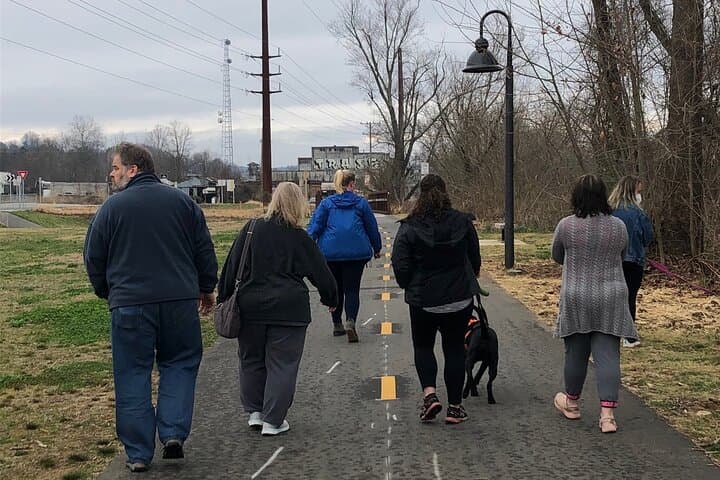
Practical guidance: the tour is roughly 1.5 miles on mostly flat, paved and compacted surfaces—comfortable shoes are fine. Expect 2–2.5 hours with several short stops and one seated tasting; the RAD is a horseshoe, not a loop, so plan to park near the midway visitor lot or end point to avoid a long return walk. Bring a refillable water bottle, a light layer for river breezes, and snap photos during the golden hour when metal and glass catch low light.
This is a pay-what-you-wish experience aimed at supporting the artists directly; tipping or purchases are warmly encouraged. Accessibility is good for strollers and most mobility levels, though some studio floors and docks are uneven. Leave space in your schedule for an extra hour—there’s always one more artist who wants to show you a piece of work or a rebuilt kiln.
easy.
2–2.5 hours.
Suitable for most fitness levels; minimal elevation and frequent stops make it easy for casual walkers.
The route covers about 1.5 miles on mostly flat, paved surfaces with frequent stops; expect 2–2.5 hours total.
Yes—infants and small children can use strollers, though some studios have small steps or uneven floors.
Yes—entrance to venues, selected tastings and live demonstrations are included in the tour experience.
Park at the mid-point visitor center (3 River Arts Place) to avoid walking the horseshoe back; local street parking and public transit are also available.
Absolutely—artists often sell work on site; bring payment or buy via card where available to support the community.
The tour is largely accessible but some studios and docks may have uneven surfaces; contact the operator ahead to discuss specific mobility needs.
The RAD grew from early 20th-century mills and warehouses; repeated floods—most recently a major 2024 event—have shaped its built environment and community-led recovery efforts.
Artists and local groups coordinate riverbank stabilization projects and community clean-ups; visitors are encouraged to support sustainable practices like minimizing single-use plastics and buying locally.
Asheville Free Walking Tours operates guided outdoor trips and adventures with an emphasis on safety, stewardship, and memorable experiences.
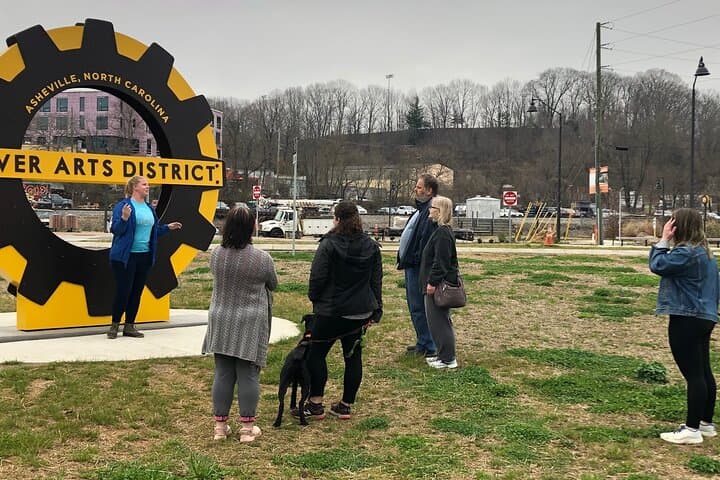
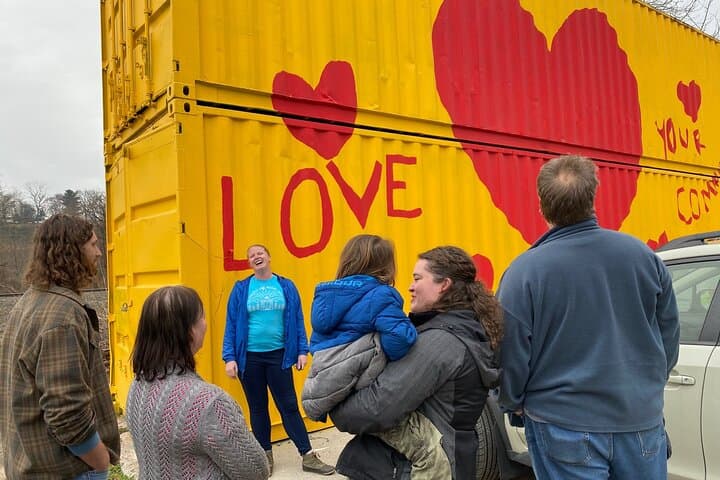
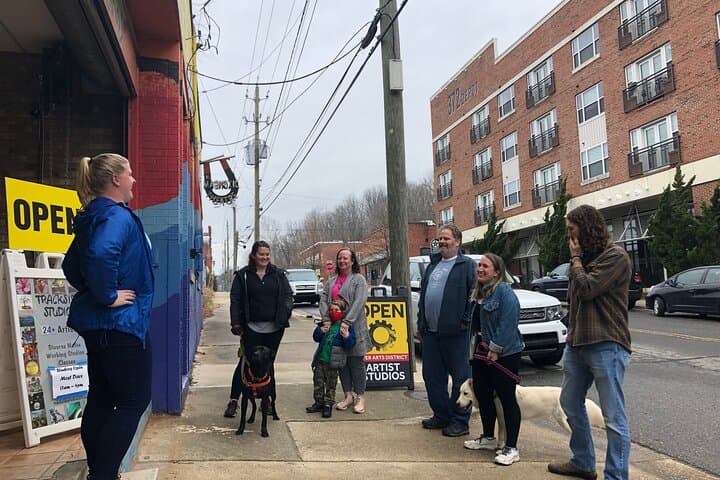
The morning air off the French Broad has a way of making the city feel like a working studio: cool, slightly damp, and full of the faint tang of kiln heat. You meet outside a low, corrugated studio where paint-splattered hands and coffee mugs sit side by side; the guide is waiting by a mural, and the horseshoe of the River Arts District unfurls along the river like a chapter of the city’s history written in brick and steel.
The morning air off the French Broad has a way of making the city feel like a working studio: cool, slightly damp, and full of the faint tang of kiln heat. You meet outside a low, corrugated studio where paint-splattered hands and coffee mugs sit side by side; the guide is waiting by a mural, and the horseshoe of the River Arts District unfurls along the river like a chapter of the city’s history written in brick and steel.
This 1.5-mile guided walk threads through converted warehouses that once served mills, tanneries and freight lines, now repurposed as glass-blowing shops, frame studios and music rooms. The tour locates the RAD’s pattern of resilience: a 1916 flood that rearranged the riverbank, and more recently the catastrophic 2024 flood that reshaped both streets and community priorities. Artists here didn’t simply recover; they reimagined their spaces, reinforcing levees, raising studios, and embedding flood stories in their work.
Geologically, the French Broad is one of the oldest rivers on the continent, its slow bends carving sedimentary terraces that made the RAD attractive to industry—and later to artists seeking large, inexpensive buildings with high ceilings. Culturally, this walk is about people: you’ll hear first-person accounts about lost inventories, insurance fights, and collective rebuilding, and meet makers who translate survival into new techniques and community projects.
Along the route you’ll enjoy a tasting from a local food maker and watch a live glass-blowing demo—heat and motion that turn sand and color into delicate forms. Stops include a historic music venue whose murals chronicle touring bands and regional folklore, and intimate studio visits where artists explain their processes and how the river informs their palette.
Practical guidance: the tour is roughly 1.5 miles on mostly flat, paved and compacted surfaces—comfortable shoes are fine. Expect 2–2.5 hours with several short stops and one seated tasting; the RAD is a horseshoe, not a loop, so plan to park near the midway visitor lot or end point to avoid a long return walk. Bring a refillable water bottle, a light layer for river breezes, and snap photos during the golden hour when metal and glass catch low light.
This is a pay-what-you-wish experience aimed at supporting the artists directly; tipping or purchases are warmly encouraged. Accessibility is good for strollers and most mobility levels, though some studio floors and docks are uneven. Leave space in your schedule for an extra hour—there’s always one more artist who wants to show you a piece of work or a rebuilt kiln.