THE ADVENTURE COLLECTIVE® · Independent discovery and booking for outdoor travel

Make the most of a 10-hour private transfer from Fez to Rabat, where Hassan Tower, the Udayas Kasbah and the Roman remains at Chellah reveal the city’s layered past. This full-day itinerary balances landmark stops with local markets and river views.
Make the most of a 10-hour private transfer from Fez to Rabat, where Hassan Tower, the Udayas Kasbah and the Roman remains at Chellah reveal the city’s layered past. This full-day itinerary balances landmark stops with local markets and river views.
The morning starts before the medina fully wakes: your driver pulls up in an air-conditioned vehicle at 08:00, and Fez falls away as you drive west across the semi-arid plain toward the Atlantic. Rolling fields and occasional olive groves give way to the broad Bouregreg estuary where Rabat’s skyline—Hassan Tower and the white ramparts of the Udayas—cuts a clean line against the sky.
Verified experiences and guided adventures in the surrounding area.
Operated by Fez City Tour · Rabat, Rabat-Salé-Kénitra
The morning starts before the medina fully wakes: your driver pulls up in an air-conditioned vehicle at 08:00, and Fez falls away as you drive west across the semi-arid plain toward the Atlantic. Rolling fields and occasional olive groves give way to the broad Bouregreg estuary where Rabat’s skyline—Hassan Tower and the white ramparts of the Udayas—cuts a clean line against the sky.
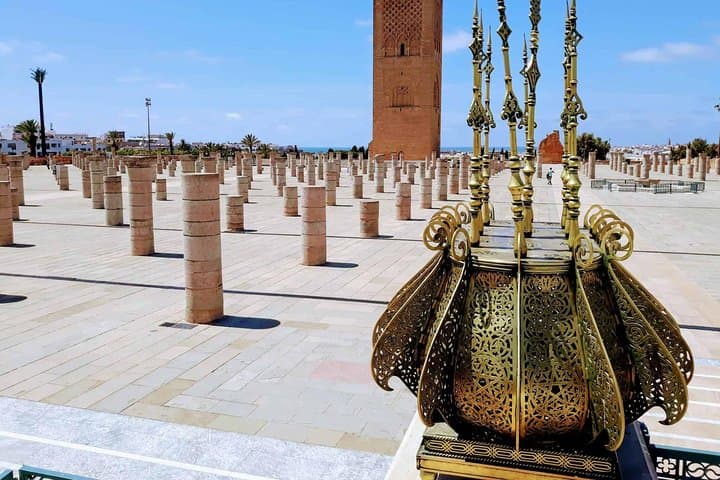
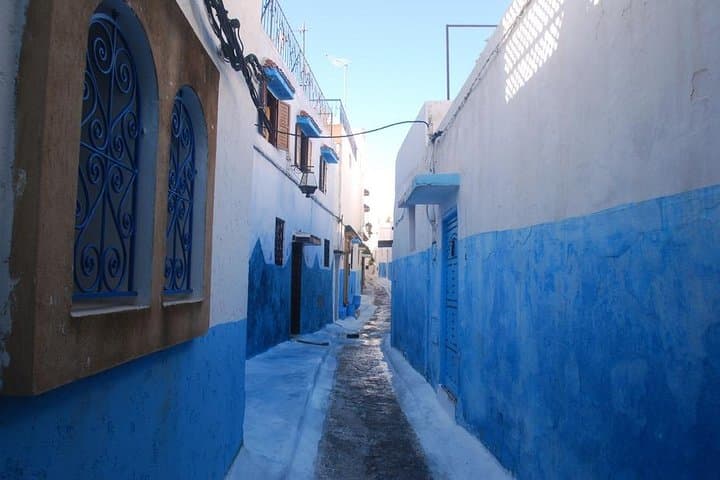
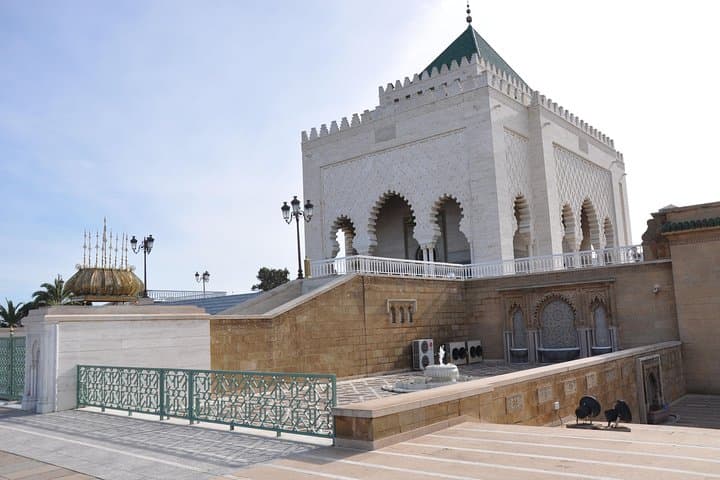
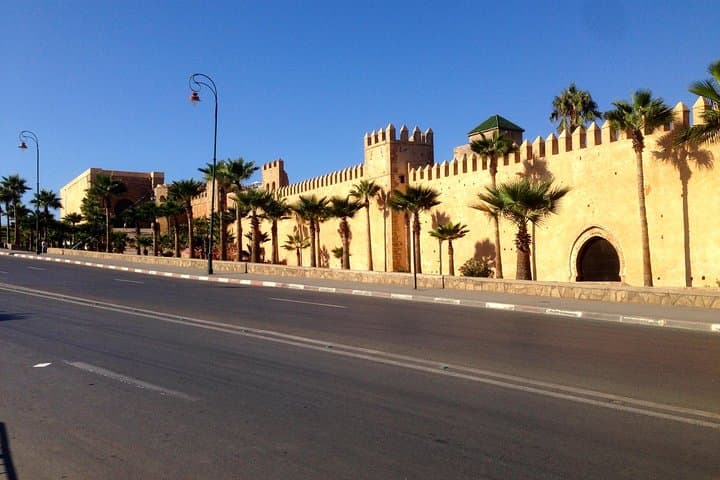
Rabat’s streets record layers of history: a Roman port and necropolis at Chellah, the 12th-century Almohad ambitions evident in Hassan Tower’s unfinished minaret, and later Alaouite and French-era boulevards in the Ville Nouvelle. The Kasbah of the Udayas, with its narrow lanes and Andalusian garden, offers both photo stops and quiet viewpoints over the river. The Mohammed V Mausoleum is an exercise in modern Moroccan craftsmanship—polished marble, zellij tilework and a solemn dome.
Expect lots of short walks on cobbles and uneven ruins, a cruise through the old medina and time at open-air markets like Place Souk-el-Ghezel. Practicalities: the round trip is about 420 km of driving (≈210 km each way) and the full day runs roughly 10 hours. Entrance fees are typically not included—budget small amounts for museums and gardens. Dress modestly for religious sites, carry water and sunscreen, and plan for photography of nesting storks on Hassan Tower.
By late afternoon you’ll pass the Ville Nouvelle’s wide avenues and return to Fez with a compact, culturally layered impression of Morocco’s capital—its river, its ruins, and its rhythm.
easy.
10 hours.
Suitable for most fitness levels; expect several short walking segments and some stairs or uneven footing.
Yes—this private tour includes round-trip pickup and drop-off from your Fez accommodation in an air-conditioned vehicle.
Admission is not listed as included; budget for individual museum or garden tickets and any optional site entries.
The service provides a professional English or French-speaking driver; confirm language requirements when booking.
The tour is listed as physically easy for all fitness levels; infants must sit on laps though infant seats can be requested.
Rabat’s core grew under the Almohad dynasty in the 12th century; later Alaouite rulers and French planners shaped the new town’s boulevards and public buildings.
Many historic sites are fragile—stay on marked paths, avoid touching mosaics or carved stone, and support local guides and small vendors to help sustain cultural preservation.
Fez City Tour operates guided outdoor trips and adventures with an emphasis on safety, stewardship, and memorable experiences.
The morning starts before the medina fully wakes: your driver pulls up in an air-conditioned vehicle at 08:00, and Fez falls away as you drive west across the semi-arid plain toward the Atlantic. Rolling fields and occasional olive groves give way to the broad Bouregreg estuary where Rabat’s skyline—Hassan Tower and the white ramparts of the Udayas—cuts a clean line against the sky.
The morning starts before the medina fully wakes: your driver pulls up in an air-conditioned vehicle at 08:00, and Fez falls away as you drive west across the semi-arid plain toward the Atlantic. Rolling fields and occasional olive groves give way to the broad Bouregreg estuary where Rabat’s skyline—Hassan Tower and the white ramparts of the Udayas—cuts a clean line against the sky.
Rabat’s streets record layers of history: a Roman port and necropolis at Chellah, the 12th-century Almohad ambitions evident in Hassan Tower’s unfinished minaret, and later Alaouite and French-era boulevards in the Ville Nouvelle. The Kasbah of the Udayas, with its narrow lanes and Andalusian garden, offers both photo stops and quiet viewpoints over the river. The Mohammed V Mausoleum is an exercise in modern Moroccan craftsmanship—polished marble, zellij tilework and a solemn dome.
Expect lots of short walks on cobbles and uneven ruins, a cruise through the old medina and time at open-air markets like Place Souk-el-Ghezel. Practicalities: the round trip is about 420 km of driving (≈210 km each way) and the full day runs roughly 10 hours. Entrance fees are typically not included—budget small amounts for museums and gardens. Dress modestly for religious sites, carry water and sunscreen, and plan for photography of nesting storks on Hassan Tower.
By late afternoon you’ll pass the Ville Nouvelle’s wide avenues and return to Fez with a compact, culturally layered impression of Morocco’s capital—its river, its ruins, and its rhythm.