THE ADVENTURE COLLECTIVE® · Independent discovery and booking for outdoor travel

A full-day private tour from Quito that pairs an Indigenous market visit with a hike into Quilotoa’s turquoise caldera. Expect high-altitude trekking, volcanic geology, and the option to ride a mule back to the rim.
A full-day private tour from Quito that pairs an Indigenous market visit with a hike into Quilotoa’s turquoise caldera. Expect high-altitude trekking, volcanic geology, and the option to ride a mule back to the rim.
You arrive on a high, wind-brushed ridge where the crater opens like a bowl of blue-green light — Quilotoa’s lagoon daring you to come closer. The air is thin and cool; vendors from the nearby market fold up colorful blankets while llamas nod at passing trucks. From the rim the drop is immediate: a steep thread of trail zig-zags down through volcanic scree and native shrubs toward a still surface that reflects the sky.
Verified experiences and guided adventures in the surrounding area.
Operated by Andean Roots Travel · Quilotoa, Cotopaxi
You arrive on a high, wind-brushed ridge where the crater opens like a bowl of blue-green light — Quilotoa’s lagoon daring you to come closer. The air is thin and cool; vendors from the nearby market fold up colorful blankets while llamas nod at passing trucks. From the rim the drop is immediate: a steep thread of trail zig-zags down through volcanic scree and native shrubs toward a still surface that reflects the sky.
Geologically Quilotoa is an extinct caldera formed by a massive explosive eruption some 800 years ago; its walls reveal bands of ash and hardened lava. Culturally the valley is part of the Sierra where Quechua-speaking communities maintain weekly markets (Pujilí or Saquisilí) and traditional weaving practices that trace back centuries.
The day's rhythm usually begins with a market visit, then a viewpoint stop over the canyon, followed by a 60–90 minute descent to the crater floor. The hike down is rewarding and the climb back can be strenuous at 3,800–3,900 m elevation — guides often offer mule rentals for the ascent.
Practical essentials: layer for rapid weather shifts, bring sunscreen and a windproof jacket, and allow extra time for the hike at altitude. Cash is useful for entrance/community fees and mule rentals. Expect 9–10 hours including transit from Quito if booked as a private day tour; the route combines cultural encounters, accessible trekking, and dramatic volcanic scenery for a full, highland experience.
moderate.
9–10 hours (including transit).
Moderate fitness recommended; be comfortable with a steep 60–90 minute descent and a strenuous return climb at high elevation.
Basic hiking fitness is enough for the descent, but the ascent is steep and at high altitude — expect strenuous effort if you hike back up.
Yes — mules are commonly available at the crater for the return ascent; prices are paid locally and can vary.
Children can join, but infants should be secured and may need to sit on laps; check with the operator about infant seats and safety.
A valid passport is typically required to be carried for verification by the tour operator on the day of travel.
Quilotoa formed after a major eruption centuries ago and sits within the cultural landscape of indigenous Sierra communities with longstanding weaving and market traditions.
The crater and surrounding land are managed with community entrance fees that support local conservation and maintenance; stay on trails and pack out waste to minimize impact.
Andean Roots Travel operates guided outdoor trips and adventures with an emphasis on safety, stewardship, and memorable experiences.
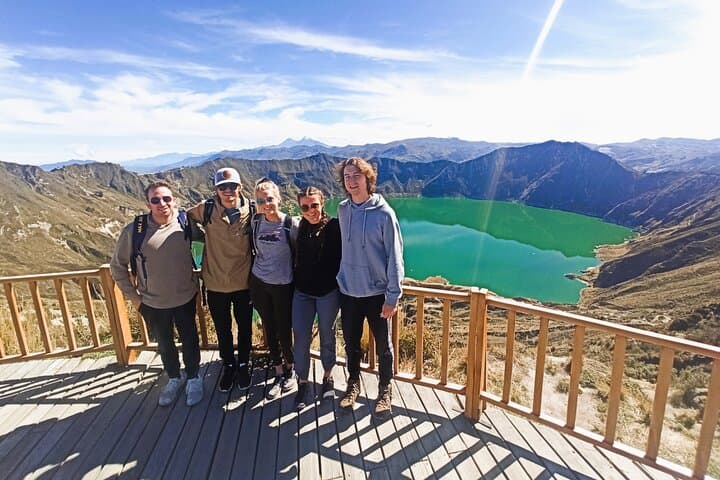
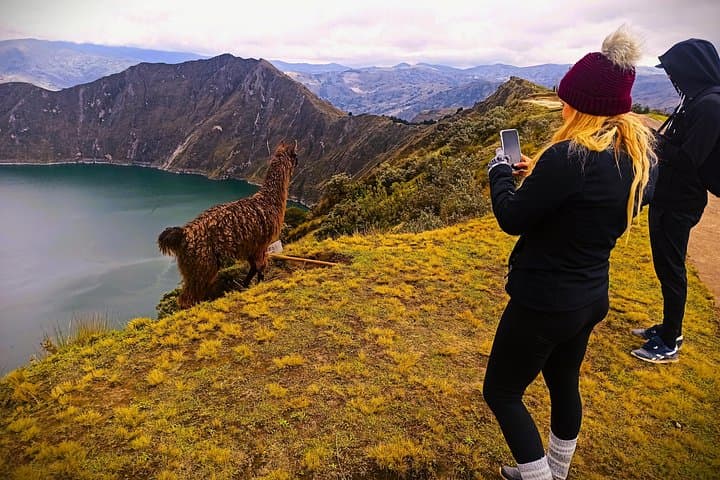
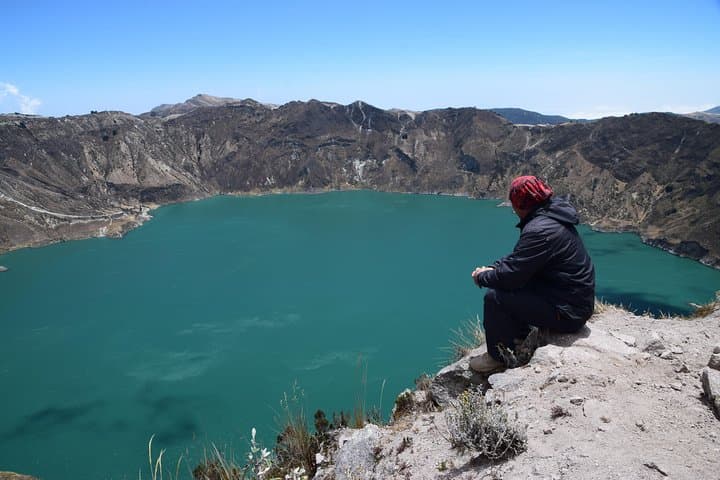
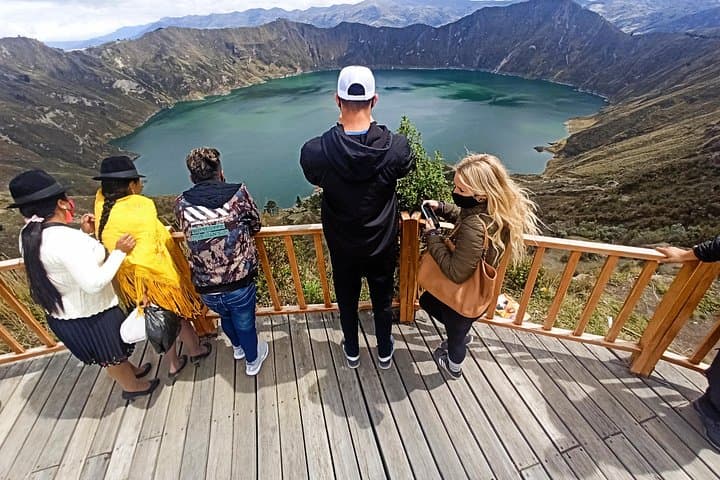
You arrive on a high, wind-brushed ridge where the crater opens like a bowl of blue-green light — Quilotoa’s lagoon daring you to come closer. The air is thin and cool; vendors from the nearby market fold up colorful blankets while llamas nod at passing trucks. From the rim the drop is immediate: a steep thread of trail zig-zags down through volcanic scree and native shrubs toward a still surface that reflects the sky.
You arrive on a high, wind-brushed ridge where the crater opens like a bowl of blue-green light — Quilotoa’s lagoon daring you to come closer. The air is thin and cool; vendors from the nearby market fold up colorful blankets while llamas nod at passing trucks. From the rim the drop is immediate: a steep thread of trail zig-zags down through volcanic scree and native shrubs toward a still surface that reflects the sky.
Geologically Quilotoa is an extinct caldera formed by a massive explosive eruption some 800 years ago; its walls reveal bands of ash and hardened lava. Culturally the valley is part of the Sierra where Quechua-speaking communities maintain weekly markets (Pujilí or Saquisilí) and traditional weaving practices that trace back centuries.
The day's rhythm usually begins with a market visit, then a viewpoint stop over the canyon, followed by a 60–90 minute descent to the crater floor. The hike down is rewarding and the climb back can be strenuous at 3,800–3,900 m elevation — guides often offer mule rentals for the ascent.
Practical essentials: layer for rapid weather shifts, bring sunscreen and a windproof jacket, and allow extra time for the hike at altitude. Cash is useful for entrance/community fees and mule rentals. Expect 9–10 hours including transit from Quito if booked as a private day tour; the route combines cultural encounters, accessible trekking, and dramatic volcanic scenery for a full, highland experience.