THE ADVENTURE COLLECTIVE® · Independent discovery and booking for outdoor travel

Drive the Avenue of the Volcanoes from Quito to Quilotoa and descend into a luminous crater lake. This full-day private tour blends dramatic geology, indigenous culture, and a steep rim-to-shore hike.
Drive the Avenue of the Volcanoes from Quito to Quilotoa and descend into a luminous crater lake. This full-day private tour blends dramatic geology, indigenous culture, and a steep rim-to-shore hike.
A cool Andean wind meets the van as you crest the Avenue of the Volcanoes and Quilotoa first appears: a bowl of impossible green set into a ring of steep cliffs. The guide eases you down a short service road and points to the rim — the lake sits in a volcanic caldera whose mineral-rich waters glow like a painted pool.
Verified experiences and guided adventures in the surrounding area.
Operated by CUSCUNGA TOURS · Quilotoa, Cotopaxi Province
A cool Andean wind meets the van as you crest the Avenue of the Volcanoes and Quilotoa first appears: a bowl of impossible green set into a ring of steep cliffs. The guide eases you down a short service road and points to the rim — the lake sits in a volcanic caldera whose mineral-rich waters glow like a painted pool.
Quilotoa formed in a large explosive eruption roughly 800 years ago; the caldera is about 3 km across and still shows fumarolic activity and hot springs to the east. The drive crosses high páramo and small indigenous hamlets — Tigua, famous for its painted leather art, and Zumbahua, the regional market town — offering a quick window into Andean culture and agrarian life.
The walk from rim to water is steep and direct, roughly a 30–45 minute descent along packed volcanic trail; return is slower as the altitude (lake ~3,814 m) makes every step heavier. You can rent mules for the return if you prefer.
Practical notes: allow a full day (8–9 hours) from Quito, carry layered clothing, sun protection, and 1–2 liters of water, and move slowly to reduce altitude effects. Photography rewards patience: morning light is cleaner, while afternoons bring cloud and occasional rain.
Expect simple facilities at the rim and local vendors; respect fragile páramo vegetation by staying on trail. Quilotoa is an experience of highland geology, living indigenous culture, and physical pace — vivid, brisk, and surprisingly quiet for such a dramatic place.
moderate.
8–9 hours.
Moderate fitness recommended—able to walk steep, uneven trails and handle short bouts of exertion at high altitude.
Expect about 2.5–3.5 hours each way depending on traffic and stops along the Avenue of the Volcanoes; the full tour lasts 8–9 hours.
Yes—Quilotoa sits around 3,814 m. Symptoms are possible; acclimatize in Quito, hydrate, move slowly, and avoid heavy exertion if you feel unwell.
Yes, mules are commonly available at the rim for about $10 for the round trip or for the uphill leg; availability can vary by season.
Basic facilities and small vendor stalls exist at the rim selling snacks and souvenirs; bring essentials as services are limited compared with a city.
Quilotoa’s caldera resulted from a large explosive eruption roughly 800 years ago; the lake’s color comes from dissolved minerals and volcanic sediments.
The high páramo is fragile—stay on marked trails, avoid contaminating the lake, and pack out all trash to protect local water and plant communities.
CUSCUNGA TOURS operates guided outdoor trips and adventures with an emphasis on safety, stewardship, and memorable experiences.
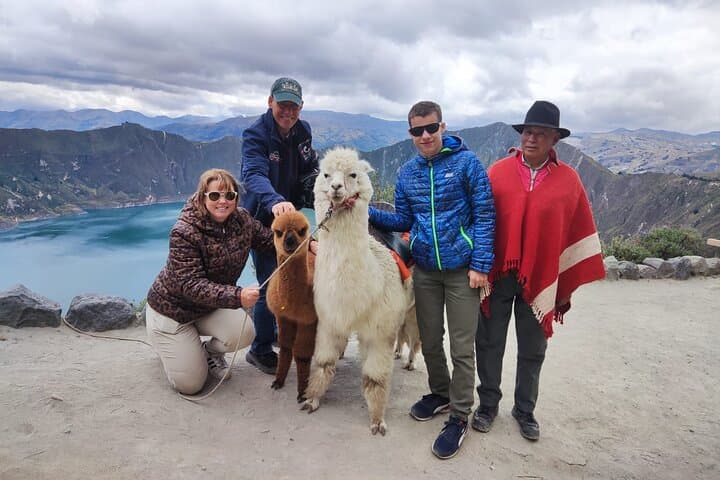
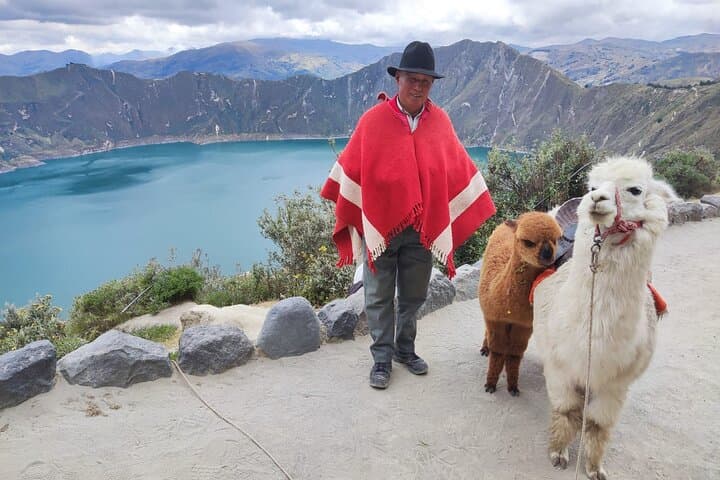
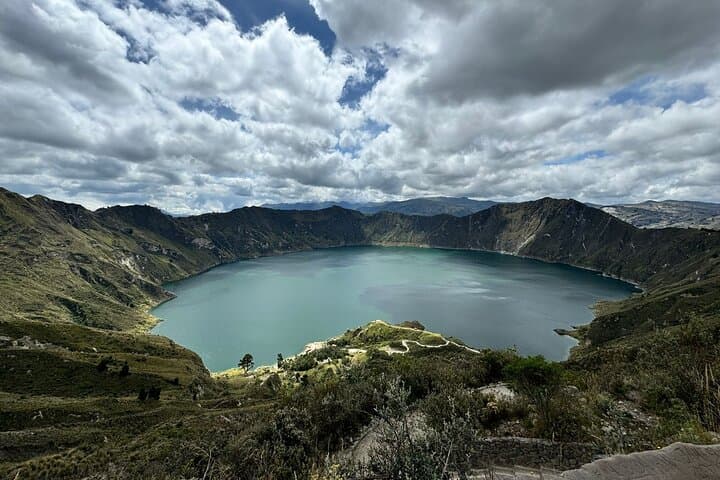
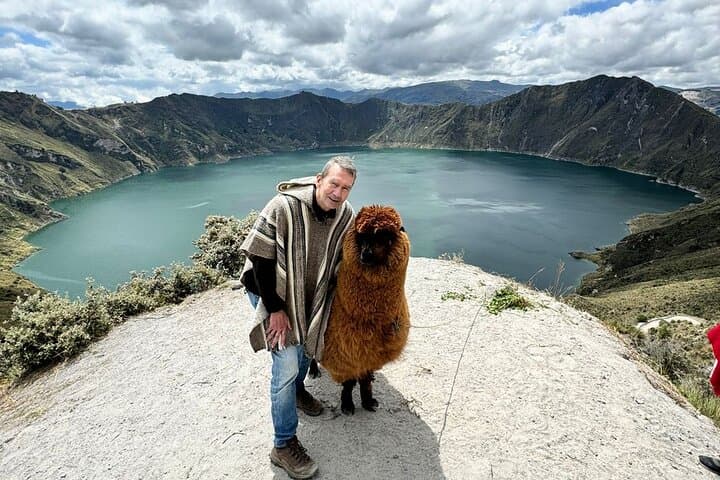
A cool Andean wind meets the van as you crest the Avenue of the Volcanoes and Quilotoa first appears: a bowl of impossible green set into a ring of steep cliffs. The guide eases you down a short service road and points to the rim — the lake sits in a volcanic caldera whose mineral-rich waters glow like a painted pool.
A cool Andean wind meets the van as you crest the Avenue of the Volcanoes and Quilotoa first appears: a bowl of impossible green set into a ring of steep cliffs. The guide eases you down a short service road and points to the rim — the lake sits in a volcanic caldera whose mineral-rich waters glow like a painted pool.
Quilotoa formed in a large explosive eruption roughly 800 years ago; the caldera is about 3 km across and still shows fumarolic activity and hot springs to the east. The drive crosses high páramo and small indigenous hamlets — Tigua, famous for its painted leather art, and Zumbahua, the regional market town — offering a quick window into Andean culture and agrarian life.
The walk from rim to water is steep and direct, roughly a 30–45 minute descent along packed volcanic trail; return is slower as the altitude (lake ~3,814 m) makes every step heavier. You can rent mules for the return if you prefer.
Practical notes: allow a full day (8–9 hours) from Quito, carry layered clothing, sun protection, and 1–2 liters of water, and move slowly to reduce altitude effects. Photography rewards patience: morning light is cleaner, while afternoons bring cloud and occasional rain.
Expect simple facilities at the rim and local vendors; respect fragile páramo vegetation by staying on trail. Quilotoa is an experience of highland geology, living indigenous culture, and physical pace — vivid, brisk, and surprisingly quiet for such a dramatic place.