THE ADVENTURE COLLECTIVE® · Independent discovery and booking for outdoor travel

Two contrasting Andean landscapes — the emerald crater of Quilotoa and the waterfalls of Baños — in a private, two-day route from Quito. Expect high-elevation rim hikes, cultural village stops, and rainforest cascades as you descend toward the Amazon.
Two contrasting Andean landscapes — the emerald crater of Quilotoa and the waterfalls of Baños — in a private, two-day route from Quito. Expect high-elevation rim hikes, cultural village stops, and rainforest cascades as you descend toward the Amazon.
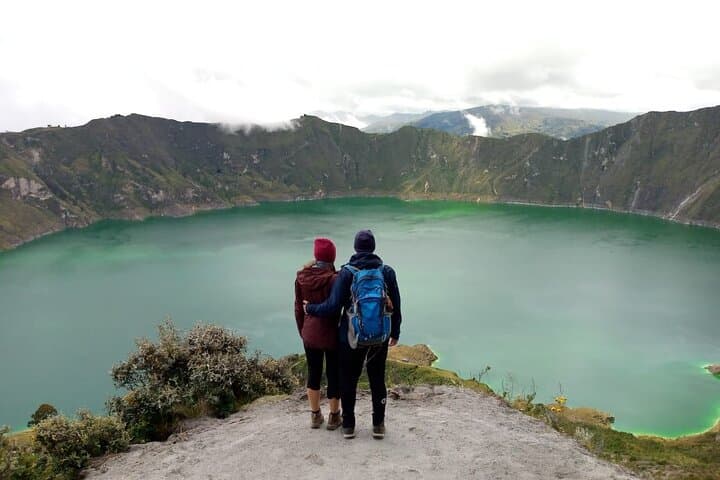
You step out of the van into thin, clean air and the rim of Quilotoa opens before you — a cold wind teasing the crater’s mirror-green lake while the Andes press close on every side.
Verified experiences and guided adventures in the surrounding area.
Operated by Latin Adventures Cía Ltda · Quito, Pichincha
You step out of the van into thin, clean air and the rim of Quilotoa opens before you — a cold wind teasing the crater’s mirror-green lake while the Andes press close on every side.
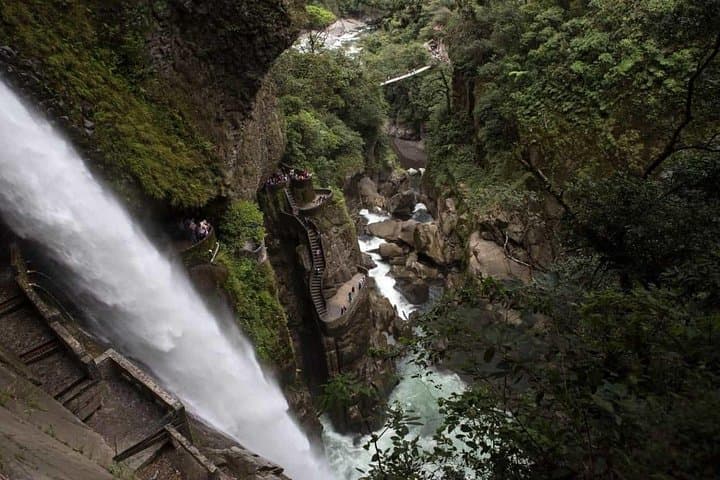
This two-day loop traces a spine of volcanic history and active geology. Quilotoa sits in a collapsed volcanic caldera carved by a major eruption centuries ago; its steep rim drops several hundred meters to the lake and offers sweeping views across páramo and cultivated terraces. The second day slips east, down the Avenue of the Volcanoes to Baños where tumbling rivers and rainforest-fed waterfalls like Pailón del Diablo and Manto de la Novia dramatize the transition from highland puna to the doorway of the Amazon.
Culture here is visible: Kichwa villages dot the highlands, markets sell wool textiles and roasted corn, and small thermal spas in Baños reflect a long local tradition of bathing in volcanic waters. Expect steep, rocky trails on the Quilotoa rim (roughly 2–4 km of hiking around the crater with up to ~400 m elevation change if you descend), gravel roads, and paved town streets in Baños.
Practical guidance: acclimatize in Quito before you go, carry layers for wind and sun, and bring at least 2 liters of water for the high-elevation hikes. Wear sturdy shoes for loose, volcanic scree and allow time for photography and short village stops. Cash is useful for small eateries and local crafts. If you prefer, guides can shorten or lengthen walks; either way, the route pairs sharp Andean light with the steady sound of waterfalls pushing toward the Amazon.
moderate.
2 days (approx. 48 hours).
Moderate fitness — able to handle a few hours of hiking at high altitude and short steep descents/ascents.
The rim walk includes steep sections and loose scree; a typical partial rim hike is 2–4 km with up to ~400 m elevation change if you descend to the lake. It’s moderate but feels harder due to altitude.
No special permits are required for the basic tour; carry ID and any standard vaccinations. Check current health entry rules for Ecuador before travel.
Yes — this private tour can shorten or replace hikes with viewpoints and village stops on request; discuss preferences at booking.
Yes—symptoms can occur above 3,000 m. Acclimatize in Quito, ascend slowly, hydrate, and tell your guide if you feel unwell.
Quilotoa’s dramatic crater is the remnant of a powerful explosive eruption centuries ago; the highland region has long been inhabited by Kichwa communities who farm the terraces you’ll pass.
The páramo and crater lake are fragile—stick to trails, minimize plastic waste, and support local guides and community-run businesses to reduce tourism pressure.
Latin Adventures Cía Ltda operates guided outdoor trips and adventures with an emphasis on safety, stewardship, and memorable experiences.

You step out of the van into thin, clean air and the rim of Quilotoa opens before you — a cold wind teasing the crater’s mirror-green lake while the Andes press close on every side.
You step out of the van into thin, clean air and the rim of Quilotoa opens before you — a cold wind teasing the crater’s mirror-green lake while the Andes press close on every side.
This two-day loop traces a spine of volcanic history and active geology. Quilotoa sits in a collapsed volcanic caldera carved by a major eruption centuries ago; its steep rim drops several hundred meters to the lake and offers sweeping views across páramo and cultivated terraces. The second day slips east, down the Avenue of the Volcanoes to Baños where tumbling rivers and rainforest-fed waterfalls like Pailón del Diablo and Manto de la Novia dramatize the transition from highland puna to the doorway of the Amazon.
Culture here is visible: Kichwa villages dot the highlands, markets sell wool textiles and roasted corn, and small thermal spas in Baños reflect a long local tradition of bathing in volcanic waters. Expect steep, rocky trails on the Quilotoa rim (roughly 2–4 km of hiking around the crater with up to ~400 m elevation change if you descend), gravel roads, and paved town streets in Baños.
Practical guidance: acclimatize in Quito before you go, carry layers for wind and sun, and bring at least 2 liters of water for the high-elevation hikes. Wear sturdy shoes for loose, volcanic scree and allow time for photography and short village stops. Cash is useful for small eateries and local crafts. If you prefer, guides can shorten or lengthen walks; either way, the route pairs sharp Andean light with the steady sound of waterfalls pushing toward the Amazon.