THE ADVENTURE COLLECTIVE® · Independent discovery and booking for outdoor travel

Get a concentrated, 45-minute orientation to the Marigny Triangle from a local guide. This quick walking tour covers Frenchmen Street music spots, Creole architecture, and neighborhood dining tips—ideal for visitors short on time.
Get a concentrated, 45-minute orientation to the Marigny Triangle from a local guide. This quick walking tour covers Frenchmen Street music spots, Creole architecture, and neighborhood dining tips—ideal for visitors short on time.
The sound of a saxophone threads through open windows as you step out from the gate of the Old U.S. Mint onto Esplanade Avenue. In 45 minutes the Marigny Triangle moves fast: a corridor of painted shotgun houses, tropical magnolias leaning into the sidewalk, and Frenchmen Street’s clubs daring you to linger. This is a neighborhood that announces itself by sound and color, compact enough to sample but rich enough to demand return visits.
Verified experiences and guided adventures in the surrounding area.
Operated by Short Tours NOLA · New Orleans, Louisiana
The sound of a saxophone threads through open windows as you step out from the gate of the Old U.S. Mint onto Esplanade Avenue. In 45 minutes the Marigny Triangle moves fast: a corridor of painted shotgun houses, tropical magnolias leaning into the sidewalk, and Frenchmen Street’s clubs daring you to linger. This is a neighborhood that announces itself by sound and color, compact enough to sample but rich enough to demand return visits.
Marigny’s streets trace back to early 19th-century Creole subdivision by Bernard de Marigny; its architecture reflects Creole townhouse forms, Caribbean influences, and an immigrant-driven music culture that swelled in the 20th century. Geologically you’re on the Mississippi’s riverward side of the French Quarter—low-lying, porous soils and a history shaped by levee building—so the urban landscape is as much about human engineering as it is about design.
Expect stops at Frenchmen Street to scope live-music venues, a park bordered by Creole cottages, and a few residential blocks where guide commentary highlights local favorites for dining and art. The pace is brisk: short walks between talking points, plenty of street-level storytelling, and recommendations you can use after the tour.
Practical notes: meet at 400 Esplanade Ave (New Orleans Jazz Museum gate); the loop is about 0.8–1.2 miles total on flat pavement. Wear comfortable walking shoes, bring sun protection and a water bottle, and plan this tour as a primer — a quick orientation to help you decide which venues and restaurants deserve more time. Morning and early evening departures are best for cooler air and more active street life.
easy.
45 minutes.
Suitable for most people with moderate mobility; involves brief standing and short, flat walks.
Yes—the meeting point at the New Orleans Jazz Museum is wheelchair accessible and the main route uses paved sidewalks; notify the operator of accessibility needs when booking.
Shared tours are capped at 16 travelers, offering a compact group size for easy walking and listening.
Yes—infants and small children in strollers are accommodated, though the tour includes standing and walking for 45 minutes.
Tours are typically in English; availability is best guaranteed by booking ahead and you can cancel for a full refund up to 24 hours before departure.
The Marigny was subdivided in the early 1800s by Creole landowner Bernard de Marigny and developed into a vibrant residential and musical neighborhood.
The area’s low-lying geography and historic fabric mean visitors should respect private property, support local businesses, and follow flood-safe routes when conditions are poor.
Short Tours NOLA operates guided outdoor trips and adventures with an emphasis on safety, stewardship, and memorable experiences.
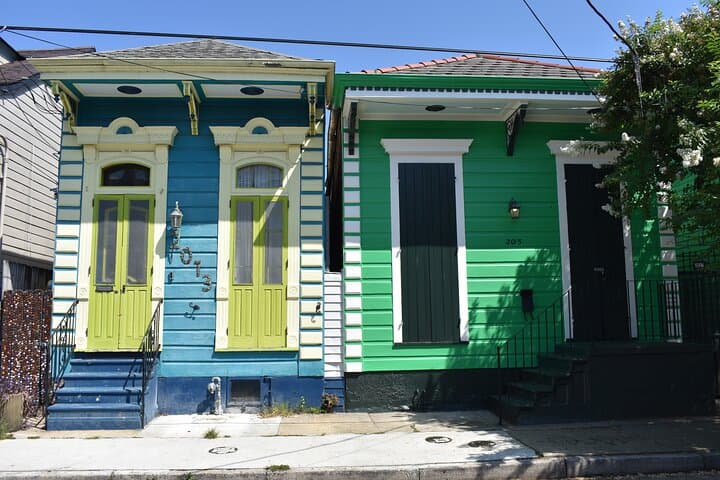
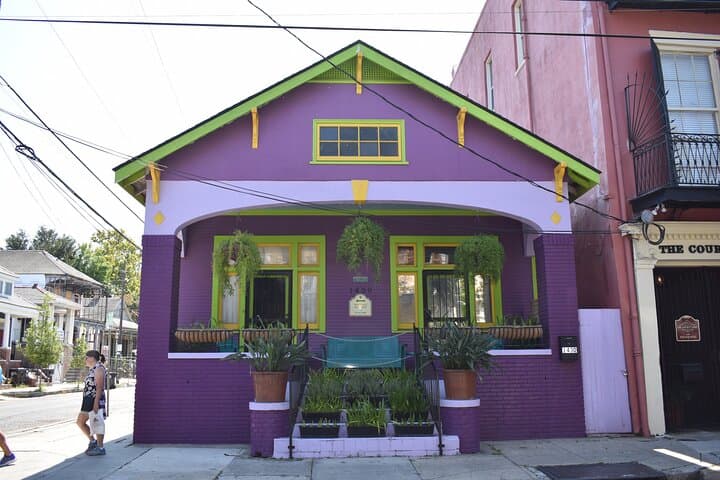


The sound of a saxophone threads through open windows as you step out from the gate of the Old U.S. Mint onto Esplanade Avenue. In 45 minutes the Marigny Triangle moves fast: a corridor of painted shotgun houses, tropical magnolias leaning into the sidewalk, and Frenchmen Street’s clubs daring you to linger. This is a neighborhood that announces itself by sound and color, compact enough to sample but rich enough to demand return visits.
The sound of a saxophone threads through open windows as you step out from the gate of the Old U.S. Mint onto Esplanade Avenue. In 45 minutes the Marigny Triangle moves fast: a corridor of painted shotgun houses, tropical magnolias leaning into the sidewalk, and Frenchmen Street’s clubs daring you to linger. This is a neighborhood that announces itself by sound and color, compact enough to sample but rich enough to demand return visits.
Marigny’s streets trace back to early 19th-century Creole subdivision by Bernard de Marigny; its architecture reflects Creole townhouse forms, Caribbean influences, and an immigrant-driven music culture that swelled in the 20th century. Geologically you’re on the Mississippi’s riverward side of the French Quarter—low-lying, porous soils and a history shaped by levee building—so the urban landscape is as much about human engineering as it is about design.
Expect stops at Frenchmen Street to scope live-music venues, a park bordered by Creole cottages, and a few residential blocks where guide commentary highlights local favorites for dining and art. The pace is brisk: short walks between talking points, plenty of street-level storytelling, and recommendations you can use after the tour.
Practical notes: meet at 400 Esplanade Ave (New Orleans Jazz Museum gate); the loop is about 0.8–1.2 miles total on flat pavement. Wear comfortable walking shoes, bring sun protection and a water bottle, and plan this tour as a primer — a quick orientation to help you decide which venues and restaurants deserve more time. Morning and early evening departures are best for cooler air and more active street life.