THE ADVENTURE COLLECTIVE® · Independent discovery and booking for outdoor travel

Turn a Seoul kitchen into your classroom: learn to make fresh kimchi, savory jeon and portable gimbap in a two-hour hands-on session. Practical techniques, cultural context and a shared meal make this a compact, memorable introduction to Korean home cooking.
Turn a Seoul kitchen into your classroom: learn to make fresh kimchi, savory jeon and portable gimbap in a two-hour hands-on session. Practical techniques, cultural context and a shared meal make this a compact, memorable introduction to Korean home cooking.
You step into a compact teaching kitchen in central Seoul, where stainless counters hum and the scent of toasted sesame oil threads the air. A small group gathers around a chopping board while an English-speaking instructor lays out napa cabbage, rice flour and sheets of gim; the city’s pulse is a muffled background beneath the chop-and-stir rhythm.
Verified experiences and guided adventures in the surrounding area.
Operated by Imagine cooking class · Seoul, Seoul
You step into a compact teaching kitchen in central Seoul, where stainless counters hum and the scent of toasted sesame oil threads the air. A small group gathers around a chopping board while an English-speaking instructor lays out napa cabbage, rice flour and sheets of gim; the city’s pulse is a muffled background beneath the chop-and-stir rhythm.
Korean home cooking mixes centuries-old techniques with quick weekday practicality: preserved kimchi for longevity, jeon (savory pancakes) for festivals, and gimbap for portable comfort. The peninsula’s agrarian history is evident in vegetable-forward dishes and fermented flavors that were once methods of preservation through long winters.
Culturally, the class gives more than recipes — it explains etiquette around communal plates, the role of soju and the seasonal importance of dishes like miyeok-guk for birthdays. You’ll also learn how street-food staples such as tteokbokki and eomuk reflect post-war urban tastes that shaped modern Seoul.
Practical guidance: classes run about two hours and alternate topics by day (kimchi, jeon, gimbap). Recipes emphasize simple techniques: knife skills, balancing gochujang, and rolling gimbap tightly. Most dietary questions can be managed with advance notice; the class provides tea, a welcome drink and a sit-down meal.
Leave with clear, replicable recipes and tips for sourcing key ingredients in Korean markets or international grocers. For first-time cooks the pace is accessible; for repeat visitors, small adjustments in seasoning and technique make the dishes yours.
easy.
2 hours.
Light — primarily standing with short periods of prep work suitable for most people
Yes — the operator asks for dietary requirements at booking and can often substitute ingredients like fish sauce or beef with vegetarian alternatives if notified in advance.
Sessions are small-group oriented; expect a handful of fellow travelers so you get hands-on time and chef attention.
Yes — simple, printable recipes and cooking tips are provided so you can recreate the dishes after your trip.
No — classes are usually in a central Seoul location accessible by public transport; details and directions are provided after booking.
Korean fermented foods like kimchi evolved as preservation methods for long winters; communal pancakes (jeon) and rice rolls (gimbap) reflect both ceremonial and street-food traditions in 20th-century urban life.
Choose locally sourced vegetables and minimize single-use plastics when shopping; support vendors who use seasonal produce to reduce food miles.
Imagine cooking class operates guided outdoor trips and adventures with an emphasis on safety, stewardship, and memorable experiences.
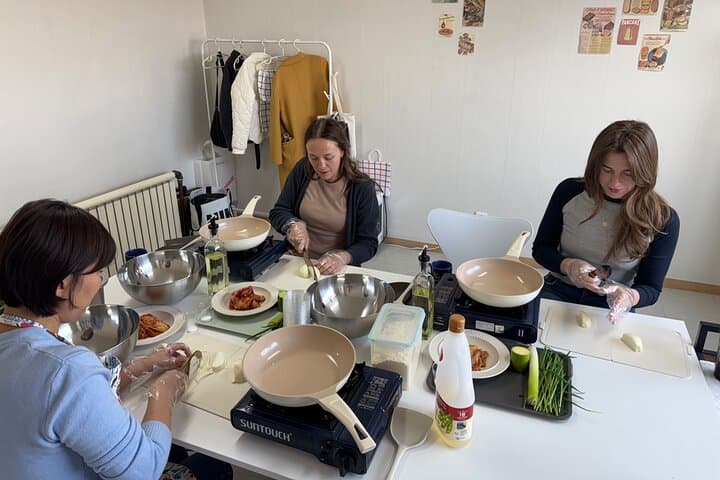
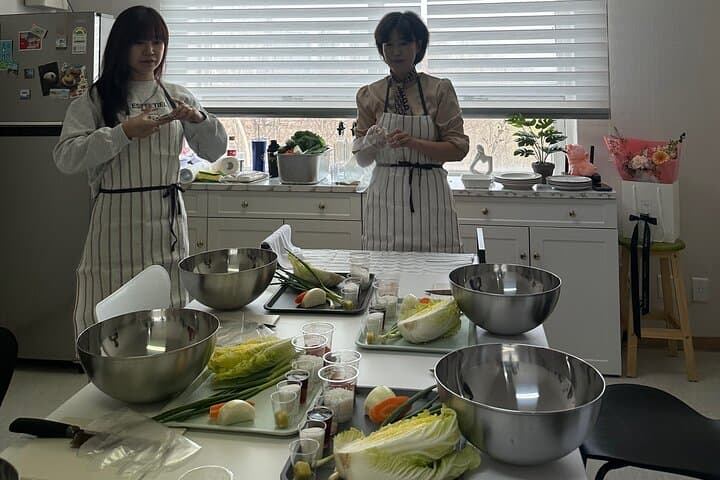
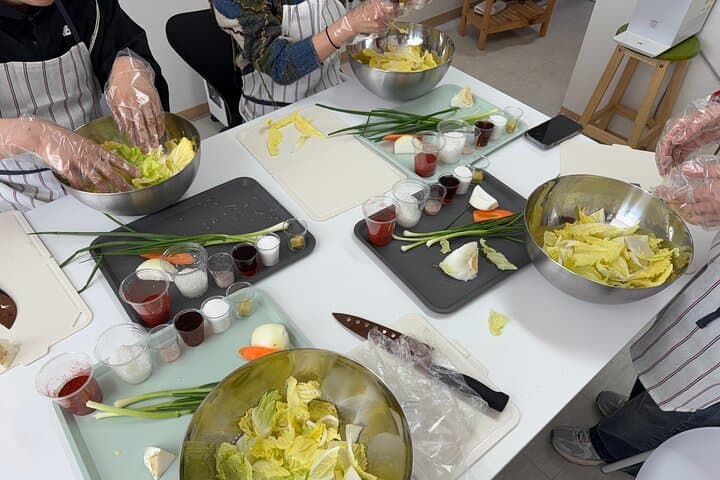
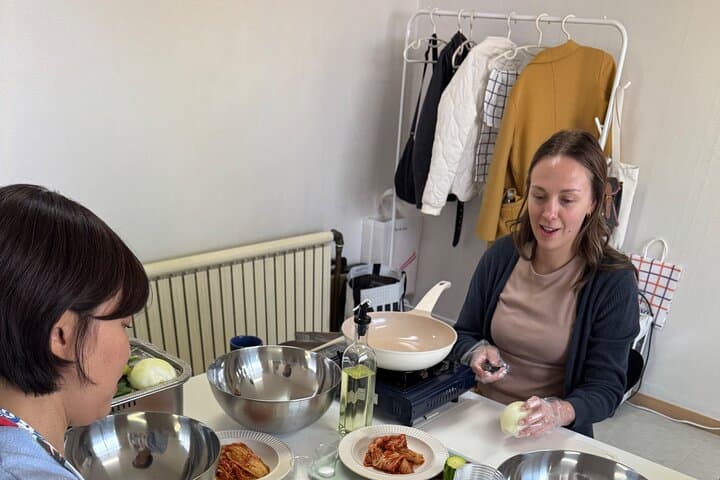
You step into a compact teaching kitchen in central Seoul, where stainless counters hum and the scent of toasted sesame oil threads the air. A small group gathers around a chopping board while an English-speaking instructor lays out napa cabbage, rice flour and sheets of gim; the city’s pulse is a muffled background beneath the chop-and-stir rhythm.
You step into a compact teaching kitchen in central Seoul, where stainless counters hum and the scent of toasted sesame oil threads the air. A small group gathers around a chopping board while an English-speaking instructor lays out napa cabbage, rice flour and sheets of gim; the city’s pulse is a muffled background beneath the chop-and-stir rhythm.
Korean home cooking mixes centuries-old techniques with quick weekday practicality: preserved kimchi for longevity, jeon (savory pancakes) for festivals, and gimbap for portable comfort. The peninsula’s agrarian history is evident in vegetable-forward dishes and fermented flavors that were once methods of preservation through long winters.
Culturally, the class gives more than recipes — it explains etiquette around communal plates, the role of soju and the seasonal importance of dishes like miyeok-guk for birthdays. You’ll also learn how street-food staples such as tteokbokki and eomuk reflect post-war urban tastes that shaped modern Seoul.
Practical guidance: classes run about two hours and alternate topics by day (kimchi, jeon, gimbap). Recipes emphasize simple techniques: knife skills, balancing gochujang, and rolling gimbap tightly. Most dietary questions can be managed with advance notice; the class provides tea, a welcome drink and a sit-down meal.
Leave with clear, replicable recipes and tips for sourcing key ingredients in Korean markets or international grocers. For first-time cooks the pace is accessible; for repeat visitors, small adjustments in seasoning and technique make the dishes yours.