THE ADVENTURE COLLECTIVE® · Independent discovery and booking for outdoor travel

A brief, accessible visit to Devi’s Falls just outside Pokhara that showcases dramatic karst geology and seasonal river power. Perfect for travelers with limited time who want a quick, photogenic excursion.
A brief, accessible visit to Devi’s Falls just outside Pokhara that showcases dramatic karst geology and seasonal river power. Perfect for travelers with limited time who want a quick, photogenic excursion.
The first view meets you at the railing: water plunging through a narrow rock throat and vanishing into a thunderous cavern below, the sound carrying like a dare across the air. On this brief tour outside Pokhara you stand where locals and travelers have stopped for generations to watch Devi’s Falls—locally known as Patale Chango—push its flow through a jagged limestone cut.
Verified experiences and guided adventures in the surrounding area.
Operated by Swami Narayan Travels Pvt Ltd · Pokhara, Gandaki Province
The first view meets you at the railing: water plunging through a narrow rock throat and vanishing into a thunderous cavern below, the sound carrying like a dare across the air. On this brief tour outside Pokhara you stand where locals and travelers have stopped for generations to watch Devi’s Falls—locally known as Patale Chango—push its flow through a jagged limestone cut.
Geologically the fall is a product of the region’s karst topography; monsoon rains swell the stream and the channel roars, while winter months tame the torrent into a quieter, sculpted run. The site ties to local legend—stories of a lost Swiss tourist in the 1960s gave the fall its English name—and sits on the fringe of Pokhara’s lake district, a short drive from Phewa Tal.
Culturally the site is a quick, vivid slice of Nepali tourism: a covered viewing area, nearby shops selling tea and snacks, and paths leading to caves and viewing platforms. The river below continues through an underground channel, making for dramatic spray and wet stone underfoot.
Practical guidance: allow 40–60 minutes for the round trip, expect steps and slick surfaces, and visit early or late in the day to avoid crowds and peak sun. Bring a lightweight rain layer in monsoon season and a camera with a fast shutter if you want to freeze drops mid-air. Accessible transport options and short walking distances make this an easy add-on if you’re based in Pokhara for a day or two.
easy.
40–60 minutes.
Suitable for most fitness levels; requires short stair descents and walking on wet paths.
The guided visit typically lasts 40–60 minutes including short walks, viewpoints, and transfer time if arranged from central Pokhara.
There are accessible transport and some viewing areas noted as wheelchair accessible, but expect steps on certain paths—check locally for the most accessible route.
Late afternoon or early morning offers cooler temperatures and fewer crowds; monsoon season produces the strongest flow but more spray.
Basic facilities such as restrooms, small cafes, and souvenir stalls are available close to the main viewing area.
The fall gained wider attention after an incident in the early 1960s and has since been a popular day-visit for travelers based in Pokhara.
High visitor numbers and water spray can stress fragile vegetation and signage; stick to marked paths and avoid tossing litter into waterways.
Swami Narayan Travels Pvt Ltd operates guided outdoor trips and adventures with an emphasis on safety, stewardship, and memorable experiences.
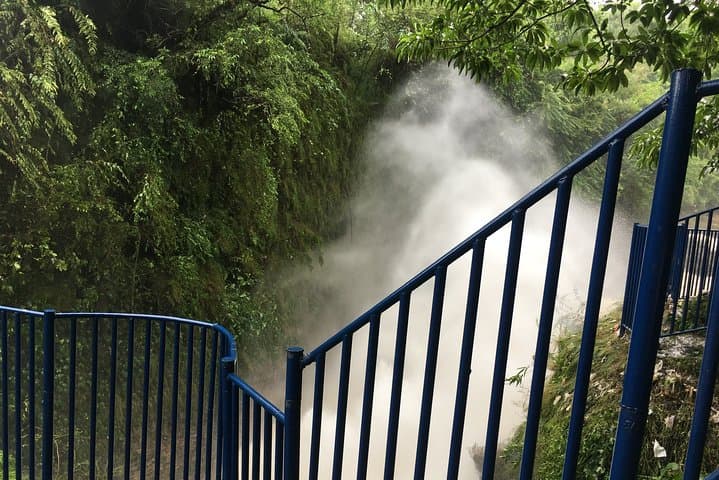
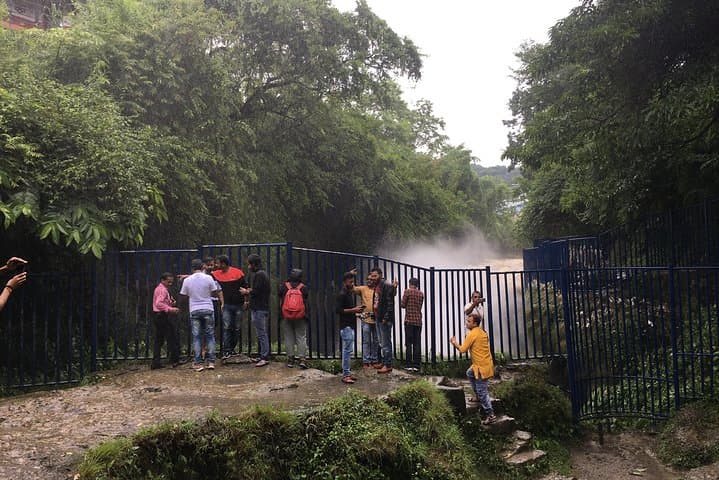
The first view meets you at the railing: water plunging through a narrow rock throat and vanishing into a thunderous cavern below, the sound carrying like a dare across the air. On this brief tour outside Pokhara you stand where locals and travelers have stopped for generations to watch Devi’s Falls—locally known as Patale Chango—push its flow through a jagged limestone cut.
The first view meets you at the railing: water plunging through a narrow rock throat and vanishing into a thunderous cavern below, the sound carrying like a dare across the air. On this brief tour outside Pokhara you stand where locals and travelers have stopped for generations to watch Devi’s Falls—locally known as Patale Chango—push its flow through a jagged limestone cut.
Geologically the fall is a product of the region’s karst topography; monsoon rains swell the stream and the channel roars, while winter months tame the torrent into a quieter, sculpted run. The site ties to local legend—stories of a lost Swiss tourist in the 1960s gave the fall its English name—and sits on the fringe of Pokhara’s lake district, a short drive from Phewa Tal.
Culturally the site is a quick, vivid slice of Nepali tourism: a covered viewing area, nearby shops selling tea and snacks, and paths leading to caves and viewing platforms. The river below continues through an underground channel, making for dramatic spray and wet stone underfoot.
Practical guidance: allow 40–60 minutes for the round trip, expect steps and slick surfaces, and visit early or late in the day to avoid crowds and peak sun. Bring a lightweight rain layer in monsoon season and a camera with a fast shutter if you want to freeze drops mid-air. Accessible transport options and short walking distances make this an easy add-on if you’re based in Pokhara for a day or two.