THE ADVENTURE COLLECTIVE® · Independent discovery and booking for outdoor travel

Spend a full day from Luanda driving into Quiçama National Park for wildlife viewing and the surreal rock formations of Miradouro da Lua. This guided safari combines game drives, short guided walks and cultural glimpses along the Kwanza estuary.
Spend a full day from Luanda driving into Quiçama National Park for wildlife viewing and the surreal rock formations of Miradouro da Lua. This guided safari combines game drives, short guided walks and cultural glimpses along the Kwanza estuary.
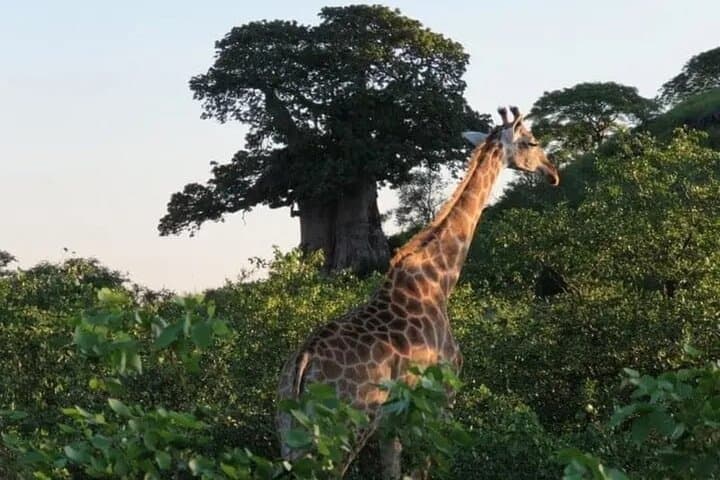
You step out of the air‑conditioned vehicle and the savanna seems to breathe around you—tall grasses nudging at the road, a distant silhouette of a lone baobab daring you to come closer. Quiçama National Park spreads across flat plains, riverine strips and pockets of dense vegetation; animals move with a quiet purpose and the horizon often reads like hard-won wilderness.
Verified experiences and guided adventures in the surrounding area.
Operated by VANTOUR · Luanda, Luanda Province
You step out of the air‑conditioned vehicle and the savanna seems to breathe around you—tall grasses nudging at the road, a distant silhouette of a lone baobab daring you to come closer. Quiçama National Park spreads across flat plains, riverine strips and pockets of dense vegetation; animals move with a quiet purpose and the horizon often reads like hard-won wilderness.
Established as one of Angola’s largest protected areas, Quiçama carries scars and resilience from decades of conflict and recovery. The park’s geology is straightforward: coastal plains giving way to alluvial soils and sandstone outcrops, the latter carved into the lunar ridges at Miradouro da Lua. Local fishing villages and communities along the park edge add cultural texture—markets, boat traffic on the Kwanza, and livelihoods woven with the landscape.
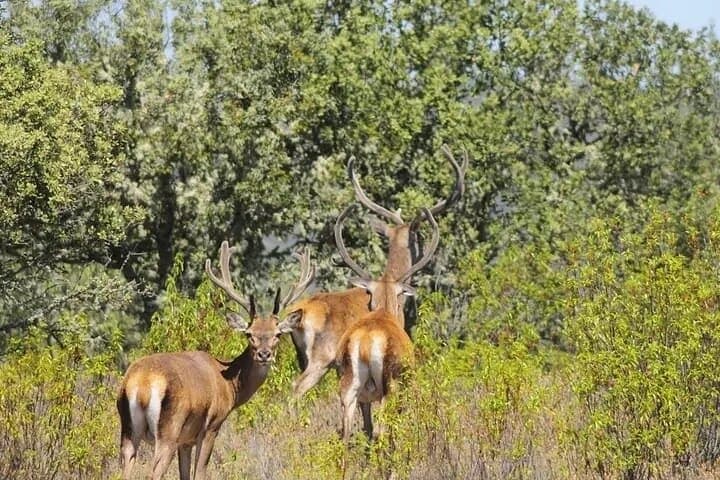
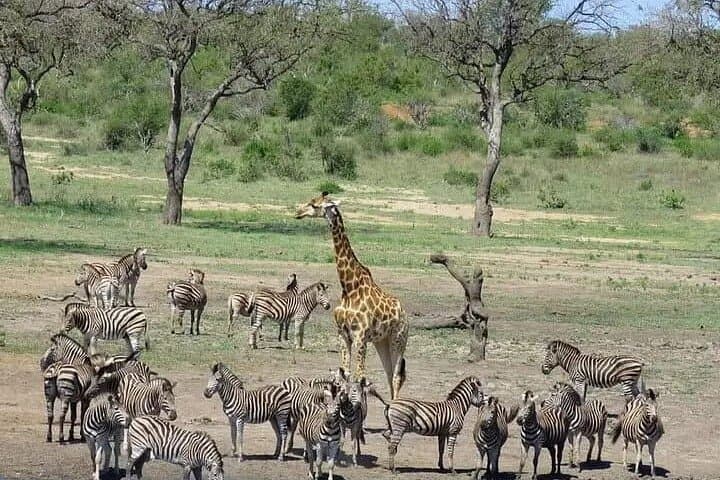
On a guided day safari you can expect long game drives with opportunistic walks, steady binoculars, and chances to see elephants, giraffes, buffalo and several antelope species. Miradouro da Lua interrupts the green with raw, wind-sculpted badlands—perfect for photographs if you time the light.
Practical notes: tours are typically a full day (about 8–9 hours) from Luanda with provided transport, bottled water, and snacks; bring sun protection, a light jacket for early mornings, durable closed shoes, and insect repellent. Charge cameras and pack extra memory—cell service is sporadic and the best views require presence, not connection. Respect park rules, stay in the vehicle unless guided to a safe spot, and leave no trace—Quiçama’s recovery depends on responsible visitors.
easy.
8–9 hours.
Suitable for most fitness levels; long vehicle time with short, easy walks may be required.
Travel time depends on traffic and your chosen entry point but expect roughly 1–2 hours each way from central Luanda to the main park gates.
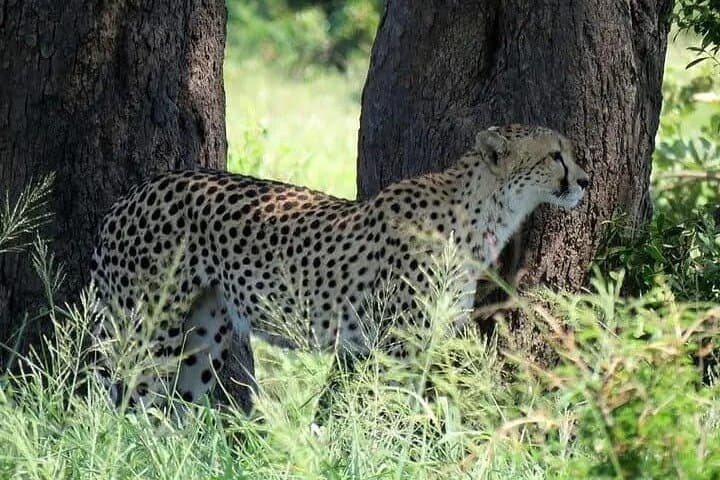
Guides target known ranges and sightings are common, but wildlife is not guaranteed—longer stays increase encounter odds.
Yes; the trip is rated easy with vehicle access and minimal walking, though long days in a vehicle can be tiring for some passengers.
Inclusions vary by operator; this standard day tour usually includes bottled water, some drinks and transport—confirm if park permits, meals or alcoholic beverages are covered before booking.
Quiçama is one of Angola’s largest protected areas and has undergone significant repopulation and conservation efforts since the end of the civil war to restore its megafauna and habitats.
Visitor guidelines emphasize staying on roads, limiting noise, and supporting local community enterprises—responsible tourism helps fund anti‑poaching and habitat recovery programs.
VANTOUR operates guided outdoor trips and adventures with an emphasis on safety, stewardship, and memorable experiences.
You step out of the air‑conditioned vehicle and the savanna seems to breathe around you—tall grasses nudging at the road, a distant silhouette of a lone baobab daring you to come closer. Quiçama National Park spreads across flat plains, riverine strips and pockets of dense vegetation; animals move with a quiet purpose and the horizon often reads like hard-won wilderness.
You step out of the air‑conditioned vehicle and the savanna seems to breathe around you—tall grasses nudging at the road, a distant silhouette of a lone baobab daring you to come closer. Quiçama National Park spreads across flat plains, riverine strips and pockets of dense vegetation; animals move with a quiet purpose and the horizon often reads like hard-won wilderness.
Established as one of Angola’s largest protected areas, Quiçama carries scars and resilience from decades of conflict and recovery. The park’s geology is straightforward: coastal plains giving way to alluvial soils and sandstone outcrops, the latter carved into the lunar ridges at Miradouro da Lua. Local fishing villages and communities along the park edge add cultural texture—markets, boat traffic on the Kwanza, and livelihoods woven with the landscape.
On a guided day safari you can expect long game drives with opportunistic walks, steady binoculars, and chances to see elephants, giraffes, buffalo and several antelope species. Miradouro da Lua interrupts the green with raw, wind-sculpted badlands—perfect for photographs if you time the light.
Practical notes: tours are typically a full day (about 8–9 hours) from Luanda with provided transport, bottled water, and snacks; bring sun protection, a light jacket for early mornings, durable closed shoes, and insect repellent. Charge cameras and pack extra memory—cell service is sporadic and the best views require presence, not connection. Respect park rules, stay in the vehicle unless guided to a safe spot, and leave no trace—Quiçama’s recovery depends on responsible visitors.