THE ADVENTURE COLLECTIVE® · Independent discovery and booking for outdoor travel

Join a working Costa Rican finca for a hands-on horseback cattle drive that ends at a volcanic viewpoint and a family-style four-course lunch. Perfect for riders with moderate experience who want farm life, volcano panoramas, and local food in a single half-day trip.
Join a working Costa Rican finca for a hands-on horseback cattle drive that ends at a volcanic viewpoint and a family-style four-course lunch. Perfect for riders with moderate experience who want farm life, volcano panoramas, and local food in a single half-day trip.
The morning opens on a high pasture: mist lifts off wet grass, horses nick and stamp, and the farm’s low stone buildings sit against a wide Costa Rican sky. You mount under the guidance of Queveri staff and move into the rhythm of a working finca — the animals, the land and the riders pulling together to bring cattle down to the old dairy.
Verified experiences and guided adventures in the surrounding area.
Operated by Queveri Horseback Riding Tours · San José, San José Province
The morning opens on a high pasture: mist lifts off wet grass, horses nick and stamp, and the farm’s low stone buildings sit against a wide Costa Rican sky. You mount under the guidance of Queveri staff and move into the rhythm of a working finca — the animals, the land and the riders pulling together to bring cattle down to the old dairy.
That stretch between paddocks and dairy is both practical and instructive. Queveri sits in a region shaped by volcanic uplift; on a clear day the ridgeline lineup—Poás, Barva, Irazú and Turrialba—cuts the horizon like geological chapters. The tour threads local agricultural history and techniques into the ride: traditional cattle handling, the old dairy’s role in community livelihoods, and the small restaurant where the family serves a four-course lunch with local trout or chicken.
If weather allows, the group continues to the Piedras del Alto viewpoint. The stones are simple landmarks—places to leave a mark and look back across Tapantí’s cloud forests where rainfall sculpts vibrant growth and wildlife stakes a claim.
Practical notes: expect four hours door-to-door on mixed farm tracks and gentle single-track; staff provide instruction and support for riders of moderate ability. Wear closed-toe shoes, sun and rain protection, and layers—the microclimate can shift quickly. Bring a small daypack, water, and a camera with a secure strap. The experience balances hands-on ranching with accessible riding and a taste of Costa Rican rural life—rough earth under hoof, distant volcanoes daring you to look farther.
moderate.
4 hours.
Suitable for people with moderate fitness who can mount/dismount and sit in a saddle for extended periods; not recommended for those with significant back or heart issues.
The private four-hour tour includes guided horseback herding, a visit to the viewpoint (weather permitting), and a four-course lunch with coffee; transportation details depend on your booking confirmation.
No expert skills are required, but riders should have basic balance and the ability to follow directions; staff provide assistance and moderate instruction.
Infants are allowed but must sit on an adult’s lap and special infant seats are available; verify age and size requirements with the operator when booking.
The activity is not recommended for pregnant travelers, people with serious back or heart problems, or anyone unable to mount/dismount a horse safely.
The finca reflects Costa Rica’s long history of small-scale cattle ranching and dairy production, practices introduced and adapted through the 19th and 20th centuries.
Queveri operates within a landscape that borders cloud forest and protected areas; visitors are asked to respect trails, avoid feeding wildlife, and support local agriculture by minimizing waste.
Queveri Horseback Riding Tours operates guided outdoor trips and adventures with an emphasis on safety, stewardship, and memorable experiences.
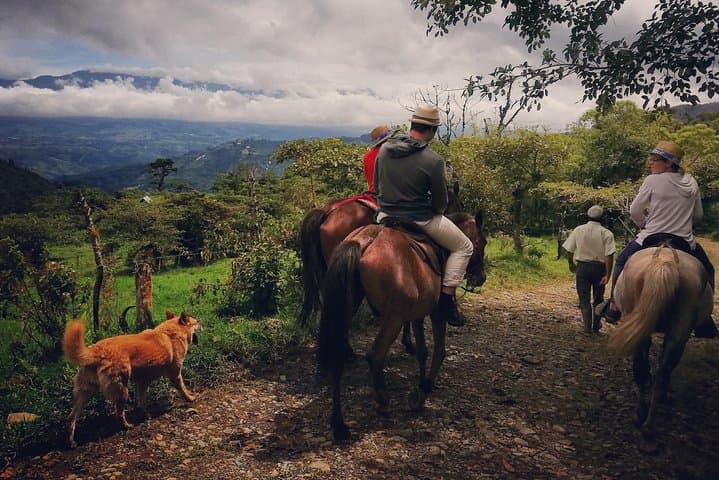
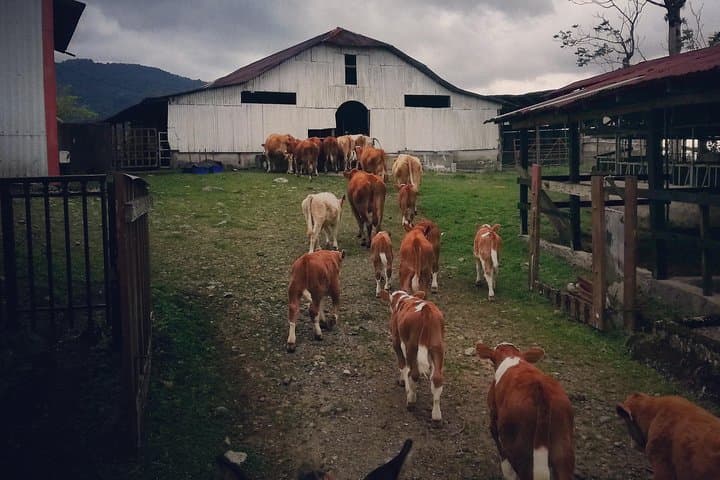
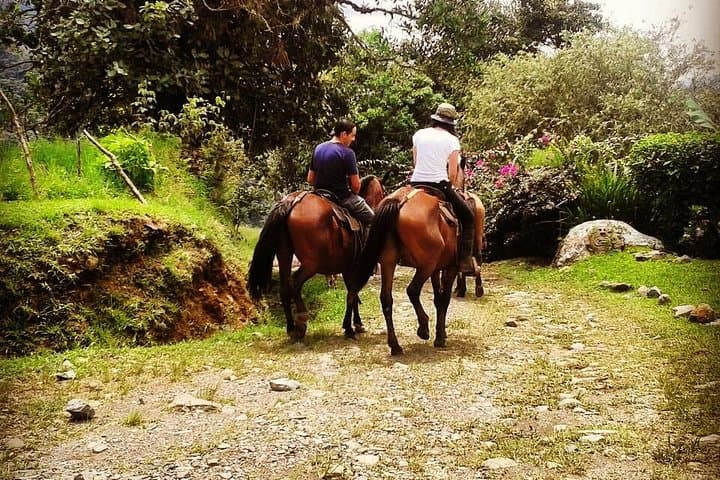
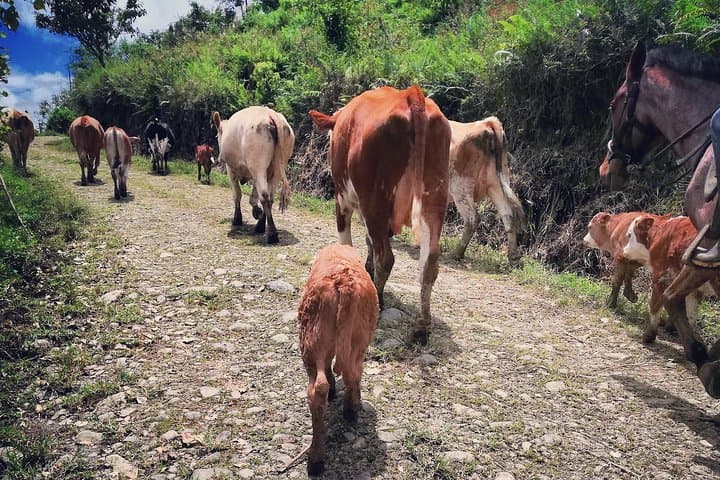
The morning opens on a high pasture: mist lifts off wet grass, horses nick and stamp, and the farm’s low stone buildings sit against a wide Costa Rican sky. You mount under the guidance of Queveri staff and move into the rhythm of a working finca — the animals, the land and the riders pulling together to bring cattle down to the old dairy.
The morning opens on a high pasture: mist lifts off wet grass, horses nick and stamp, and the farm’s low stone buildings sit against a wide Costa Rican sky. You mount under the guidance of Queveri staff and move into the rhythm of a working finca — the animals, the land and the riders pulling together to bring cattle down to the old dairy.
That stretch between paddocks and dairy is both practical and instructive. Queveri sits in a region shaped by volcanic uplift; on a clear day the ridgeline lineup—Poás, Barva, Irazú and Turrialba—cuts the horizon like geological chapters. The tour threads local agricultural history and techniques into the ride: traditional cattle handling, the old dairy’s role in community livelihoods, and the small restaurant where the family serves a four-course lunch with local trout or chicken.
If weather allows, the group continues to the Piedras del Alto viewpoint. The stones are simple landmarks—places to leave a mark and look back across Tapantí’s cloud forests where rainfall sculpts vibrant growth and wildlife stakes a claim.
Practical notes: expect four hours door-to-door on mixed farm tracks and gentle single-track; staff provide instruction and support for riders of moderate ability. Wear closed-toe shoes, sun and rain protection, and layers—the microclimate can shift quickly. Bring a small daypack, water, and a camera with a secure strap. The experience balances hands-on ranching with accessible riding and a taste of Costa Rican rural life—rough earth under hoof, distant volcanoes daring you to look farther.