THE ADVENTURE COLLECTIVE® · Independent discovery and booking for outdoor travel

Walk across the last living Inca rope bridge and watch communities rebuild a 120‑ft handwoven span high above the Apurímac. This full‑day tour from Cusco combines highland lakes, pre‑Inca ruins and a living cultural ritual.
Walk across the last living Inca rope bridge and watch communities rebuild a 120‑ft handwoven span high above the Apurímac. This full‑day tour from Cusco combines highland lakes, pre‑Inca ruins and a living cultural ritual.
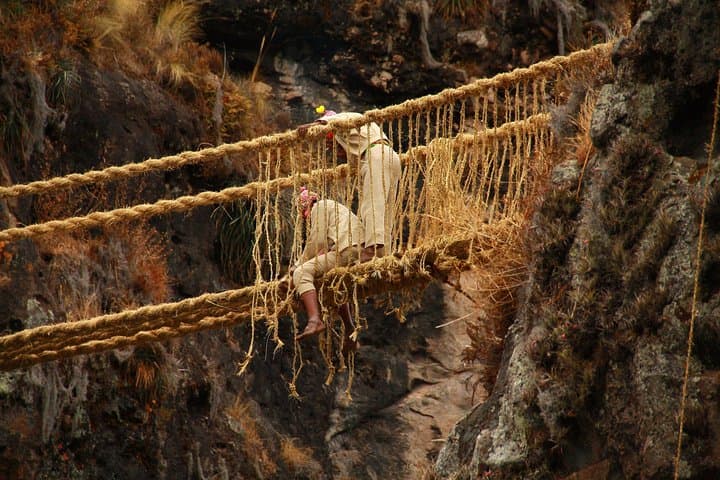
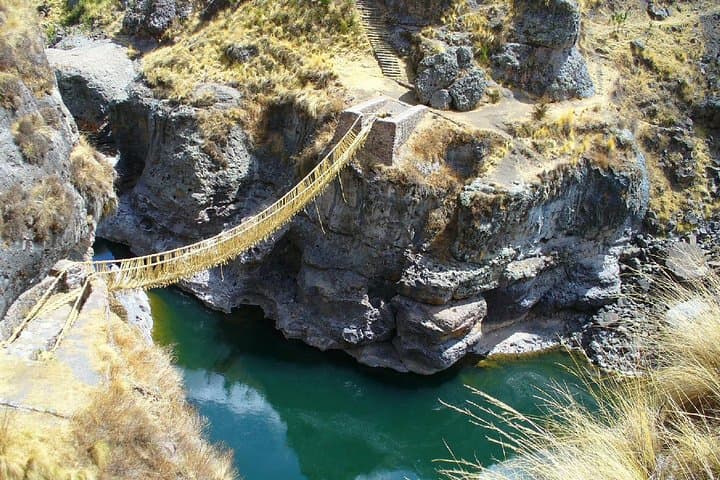
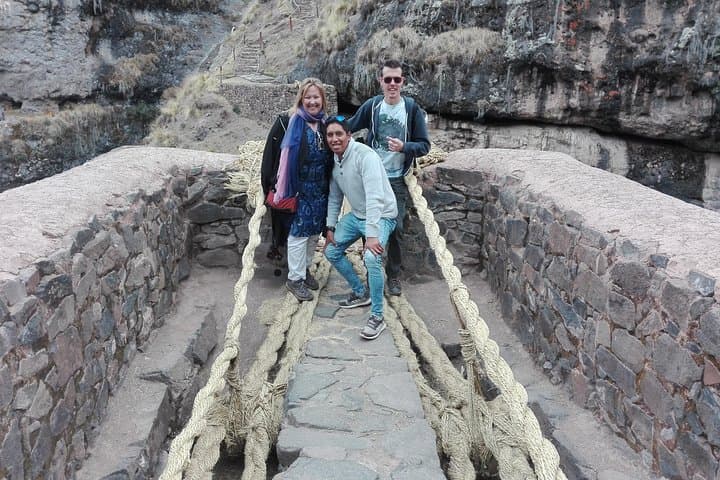
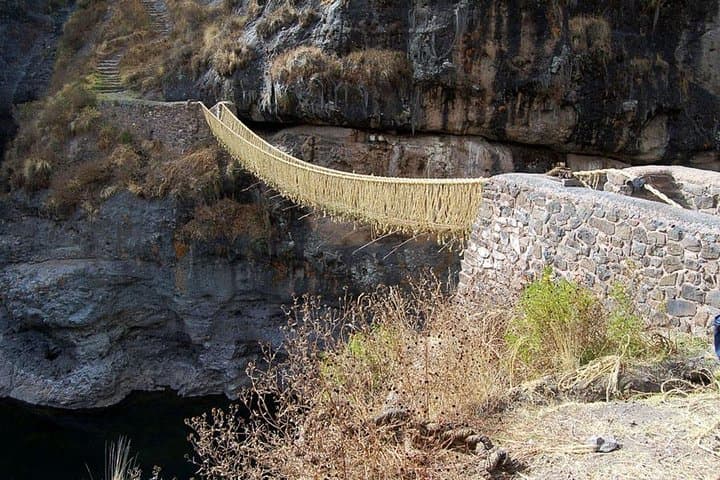
You step out of the van and the air is thin and sharp — the high puna pressing cool against your cheeks as the valley narrows toward the Apurímac. At about 3,900 m (≈13,000 ft) the handwoven span of Q'eswachaka stretches across a canyon, its braided ichu grass ropes catching wind and sun. Standing on the approach you can hear the murmur of communal voices and the creak of fiber underfoot: this is still a living, labor-intensive crossing.
Verified experiences and guided adventures in the surrounding area.
Operated by Peru4Fun Servicios Turísticos EIRL · Qeswachaka (Canas Province), Cusco
You step out of the van and the air is thin and sharp — the high puna pressing cool against your cheeks as the valley narrows toward the Apurímac. At about 3,900 m (≈13,000 ft) the handwoven span of Q'eswachaka stretches across a canyon, its braided ichu grass ropes catching wind and sun. Standing on the approach you can hear the murmur of communal voices and the creak of fiber underfoot: this is still a living, labor-intensive crossing.
The bridge is an uninterrupted link to Andean engineering. For generations local communities (notably Huinchiri and Ccollana) have rebuilt the 36.5 m (120 ft) span every one or two years using pre-Columbian techniques; the event culminates each June in a fiesta of dances and offerings. Geologically the gorge was carved by the Apurímac River, whose steep walls expose layered volcanic and sedimentary rock typical of the southern Peruvian Andes.
On a day tour from Cusco you’ll likely combine the visit with highland lakes, the Wari ruins at Piquillacta, and colonial gems such as Andahuaylillas. Expect a mix of paved and rough roads across 150–160 km (4–5 hours driving). The crossing itself is short but culturally dense: observe local rituals, ask about weaving techniques, and walk across if conditions allow.
Practical guide: acclimatize a day or two in Cusco, carry water and high‑SPF sun protection, and wear sturdy shoes for uneven village paths. Respect local customs — ask before photographing people and follow guidance from community stewards. If you time it for the second Sunday in June you’ll witness the full rebuilding fiesta; otherwise, visits during the dry season (May–September) offer the most stable access.
moderate.
10 hours.
Light walking plus long vehicle transfers; participants should be comfortable at high altitude and able to walk short uneven stretches.
Expect roughly 4–5 hours each way (150–160 km) depending on road conditions and stops; the tour is typically a full day.
Visitors are usually allowed to cross when the community has finished reconstruction and permits access, but follow local stewards’ instructions — the surface is narrow and uneven.
The major communal rebuilding fiesta culminates on the second Sunday in June each year; arriving then provides a rare cultural experience but requires advance planning.
This itinerary is not recommended for travelers with serious spinal injuries or for pregnant travelers due to high altitude and uneven terrain; consult a physician before booking.
Q'eswachaka preserves a living Inca-era engineering tradition: communities rebuild the grass suspension bridge using techniques passed down across generations.
The bridge’s annual reconstruction is a sustainable practice that recycles ichu grass and reinforces communal land stewardship; visitors should avoid removing plant material or disturbing ritual sites.
Peru4Fun Servicios Turísticos EIRL operates guided outdoor trips and adventures with an emphasis on safety, stewardship, and memorable experiences.
You step out of the van and the air is thin and sharp — the high puna pressing cool against your cheeks as the valley narrows toward the Apurímac. At about 3,900 m (≈13,000 ft) the handwoven span of Q'eswachaka stretches across a canyon, its braided ichu grass ropes catching wind and sun. Standing on the approach you can hear the murmur of communal voices and the creak of fiber underfoot: this is still a living, labor-intensive crossing.
You step out of the van and the air is thin and sharp — the high puna pressing cool against your cheeks as the valley narrows toward the Apurímac. At about 3,900 m (≈13,000 ft) the handwoven span of Q'eswachaka stretches across a canyon, its braided ichu grass ropes catching wind and sun. Standing on the approach you can hear the murmur of communal voices and the creak of fiber underfoot: this is still a living, labor-intensive crossing.
The bridge is an uninterrupted link to Andean engineering. For generations local communities (notably Huinchiri and Ccollana) have rebuilt the 36.5 m (120 ft) span every one or two years using pre-Columbian techniques; the event culminates each June in a fiesta of dances and offerings. Geologically the gorge was carved by the Apurímac River, whose steep walls expose layered volcanic and sedimentary rock typical of the southern Peruvian Andes.
On a day tour from Cusco you’ll likely combine the visit with highland lakes, the Wari ruins at Piquillacta, and colonial gems such as Andahuaylillas. Expect a mix of paved and rough roads across 150–160 km (4–5 hours driving). The crossing itself is short but culturally dense: observe local rituals, ask about weaving techniques, and walk across if conditions allow.
Practical guide: acclimatize a day or two in Cusco, carry water and high‑SPF sun protection, and wear sturdy shoes for uneven village paths. Respect local customs — ask before photographing people and follow guidance from community stewards. If you time it for the second Sunday in June you’ll witness the full rebuilding fiesta; otherwise, visits during the dry season (May–September) offer the most stable access.