THE ADVENTURE COLLECTIVE® · Independent discovery and booking for outdoor travel

Walk Lisbon’s streets with a queer lens: four hours of history, from the Carnation Revolution to contemporary queer culture, ending at a local queer venue for tapas and conversation. Expect cobbles, viewpoints and a thoughtfully curated local map.
Walk Lisbon’s streets with a queer lens: four hours of history, from the Carnation Revolution to contemporary queer culture, ending at a local queer venue for tapas and conversation. Expect cobbles, viewpoints and a thoughtfully curated local map.
You begin on a cool Lisbon morning at a monument marking victims of homophobia, the Tagus river out of sight but its presence felt in the city’s light. The guide’s voice threads through narrow cobbled lanes as you climb one of Lisbon’s seven hills; the city exhales terraces, tiled facades and the distant rumble of trams.
Verified experiences and guided adventures in the surrounding area.
Operated by Queer Lisbon Tour · Lisbon, Lisbon
You begin on a cool Lisbon morning at a monument marking victims of homophobia, the Tagus river out of sight but its presence felt in the city’s light. The guide’s voice threads through narrow cobbled lanes as you climb one of Lisbon’s seven hills; the city exhales terraces, tiled facades and the distant rumble of trams.
The route folds history into street life: conversations about Portugal’s imperial past and lusotropicalism sit beside the story of the 25 April Carnation Revolution that upended a long dictatorship and opened space for social change. Stops include Bairro Alto viewpoints, a church square where religious authority shaped norms, and sites of twentieth‑century resistance — each explained with attention to how colonialism and patriarchy influenced ideas about gender and sexuality.
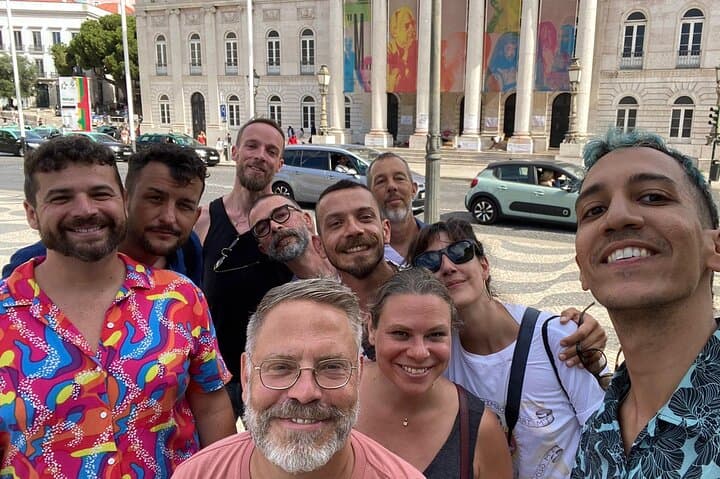
Culturally, the tour traces queer visibility from underground networks to today’s community hubs, finishing at a queer‑owned venue in Graça where local tapas, DJs and artists continue the conversation. Geology and topography show up too: the sweep of the Tagus estuary and the city’s layered hills dictated neighborhoods, views and gathering places.
Practical guidance: this is a four‑hour walking tour over uneven cobbles and short stairways — wear supportive shoes, bring a charged phone and a refillable water bottle, and plan to move at a steady pace. Mornings are cooler and quieter, evenings livelier; the guide’s updated queer map is a useful takeaway for further independent exploration.
moderate.
4 hours.
Moderate fitness recommended: expect 2–4 miles of walking with stair sections and uneven cobbles
No; the tour ends at a queer‑owned venue where you can order tapas and drinks separately—bring modest cash or card.
The guide speaks English and Portuguese, and materials are available in both languages.
Not recommended for those with significant mobility limitations due to cobbled streets and stair sections; contact the operator to discuss accommodations.
Winter availability is limited and bookings may be required via the operator’s website as noted in the tour details.
The tour links Portugal’s maritime empire and lusotropical ideas with 20th‑century dictatorship and the Carnation Revolution, showing how political change shaped queer visibility.
Respect local neighborhoods by keeping noise low in residential areas, avoid trampling fragile green spaces, and support queer‑owned businesses to sustain community economies.
Queer Lisbon Tour operates guided outdoor trips and adventures with an emphasis on safety, stewardship, and memorable experiences.
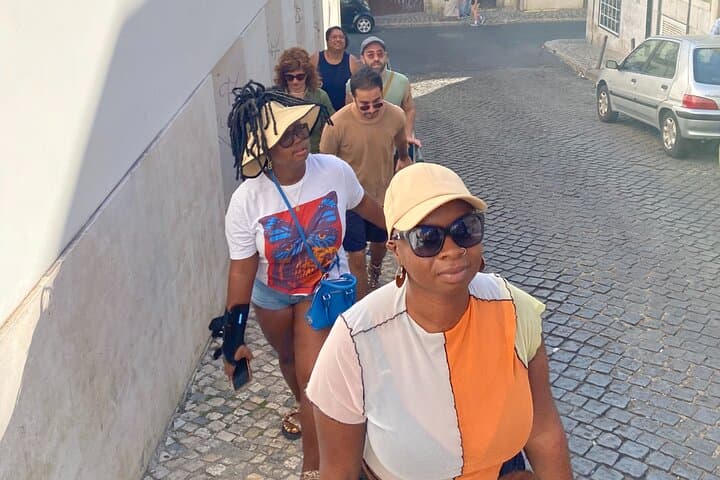
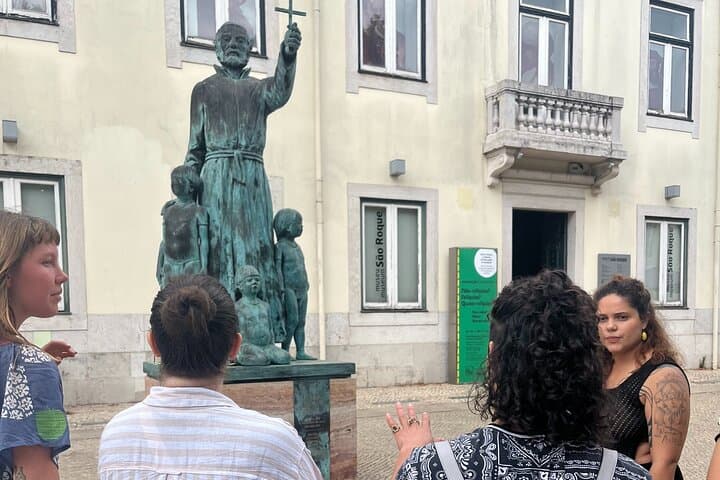

You begin on a cool Lisbon morning at a monument marking victims of homophobia, the Tagus river out of sight but its presence felt in the city’s light. The guide’s voice threads through narrow cobbled lanes as you climb one of Lisbon’s seven hills; the city exhales terraces, tiled facades and the distant rumble of trams.
You begin on a cool Lisbon morning at a monument marking victims of homophobia, the Tagus river out of sight but its presence felt in the city’s light. The guide’s voice threads through narrow cobbled lanes as you climb one of Lisbon’s seven hills; the city exhales terraces, tiled facades and the distant rumble of trams.
The route folds history into street life: conversations about Portugal’s imperial past and lusotropicalism sit beside the story of the 25 April Carnation Revolution that upended a long dictatorship and opened space for social change. Stops include Bairro Alto viewpoints, a church square where religious authority shaped norms, and sites of twentieth‑century resistance — each explained with attention to how colonialism and patriarchy influenced ideas about gender and sexuality.
Culturally, the tour traces queer visibility from underground networks to today’s community hubs, finishing at a queer‑owned venue in Graça where local tapas, DJs and artists continue the conversation. Geology and topography show up too: the sweep of the Tagus estuary and the city’s layered hills dictated neighborhoods, views and gathering places.
Practical guidance: this is a four‑hour walking tour over uneven cobbles and short stairways — wear supportive shoes, bring a charged phone and a refillable water bottle, and plan to move at a steady pace. Mornings are cooler and quieter, evenings livelier; the guide’s updated queer map is a useful takeaway for further independent exploration.