THE ADVENTURE COLLECTIVE® · Independent discovery and booking for outdoor travel

A 75-minute light-aircraft circuit over Queen Charlotte, Kenepuru and Pelorus Sounds with a short beach landing in the Outer Sounds. Expect narrated geology, wildlife spotting, and a dramatic perspective on Marlborough’s drowned valleys.
A 75-minute light-aircraft circuit over Queen Charlotte, Kenepuru and Pelorus Sounds with a short beach landing in the Outer Sounds. Expect narrated geology, wildlife spotting, and a dramatic perspective on Marlborough’s drowned valleys.
On a gray-pressed morning the twin-wing light aircraft shudders, taxis, and lifts off from Koromiko — the hangar a last human punctuation before the Marlborough Sounds swell into view. From the window the coastline unspools: fingers of water claim valleys carved by ice and sea, forested ridges stand like old cartographers’ lines, and the channels narrow into places that tides dare to boil.
Verified experiences and guided adventures in the surrounding area.
Operated by Pelorus Air · Picton, Marlborough
On a gray-pressed morning the twin-wing light aircraft shudders, taxis, and lifts off from Koromiko — the hangar a last human punctuation before the Marlborough Sounds swell into view. From the window the coastline unspools: fingers of water claim valleys carved by ice and sea, forested ridges stand like old cartographers’ lines, and the channels narrow into places that tides dare to boil.
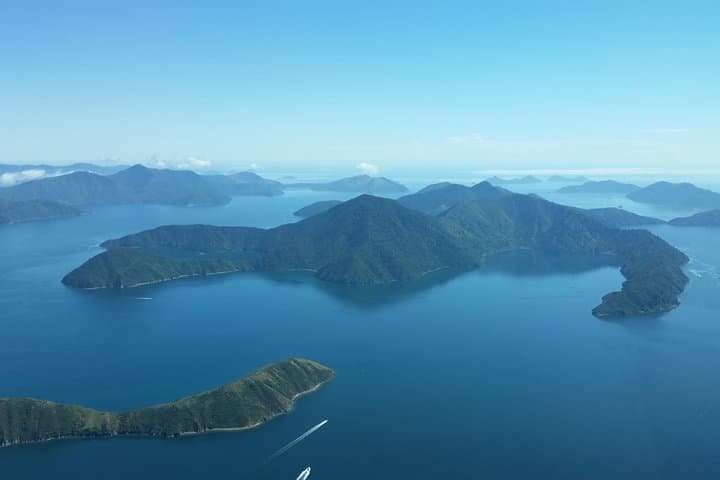
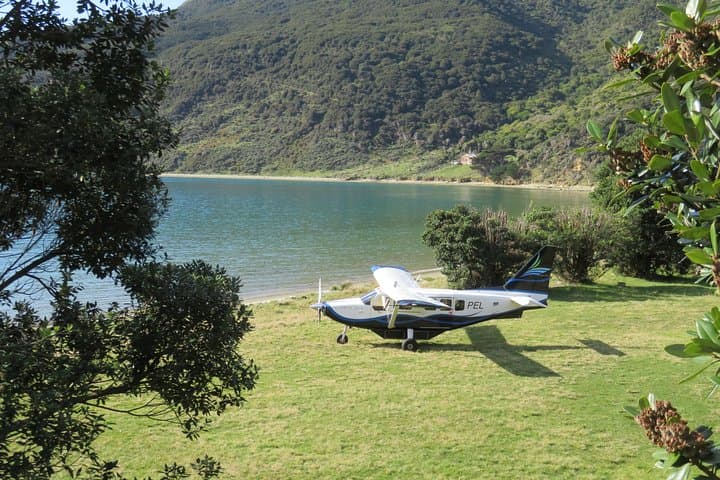
The 75-minute circuit covers Queen Charlotte, Kenepuru and Pelorus Sounds, finishing with a brief beach landing on an Outer Sounds shore where passengers step out into a silence that feels older than maps. From above the drowned-valley landscape reads like geology: a mosaic of steep sandstone and greywacke ridges downthrust and scoured by glaciation, then flooded as sea levels rose. Human history layers onto that — Māori used the sheltered inlets for kai and passage, and European settlers later turned coves into sawmill sites and small ports.
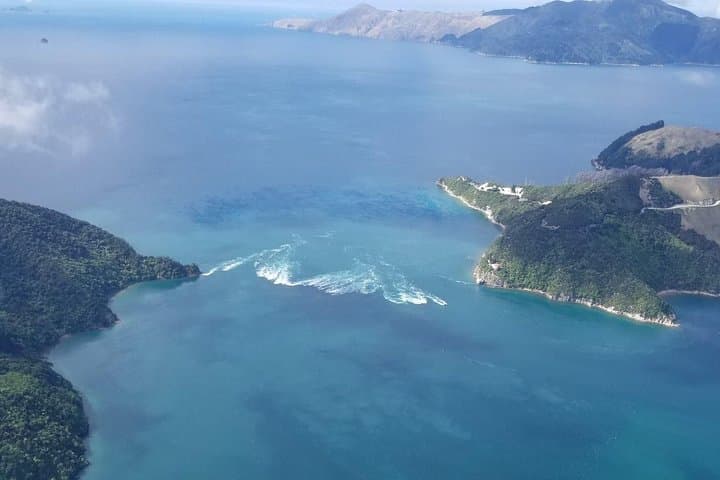
You’ll also pass the rocky teeth of islands that harbor rare wildlife. Pilots often point out Takapourewa/Stephens Island, a refuge where tuatara and other species persisted when mainland habitats changed. Tidal narrows and rips — places the sea churns with a will of its own — highlight how dynamic these waters are; they’ve shaped local fishing, navigation and lore.
Beyond natural science, the tour is practical theater: the pilot narrates landmarks, points to probable whale sightings, and times the route to show sheltered coves bathed in afternoon light. The remote beach stop is short — about 20 minutes — long enough for a stretch, a quick walk, and a few photographs, but short enough that you should plan clothing and camera settings in advance.
Practicalities: meet at Koromiko airstrip, 9 km south of Picton (operators pick up from the Picton i-Site on request). Flights run year-round but are weather dependent; heavy rain and low cloud will postpone the tour. Weight and passenger numbers matter for small aircraft, so expect the booking form to include weight details. Bring a windproof layer, secure your camera with a strap, and plan for limited time ashore.
For travelers who want immediate perspective on the Marlborough Sounds — geology beneath your feet, birds skimming channel air, the peculiar stillness of a remote beach — this flight compresses hours of driving and hiking into a concentrated aerial primer. It’s an introduction that urges a follow-up visit: longer water taxis, shore walks, and time to stand at waterline and let the sounds recharge a different sense of scale.
easy.
75 minutes.
Suitable for people of average mobility; only brief walking on sand at the beach stop.
The landing at a remote Outer Sounds beach is approximately 20 minutes — enough for photos and a short walk, but bring only what you can carry easily.
Infants are permitted but must sit on an adult’s lap; the aircraft operator will confirm any age limitations at booking.
Flights are weather-dependent; if your tour is cancelled due to low cloud or high winds you’ll be offered a refund or a reschedule according to the operator’s cancellation policy.
Yes — small aircraft require accurate passenger weights for safety and balance. You’ll be asked to provide weight info during booking.
Service animals are usually allowed; check with the operator in advance for specifics about non-service pets.
No — the tour is designed for general audiences and requires no technical skills or training.
Marlborough Sounds are drowned river valleys shaped by glaciation and sea-level change; Māori used these sheltered waters for seasonal food gathering and travel.
Several islands in the Sounds are predator-free sanctuaries with active conservation projects; visitors are asked to minimise biosecurity risks and stay to marked areas during landings.
Pelorus Air operates guided outdoor trips and adventures with an emphasis on safety, stewardship, and memorable experiences.
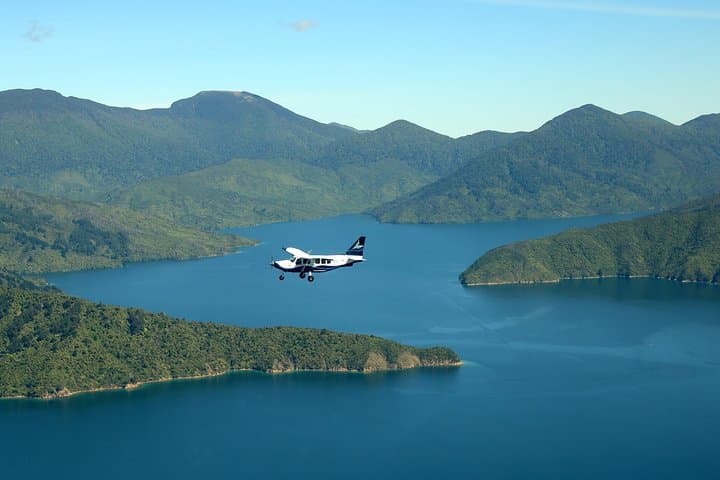
On a gray-pressed morning the twin-wing light aircraft shudders, taxis, and lifts off from Koromiko — the hangar a last human punctuation before the Marlborough Sounds swell into view. From the window the coastline unspools: fingers of water claim valleys carved by ice and sea, forested ridges stand like old cartographers’ lines, and the channels narrow into places that tides dare to boil.
On a gray-pressed morning the twin-wing light aircraft shudders, taxis, and lifts off from Koromiko — the hangar a last human punctuation before the Marlborough Sounds swell into view. From the window the coastline unspools: fingers of water claim valleys carved by ice and sea, forested ridges stand like old cartographers’ lines, and the channels narrow into places that tides dare to boil.
The 75-minute circuit covers Queen Charlotte, Kenepuru and Pelorus Sounds, finishing with a brief beach landing on an Outer Sounds shore where passengers step out into a silence that feels older than maps. From above the drowned-valley landscape reads like geology: a mosaic of steep sandstone and greywacke ridges downthrust and scoured by glaciation, then flooded as sea levels rose. Human history layers onto that — Māori used the sheltered inlets for kai and passage, and European settlers later turned coves into sawmill sites and small ports.
You’ll also pass the rocky teeth of islands that harbor rare wildlife. Pilots often point out Takapourewa/Stephens Island, a refuge where tuatara and other species persisted when mainland habitats changed. Tidal narrows and rips — places the sea churns with a will of its own — highlight how dynamic these waters are; they’ve shaped local fishing, navigation and lore.
Beyond natural science, the tour is practical theater: the pilot narrates landmarks, points to probable whale sightings, and times the route to show sheltered coves bathed in afternoon light. The remote beach stop is short — about 20 minutes — long enough for a stretch, a quick walk, and a few photographs, but short enough that you should plan clothing and camera settings in advance.
Practicalities: meet at Koromiko airstrip, 9 km south of Picton (operators pick up from the Picton i-Site on request). Flights run year-round but are weather dependent; heavy rain and low cloud will postpone the tour. Weight and passenger numbers matter for small aircraft, so expect the booking form to include weight details. Bring a windproof layer, secure your camera with a strap, and plan for limited time ashore.
For travelers who want immediate perspective on the Marlborough Sounds — geology beneath your feet, birds skimming channel air, the peculiar stillness of a remote beach — this flight compresses hours of driving and hiking into a concentrated aerial primer. It’s an introduction that urges a follow-up visit: longer water taxis, shore walks, and time to stand at waterline and let the sounds recharge a different sense of scale.