THE ADVENTURE COLLECTIVE® · Independent discovery and booking for outdoor travel

Trade Montreal’s skyline for a winter-made world: visit the unique Hôtel de Glace, view the frozen grandeur of Montmorency Falls, and walk Old Québec with a local guide. This long day tours architecture, geology, and the durable culture of Canada’s oldest stronghold.
Trade Montreal’s skyline for a winter-made world: visit the unique Hôtel de Glace, view the frozen grandeur of Montmorency Falls, and walk Old Québec with a local guide. This long day tours architecture, geology, and the durable culture of Canada’s oldest stronghold.
You step off the coach into a crystalline world—air so sharp it pricks the face, sunlight catching on facets of carved ice. The Hôtel de Glace rises like a temporary cathedral, corridors and sculptures hewn from compacted snow and frozen water; nearby Montmorency Falls throws its frozen veil down 83 metres, thicker than Niagara and alive with slow-motion fracture.
Verified experiences and guided adventures in the surrounding area.
Operated by Vacances dragon · Quebec City, Quebec
You step off the coach into a crystalline world—air so sharp it pricks the face, sunlight catching on facets of carved ice. The Hôtel de Glace rises like a temporary cathedral, corridors and sculptures hewn from compacted snow and frozen water; nearby Montmorency Falls throws its frozen veil down 83 metres, thicker than Niagara and alive with slow-motion fracture.
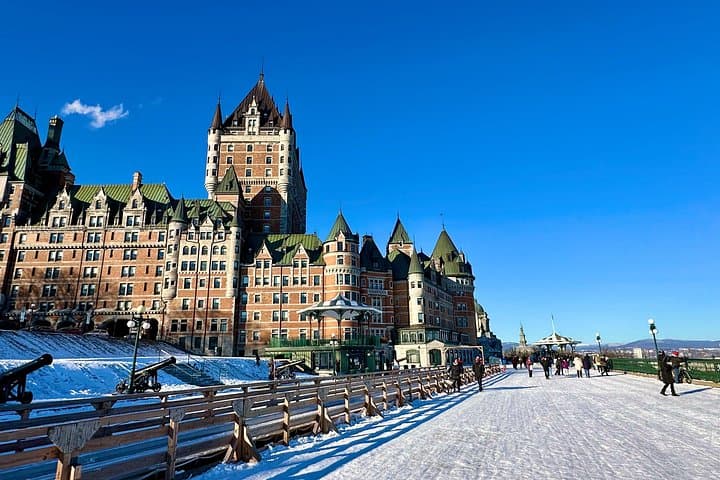
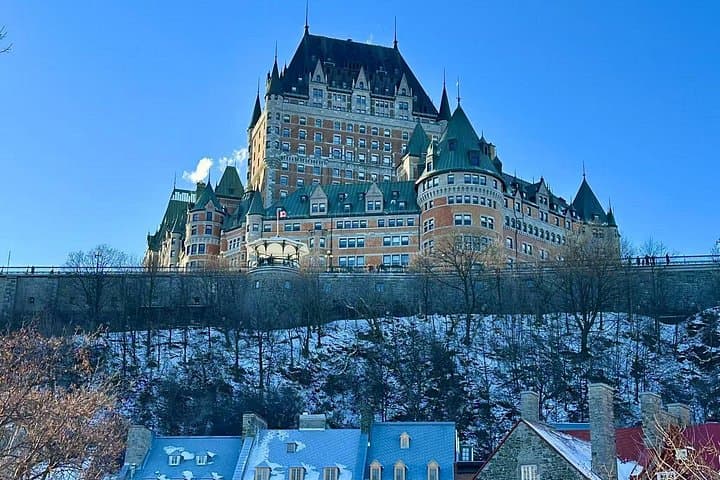
Quebec City’s fortified core dates to the 17th century; its stone ramparts and narrow streets recall French colonial life while winter recreates older rhythms—sled tracks, market stalls, and steam from café windows. Geologically, Montmorency is an oversteepened fall where the St. Lawrence’s tributaries spill over hard Cap-Diamant rock, forming a dramatic drop that freezes into monumental curtains and ice fingers.
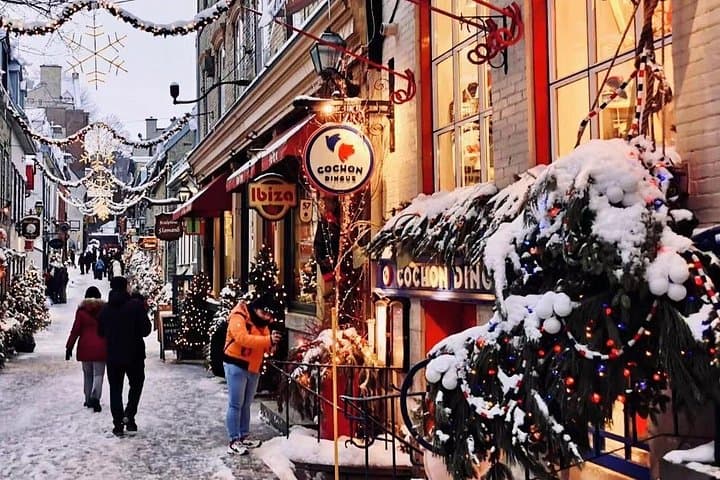
Culture here favors pragmatic warmth: layered wool, heated cafés, and an appetite for hearty fare in the Petit-Champlain quarter. Local guides translate architecture and strategy into stories—why the walls remain, how the ice hotel is rebuilt each season, and how winter shaped the city’s commerce.
Practically, the full-day itinerary moves fast: an hour at the ice hotel to photograph sculptures and the ice chapel, an hour at the falls for viewpoints and the cable car (seasonal), then a guided walk through Old Québec with time to explore. Expect firm packed snow, icy viewpoints, and cold-run cameras; traction on boots helps. Bring thermal layers, a waterproof outer shell, and plan for limited indoor time—hot drinks and sheltered restaurants make good midpoints. This is a day of structured highlights and short, sensory encounters with winter’s architecture.
easy.
13–14 hours.
Light level of fitness; mostly coach travel with short walks and standing during guided tours
Yes—according to the itinerary, admission to the Hôtel de Glace and Parc de la Chute-Montmorency is included.
The tour departs Montreal around 7:00 AM and returns by approximately 8:30 PM; check operator details for exact pickup locations.
Visits to the Hôtel de Glace are self-guided and allow you to enter public display suites, the ice chapel, and the ice bar area, but sleeping overnight is not part of this day tour.
The itinerary is rated easy and is suitable for a wide range of ages, though those with spinal or serious heart conditions are advised against participation due to cold exposure and walking.
Old Québec is North America’s only fortified city north of Mexico; its walls and ramparts reflect French and British colonial strategy from the 17th–19th centuries.
Seasonal attractions concentrate visitors—stick to marked paths at Montmorency and follow site rules at the ice hotel to protect fragile ice art and local vegetation.
Vacances dragon operates guided outdoor trips and adventures with an emphasis on safety, stewardship, and memorable experiences.
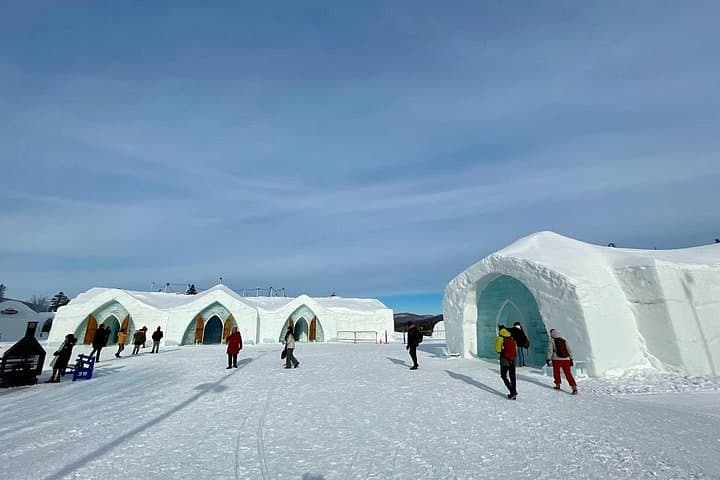
You step off the coach into a crystalline world—air so sharp it pricks the face, sunlight catching on facets of carved ice. The Hôtel de Glace rises like a temporary cathedral, corridors and sculptures hewn from compacted snow and frozen water; nearby Montmorency Falls throws its frozen veil down 83 metres, thicker than Niagara and alive with slow-motion fracture.
You step off the coach into a crystalline world—air so sharp it pricks the face, sunlight catching on facets of carved ice. The Hôtel de Glace rises like a temporary cathedral, corridors and sculptures hewn from compacted snow and frozen water; nearby Montmorency Falls throws its frozen veil down 83 metres, thicker than Niagara and alive with slow-motion fracture.
Quebec City’s fortified core dates to the 17th century; its stone ramparts and narrow streets recall French colonial life while winter recreates older rhythms—sled tracks, market stalls, and steam from café windows. Geologically, Montmorency is an oversteepened fall where the St. Lawrence’s tributaries spill over hard Cap-Diamant rock, forming a dramatic drop that freezes into monumental curtains and ice fingers.
Culture here favors pragmatic warmth: layered wool, heated cafés, and an appetite for hearty fare in the Petit-Champlain quarter. Local guides translate architecture and strategy into stories—why the walls remain, how the ice hotel is rebuilt each season, and how winter shaped the city’s commerce.
Practically, the full-day itinerary moves fast: an hour at the ice hotel to photograph sculptures and the ice chapel, an hour at the falls for viewpoints and the cable car (seasonal), then a guided walk through Old Québec with time to explore. Expect firm packed snow, icy viewpoints, and cold-run cameras; traction on boots helps. Bring thermal layers, a waterproof outer shell, and plan for limited indoor time—hot drinks and sheltered restaurants make good midpoints. This is a day of structured highlights and short, sensory encounters with winter’s architecture.