THE ADVENTURE COLLECTIVE® · Independent discovery and booking for outdoor travel

A full-day escape from Hanoi that pairs the colorful craft life of Quang Phu Cau incense makers with a gentle sampan glide through Tam Coc’s karst river and a visit to Hoa Lu’s ancient temples. Practical, scenic, and ideal for photographers.
A full-day escape from Hanoi that pairs the colorful craft life of Quang Phu Cau incense makers with a gentle sampan glide through Tam Coc’s karst river and a visit to Hoa Lu’s ancient temples. Practical, scenic, and ideal for photographers.
The day begins before dawn in Hanoi’s Old Quarter—your guide meets you, the van hums south and the city’s grit fades into open fields. By mid-morning the road gives way to rows of red incense sticks drying in the sun at Quang Phu Cau: a working craft village where smoke, color and hands-on industry shape both landscape and livelihood.
Verified experiences and guided adventures in the surrounding area.
Operated by Authentic PHU QUOC · Tam Coc, Ninh Binh Province
The day begins before dawn in Hanoi’s Old Quarter—your guide meets you, the van hums south and the city’s grit fades into open fields. By mid-morning the road gives way to rows of red incense sticks drying in the sun at Quang Phu Cau: a working craft village where smoke, color and hands-on industry shape both landscape and livelihood.
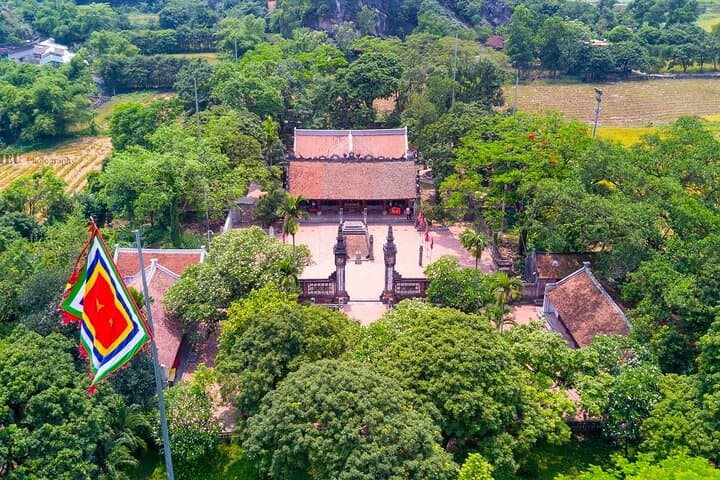
Geology and history follow in the river valley. Ninh Binh’s karst towers rise abruptly from flat rice plains—limestone sculpted over millions of years—while Tam Coc’s slow river threads between caves and ridgelines that feel like a shoreline turned vertical. Hoa Lu, the region’s 10th–11th century capital, stands as compact stone temples and carved gates that recall early Vietnamese statecraft and regional trade.
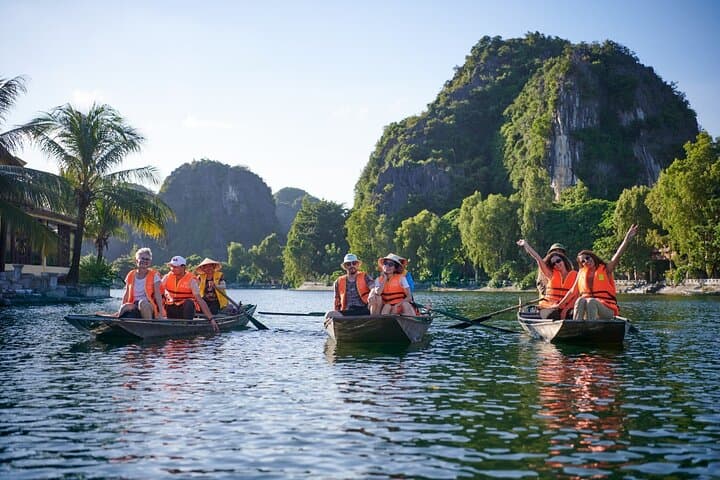
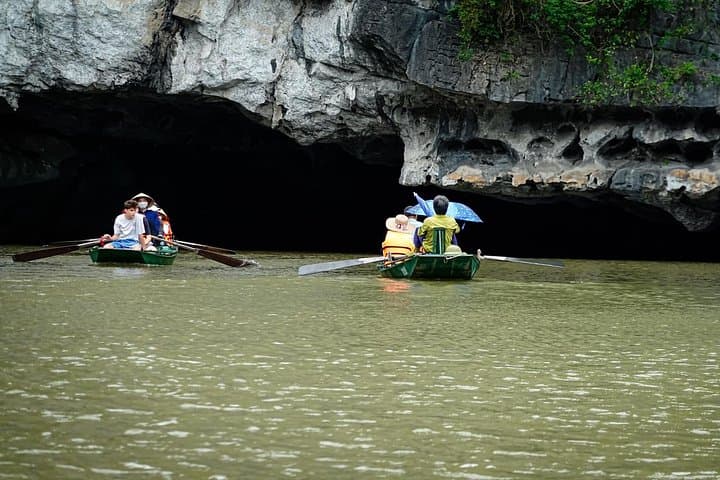
Practical rhythm: the Tam Coc sampan is a low, non-motorized boat ride of roughly 2 km that lasts about an hour, gliding under three short caves and past rice fields; physical strain is minimal, with short walks and temple steps in Hoa Lu. Bring sun protection, a lightweight rain layer, and a camera with a polarizer for saturated greens and reflections. Start early to avoid midday heat and crowds, and carry cash for small purchases and tipping the rower.
Expect close encounters with rural life—farmers, water buffalo, and craft workshops—paired with easy sightseeing. Respect temple areas, follow your guide’s cultural notes, and leave no trace in rice paddies and caves. The trip pairs sensory detail with straightforward logistics: an accessible full-day loop from Hanoi that delivers big karst scenery in a single, manageable outing.
moderate.
10–12 hours.
Suitable for most fitness levels; expect short walks, low steps at temples, and an hour seated on a low sampan.
Pickup and drop-off are at hotels in Hanoi’s Old Quarter; the tour returns the same evening to central Hanoi.
The sampan ride typically covers about 2 km and lasts roughly one hour, passing through three caves and along rice fields.
Yes—Vietnamese lunch and entrance fees to included sites are covered in the tour price.
The tour is generally suitable for families; however, boat access and temple steps may be challenging for those with mobility restrictions—check with the operator when booking.
Hoa Lu served as Vietnam’s first centralized capital in the 10th–11th centuries and contains shrines to early Vietnamese rulers.
The karst and rice-plain ecosystem is fragile—avoid trampling paddies, use local guides who support village economies, and minimize plastic waste.
Authentic PHU QUOC operates guided outdoor trips and adventures with an emphasis on safety, stewardship, and memorable experiences.
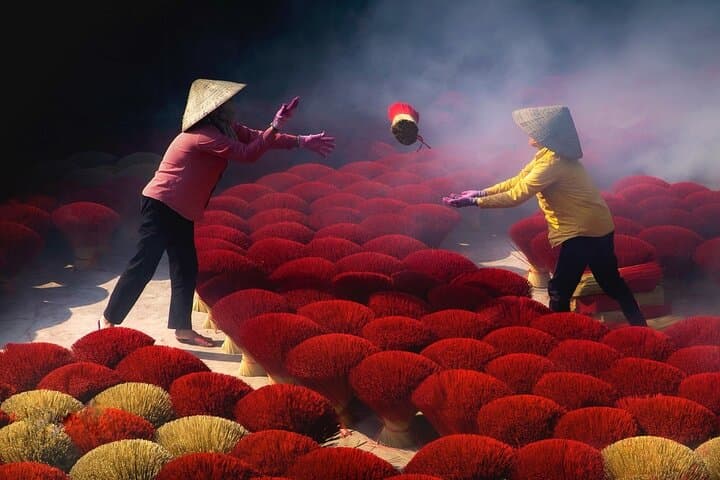
The day begins before dawn in Hanoi’s Old Quarter—your guide meets you, the van hums south and the city’s grit fades into open fields. By mid-morning the road gives way to rows of red incense sticks drying in the sun at Quang Phu Cau: a working craft village where smoke, color and hands-on industry shape both landscape and livelihood.
The day begins before dawn in Hanoi’s Old Quarter—your guide meets you, the van hums south and the city’s grit fades into open fields. By mid-morning the road gives way to rows of red incense sticks drying in the sun at Quang Phu Cau: a working craft village where smoke, color and hands-on industry shape both landscape and livelihood.
Geology and history follow in the river valley. Ninh Binh’s karst towers rise abruptly from flat rice plains—limestone sculpted over millions of years—while Tam Coc’s slow river threads between caves and ridgelines that feel like a shoreline turned vertical. Hoa Lu, the region’s 10th–11th century capital, stands as compact stone temples and carved gates that recall early Vietnamese statecraft and regional trade.
Practical rhythm: the Tam Coc sampan is a low, non-motorized boat ride of roughly 2 km that lasts about an hour, gliding under three short caves and past rice fields; physical strain is minimal, with short walks and temple steps in Hoa Lu. Bring sun protection, a lightweight rain layer, and a camera with a polarizer for saturated greens and reflections. Start early to avoid midday heat and crowds, and carry cash for small purchases and tipping the rower.
Expect close encounters with rural life—farmers, water buffalo, and craft workshops—paired with easy sightseeing. Respect temple areas, follow your guide’s cultural notes, and leave no trace in rice paddies and caves. The trip pairs sensory detail with straightforward logistics: an accessible full-day loop from Hanoi that delivers big karst scenery in a single, manageable outing.