THE ADVENTURE COLLECTIVE® · Independent discovery and booking for outdoor travel

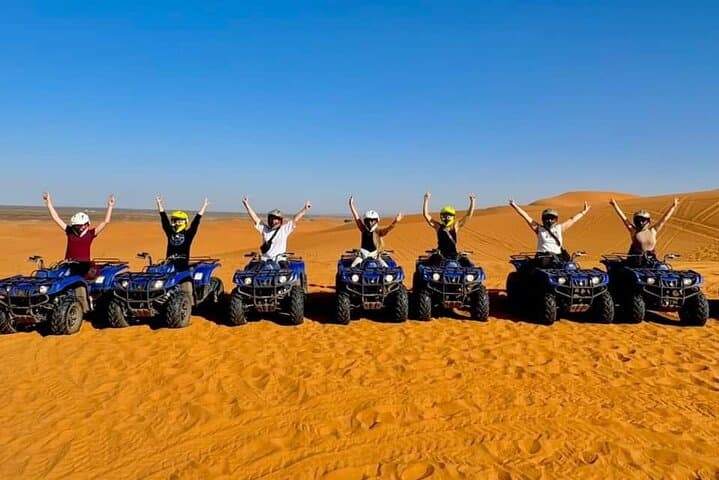
Feel the Sahara under your tires: a guided 60-minute quad or two-seat buggy across Merzouga’s towering Erg Chebbi dunes, with helmets, bottled water and sandboarding included. Perfect for a high-energy, short desert blast timed around golden light.
Feel the Sahara under your tires: a guided 60-minute quad or two-seat buggy across Merzouga’s towering Erg Chebbi dunes, with helmets, bottled water and sandboarding included. Perfect for a high-energy, short desert blast timed around golden light.
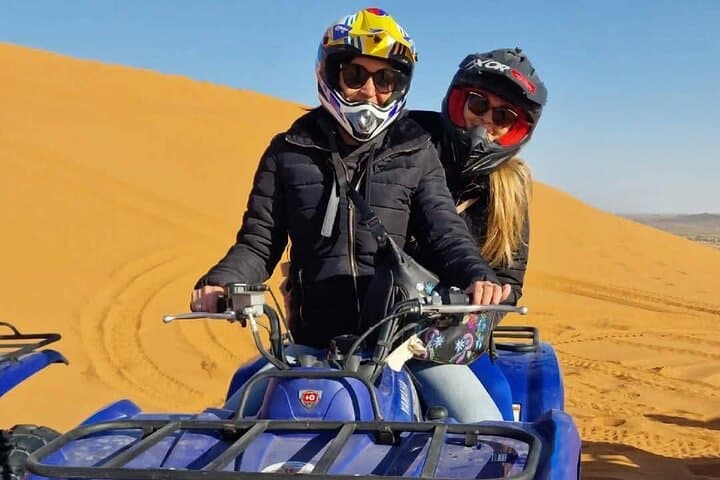
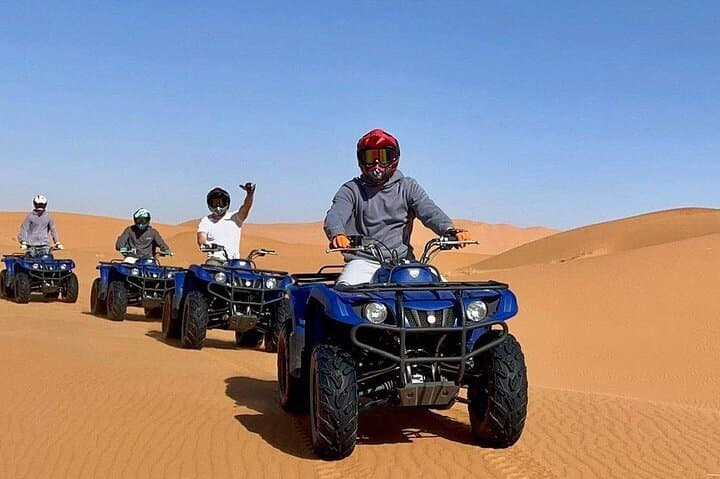
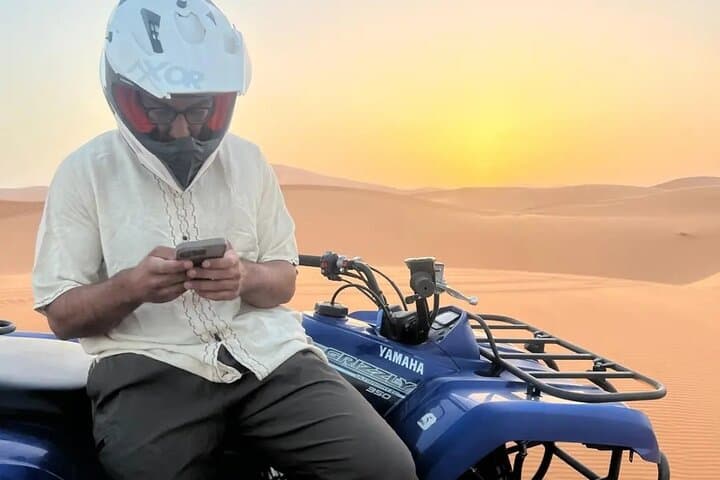
Morning in Hassilabied starts with engines warming and sand cooling beneath early light. Drivers and passengers gather by low stone guesthouses while guides check helmets and ATVs; ahead, the Erg Chebbi dunes rise like a living landscape that dares you up each wind-sculpted face. The ride itself is a short, concentrated burst—an hour of guided quad or two-seat buggy travel across shifting ridgelines, with pauses to try complimentary sandboarding on a steep lee slope.
Verified experiences and guided adventures in the surrounding area.
Operated by See Around Morocco · Hassilabied, Drâa-Tafilalet
Morning in Hassilabied starts with engines warming and sand cooling beneath early light. Drivers and passengers gather by low stone guesthouses while guides check helmets and ATVs; ahead, the Erg Chebbi dunes rise like a living landscape that dares you up each wind-sculpted face. The ride itself is a short, concentrated burst—an hour of guided quad or two-seat buggy travel across shifting ridgelines, with pauses to try complimentary sandboarding on a steep lee slope.
Erg Chebbi is one of Morocco’s largest dune seas, built by thousands of years of wind sorting the Sahara’s sands. Hassilabied grew as an offshoot of nomadic and Berber settlements that serviced caravan routes; today small guesthouses and camel farms form a low, human fringe at the dunes’ edge. Geology and local culture meet here: the dunes move subtly year-to-year, and nearby households run camps and evening tea rituals that reflect Berber hospitality.
Practically, expect loose sand, sudden pitch changes, and open, dry sun. Guides provide helmets, bottled water and basic instruction; sandboarding is included, and pickup can be arranged from local stays. This is not technical driving—guides lead and set pace—but a short, adrenaline-tinged outing that rewards timing: early morning or late afternoon light is best for contrast and cooler temperatures.
Bring closed-toe shoes, sun protection, layered wind gear for winter mornings and a secure way to carry your camera. Riders with heart conditions or pregnancy should avoid this activity. With common-sense prep, a one-hour quad run in Hassilabied is a direct, high-energy way to meet the Sahara.
easy.
1 hour.
Suitable for most adults with reasonable mobility; not physically strenuous but requires balance when entering/exiting vehicles
No—guides provide a brief safety and handling orientation; vehicles are guided on marked routes so prior experience is helpful but not required.
A one-hour guided quad or two-seat buggy run, helmets, bottled water, sandboarding, and pickup options when arranged from nearby stays.
Children can ride as passengers in buggies or on an adult's lap on some ATVs; infant seats are available but infants are required to sit on laps—confirm during booking.
This experience is not recommended for travelers with serious cardiovascular problems or for pregnant guests due to jostling and excitement.
Hassilabied sits at the edge of historical caravan routes and has long served Berber families who guided travelers across the Sahara; modern homestays continue that hospitality.
Dune ecosystems are fragile—stay on designated driving tracks, avoid leaving waste, and follow guide instructions to minimize erosion and disturbance to wildlife.
See Around Morocco operates guided outdoor trips and adventures with an emphasis on safety, stewardship, and memorable experiences.
Morning in Hassilabied starts with engines warming and sand cooling beneath early light. Drivers and passengers gather by low stone guesthouses while guides check helmets and ATVs; ahead, the Erg Chebbi dunes rise like a living landscape that dares you up each wind-sculpted face. The ride itself is a short, concentrated burst—an hour of guided quad or two-seat buggy travel across shifting ridgelines, with pauses to try complimentary sandboarding on a steep lee slope.
Morning in Hassilabied starts with engines warming and sand cooling beneath early light. Drivers and passengers gather by low stone guesthouses while guides check helmets and ATVs; ahead, the Erg Chebbi dunes rise like a living landscape that dares you up each wind-sculpted face. The ride itself is a short, concentrated burst—an hour of guided quad or two-seat buggy travel across shifting ridgelines, with pauses to try complimentary sandboarding on a steep lee slope.
Erg Chebbi is one of Morocco’s largest dune seas, built by thousands of years of wind sorting the Sahara’s sands. Hassilabied grew as an offshoot of nomadic and Berber settlements that serviced caravan routes; today small guesthouses and camel farms form a low, human fringe at the dunes’ edge. Geology and local culture meet here: the dunes move subtly year-to-year, and nearby households run camps and evening tea rituals that reflect Berber hospitality.
Practically, expect loose sand, sudden pitch changes, and open, dry sun. Guides provide helmets, bottled water and basic instruction; sandboarding is included, and pickup can be arranged from local stays. This is not technical driving—guides lead and set pace—but a short, adrenaline-tinged outing that rewards timing: early morning or late afternoon light is best for contrast and cooler temperatures.
Bring closed-toe shoes, sun protection, layered wind gear for winter mornings and a secure way to carry your camera. Riders with heart conditions or pregnancy should avoid this activity. With common-sense prep, a one-hour quad run in Hassilabied is a direct, high-energy way to meet the Sahara.