THE ADVENTURE COLLECTIVE® · Independent discovery and booking for outdoor travel

Ride a quad through open desert tracks with repeated, close-range views of the Great Pyramids and the Sphinx. This 4-hour desert safari mixes off-road thrills with accessible archaeology-focused viewpoints—ideal for travelers who want action and iconic scenery in one outing.
Ride a quad through open desert tracks with repeated, close-range views of the Great Pyramids and the Sphinx. This 4-hour desert safari mixes off-road thrills with accessible archaeology-focused viewpoints—ideal for travelers who want action and iconic scenery in one outing.
You kick up red dust under a wide, hard sky as the three great pyramids hold their patient line ahead. Engines hum; wind pulls at your jacket. The track skirts scrubby desert and low dunes, and every turn reveals a new angle on Cheops, Chephren and Mykerinus—their stone faces catching light like a geological clock.
Verified experiences and guided adventures in the surrounding area.
Operated by Three Pyramids Tours · Giza, Giza Governorate
You kick up red dust under a wide, hard sky as the three great pyramids hold their patient line ahead. Engines hum; wind pulls at your jacket. The track skirts scrubby desert and low dunes, and every turn reveals a new angle on Cheops, Chephren and Mykerinus—their stone faces catching light like a geological clock.
The Giza Plateau is both archaeological core and living desert. These pyramids, built about 4,500 years ago as royal tombs, sit on limestone bedrock that has weathered into the plateau’s flat terraces and occasional ridgelines. Local culture here is a mix of urban Cairo’s bustle and centuries-old Bedouin desert knowledge—the drivers and guides read the land as much as the map.
Expect a compact wilderness experience: sandy tracks, occasional packed gravel, and stretches of soft sand that demand throttle and balance. Sightlines to the Sphinx and the pyramid faces are frequent; photographers find dramatic low-angle perspectives and a sense that arriving is as much part of the trip as the destination.
Practical guidance: wear closed-toe shoes, sun protection and a light layer against wind. Follow the guide’s route—many areas near the monuments are protected and off-limits—ride at controlled speeds near tourists and archaeological zones, and bring at least 1–2 liters of water. Morning or late-afternoon departures offer cooler temperatures and stronger light for photos. Helmets and basic safety gear are typically provided; confirm before you go. This is an accessible, motorized desert outing that pairs big-history views with hands-on adventure.
moderate.
4 hours.
Basic fitness and mobility; you should be comfortable mounting and steering an ATV for several consecutive minutes and standing briefly for balance.
No—most tours provide a short safety briefing and basic handling instruction; guides will match pace to your comfort level.
Helmets and basic protective gear are typically provided, but confirm with the operator if you prefer your own.
You’ll get panoramic viewpoints near the Three Pyramids and the Sphinx, but direct access to monument bases is restricted—follow your guide’s instructions.
Operators usually cancel for unsafe conditions (sandstorms or heavy rain); check the tour’s 24-hour cancellation window for full refund rules.
The Giza pyramids were erected in the Fourth Dynasty (circa 2600–2500 BCE) as monumental royal tombs and remain central to Egypt’s archaeological heritage.
Stick to marked tracks and heed guides to avoid trampling sensitive surfaces; the plateau is both a cultural site and fragile desert ecology.
Three Pyramids Tours operates guided outdoor trips and adventures with an emphasis on safety, stewardship, and memorable experiences.
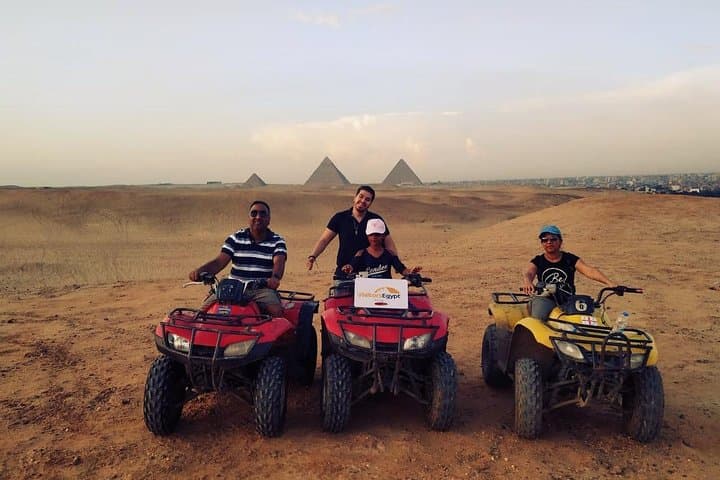

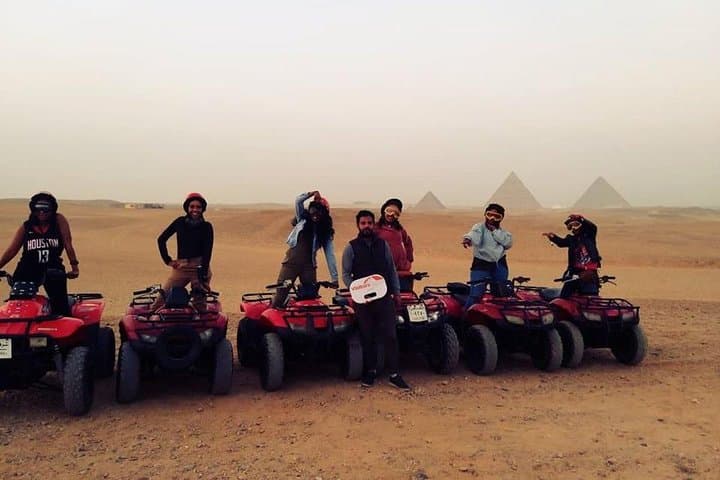

You kick up red dust under a wide, hard sky as the three great pyramids hold their patient line ahead. Engines hum; wind pulls at your jacket. The track skirts scrubby desert and low dunes, and every turn reveals a new angle on Cheops, Chephren and Mykerinus—their stone faces catching light like a geological clock.
You kick up red dust under a wide, hard sky as the three great pyramids hold their patient line ahead. Engines hum; wind pulls at your jacket. The track skirts scrubby desert and low dunes, and every turn reveals a new angle on Cheops, Chephren and Mykerinus—their stone faces catching light like a geological clock.
The Giza Plateau is both archaeological core and living desert. These pyramids, built about 4,500 years ago as royal tombs, sit on limestone bedrock that has weathered into the plateau’s flat terraces and occasional ridgelines. Local culture here is a mix of urban Cairo’s bustle and centuries-old Bedouin desert knowledge—the drivers and guides read the land as much as the map.
Expect a compact wilderness experience: sandy tracks, occasional packed gravel, and stretches of soft sand that demand throttle and balance. Sightlines to the Sphinx and the pyramid faces are frequent; photographers find dramatic low-angle perspectives and a sense that arriving is as much part of the trip as the destination.
Practical guidance: wear closed-toe shoes, sun protection and a light layer against wind. Follow the guide’s route—many areas near the monuments are protected and off-limits—ride at controlled speeds near tourists and archaeological zones, and bring at least 1–2 liters of water. Morning or late-afternoon departures offer cooler temperatures and stronger light for photos. Helmets and basic safety gear are typically provided; confirm before you go. This is an accessible, motorized desert outing that pairs big-history views with hands-on adventure.