THE ADVENTURE COLLECTIVE® · Independent discovery and booking for outdoor travel

Strap into a quad and ride the sands that frame the Pyramids of Giza. This four‑hour desert safari pairs short dune runs and plateau tracks with sweeping, close‑range views of Khufu, Khafre and Menkaure.
Strap into a quad and ride the sands that frame the Pyramids of Giza. This four‑hour desert safari pairs short dune runs and plateau tracks with sweeping, close‑range views of Khufu, Khafre and Menkaure.
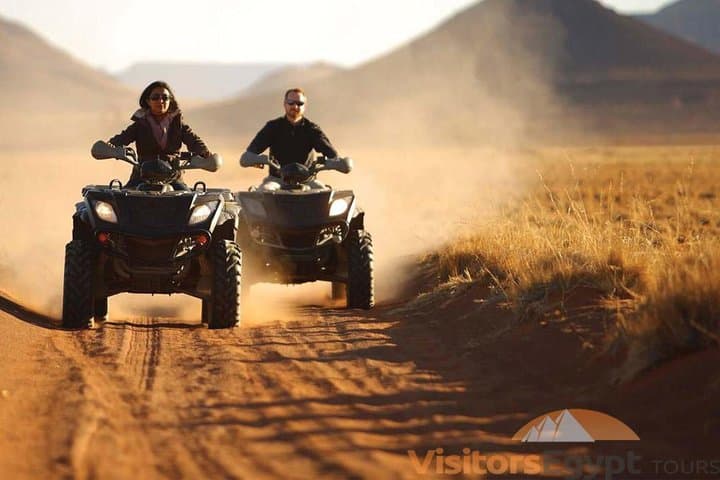
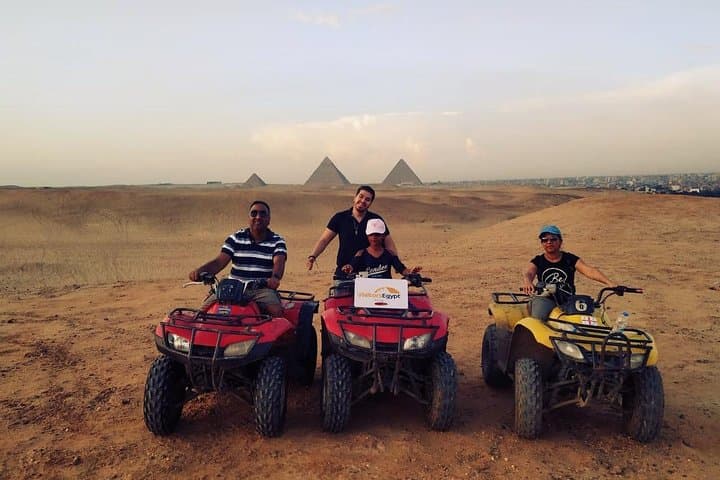
The engine thumps to life and the desert opens — a low, golden plain rolling toward stone giants that have watched the Nile for millennia. Riders meet their guide in Cairo and are whisked by air‑conditioned transfer to the sandy edge of the Giza Plateau. From the saddle, the three main pyramids — Khufu (Cheops), Khafre (Chephren) and Menkaure (Mykerinus) — loom like carved cliffs, while the Sphinx keeps a quiet, carved watch nearby.
Verified experiences and guided adventures in the surrounding area.
Operated by Visitors Egypt Tours · Giza, Giza Governorate
The engine thumps to life and the desert opens — a low, golden plain rolling toward stone giants that have watched the Nile for millennia. Riders meet their guide in Cairo and are whisked by air‑conditioned transfer to the sandy edge of the Giza Plateau. From the saddle, the three main pyramids — Khufu (Cheops), Khafre (Chephren) and Menkaure (Mykerinus) — loom like carved cliffs, while the Sphinx keeps a quiet, carved watch nearby.
This route threads recent motor tracks, hard-packed plateau and short sand runs that reveal the geology beneath: wind‑smoothed limestone and desert veneers left by ancient seas. The plates and blocks that make the pyramids were quarried locally; the plateau itself is part of that same calcareous bedrock laid down millions of years ago. Culturally, the ride sits where modern Egyptian life meets a 4,500‑year‑old monument complex; guides emphasize respectful distance from archaeological zones and local customs around photography.
Practically, the tour runs about four hours with hotel pickup and bottled water provided. Expect short instruction on quad handling, flat stretches interspersed with low dunes, and panoramic photo stops. Riders should follow the guide’s route to avoid protected areas, keep speed measured around other visitors, and carry ID. Wear closed shoes, sun protection and a dust layer; mornings and late afternoons offer cooler temperatures and softer light for photos.
This is an access‑forward desert experience — part mechanical thrill, part history lesson — best enjoyed with attentive guidance, basic vehicle confidence, and a respect for one of humanity’s oldest landscapes.
moderate.
4 hours.
Suitable for people with basic mobility and balance; no advanced fitness required but expect short periods of standing and leaning on uneven sand.
No — brief instruction is provided and the route suits beginners, but riders should be comfortable with basic throttle, braking and balance.
Yes — the tour includes pickup and return transfers from Cairo hotels by air‑conditioned vehicle.
Guides will take you to designated viewpoints near the plateau, but riders must respect protected zones and follow guide direction to avoid restricted archaeological areas.
Full refunds are available if canceled at least 24 hours before the scheduled departure; bad weather may also trigger cancellation.
The Giza Plateau holds pyramids built c. 2600–2500 BCE during Egypt’s Fourth Dynasty; the stones come from local limestone beds exposed on the plateau.
Tours are routed to avoid sensitive archaeological zones; travelers should avoid littering, follow guides’ directions, and not climb or touch ancient masonry.
Visitors Egypt Tours operates guided outdoor trips and adventures with an emphasis on safety, stewardship, and memorable experiences.

The engine thumps to life and the desert opens — a low, golden plain rolling toward stone giants that have watched the Nile for millennia. Riders meet their guide in Cairo and are whisked by air‑conditioned transfer to the sandy edge of the Giza Plateau. From the saddle, the three main pyramids — Khufu (Cheops), Khafre (Chephren) and Menkaure (Mykerinus) — loom like carved cliffs, while the Sphinx keeps a quiet, carved watch nearby.
The engine thumps to life and the desert opens — a low, golden plain rolling toward stone giants that have watched the Nile for millennia. Riders meet their guide in Cairo and are whisked by air‑conditioned transfer to the sandy edge of the Giza Plateau. From the saddle, the three main pyramids — Khufu (Cheops), Khafre (Chephren) and Menkaure (Mykerinus) — loom like carved cliffs, while the Sphinx keeps a quiet, carved watch nearby.
This route threads recent motor tracks, hard-packed plateau and short sand runs that reveal the geology beneath: wind‑smoothed limestone and desert veneers left by ancient seas. The plates and blocks that make the pyramids were quarried locally; the plateau itself is part of that same calcareous bedrock laid down millions of years ago. Culturally, the ride sits where modern Egyptian life meets a 4,500‑year‑old monument complex; guides emphasize respectful distance from archaeological zones and local customs around photography.
Practically, the tour runs about four hours with hotel pickup and bottled water provided. Expect short instruction on quad handling, flat stretches interspersed with low dunes, and panoramic photo stops. Riders should follow the guide’s route to avoid protected areas, keep speed measured around other visitors, and carry ID. Wear closed shoes, sun protection and a dust layer; mornings and late afternoons offer cooler temperatures and softer light for photos.
This is an access‑forward desert experience — part mechanical thrill, part history lesson — best enjoyed with attentive guidance, basic vehicle confidence, and a respect for one of humanity’s oldest landscapes.