THE ADVENTURE COLLECTIVE® · Independent discovery and booking for outdoor travel

Combine high-speed quad biking with a traditional camel ride on the Giza Plateau—close-up views of the Great Pyramid meet desert momentum in a compact 1–2 hour outing. Ideal for travelers who want an active photo stop near the world’s oldest surviving Wonder.
Combine high-speed quad biking with a traditional camel ride on the Giza Plateau—close-up views of the Great Pyramid meet desert momentum in a compact 1–2 hour outing. Ideal for travelers who want an active photo stop near the world’s oldest surviving Wonder.
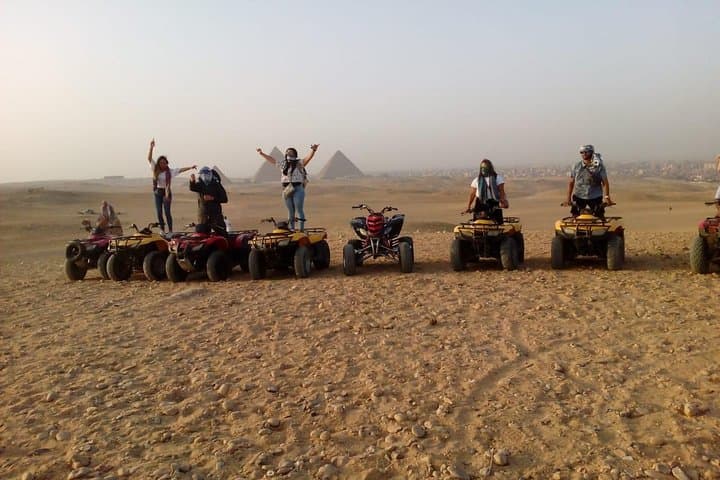
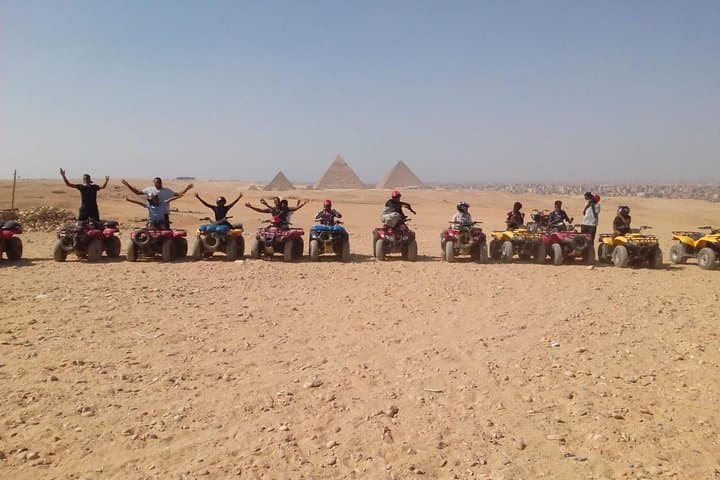
The wind in the western desert pushes warm sand into ridges while the Great Pyramid rises, an ancient stone silhouette against a low sun. You stand on a dune, helmet clipped and binoculars in hand, as quad bikes rumble and camels chew quietly nearby—the plateau’s scale shrinking every human-made assumption.
Verified experiences and guided adventures in the surrounding area.
Operated by Twitter Egypt Travel · Giza, Giza Governorate
The wind in the western desert pushes warm sand into ridges while the Great Pyramid rises, an ancient stone silhouette against a low sun. You stand on a dune, helmet clipped and binoculars in hand, as quad bikes rumble and camels chew quietly nearby—the plateau’s scale shrinking every human-made assumption.
This short desert safari pairs two very different forms of travel: the mechanized thrill of an hour on a quad bike and the slower rhythm of a 30–60 minute camel ride with panoramic views of Cheops, Chephren and Mykerinus. Geologically the Giza Plateau is Pleistocene limestone capped by wind-swept sand; the pyramids are made from Tura limestone and local limestone blocks quarried and transported in antiquity. Culturally, the plateau is a living archaeological landscape—local Bedouin and guides have been sharing desert skills here for generations and many local operators include bottled water and basic safety briefings.
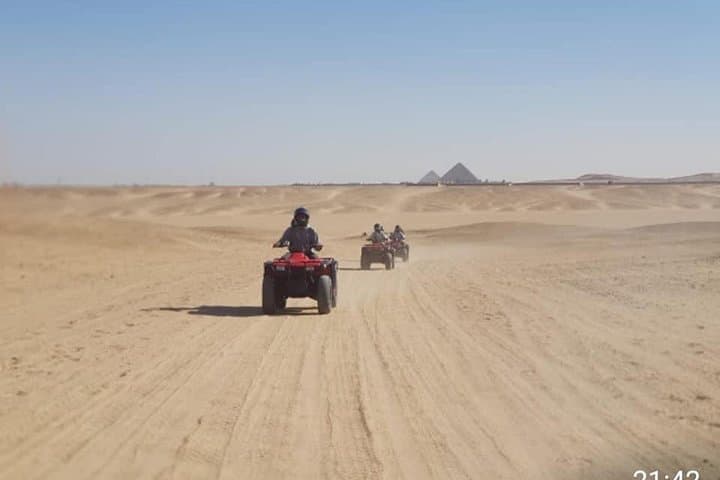
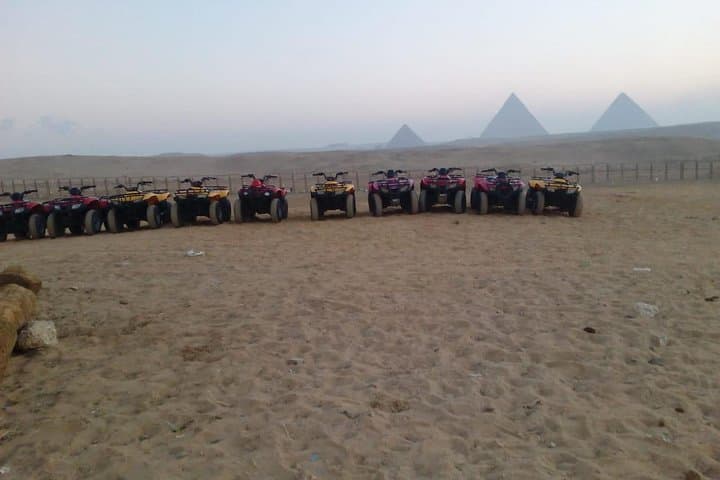
Expect short bursts of high-adrenaline riding across packed sand, interspersed with photo stops and a guided camel walk close to the monuments. The panorama is uninterrupted and especially striking at sunrise or sunset when shadows reveal the pyramids’ angles.
Practical guidance: arrive rested, wear closed-toe shoes, bring sun protection, and listen to vehicle safety briefings. Travelers with spinal, heart, or pregnancy concerns should skip the quad. The experience is compact—plan it as a half-day outing combined with museum time in Cairo or a guided Giza plateau visit.
moderate.
1–2 hours.
Requires a moderate level of fitness—comfortable mounting/dismounting, balance for a camel, and basic ability to handle an ATV.
The quad bike section is approximately one hour, typically on packed sand and short dunes close to the Giza Plateau.
Yes—riding routes and camel walks are arranged to offer panoramic views of Cheops, Chephren and Mykerinus, but no entry onto the monuments is included.
No prior experience is required; operators give a safety briefing and basic handling instruction before you ride.
Not recommended for pregnant travelers, people with spinal injuries, or those with serious heart conditions; disclose medical issues at booking.
The Giza Plateau hosts the Great Pyramid of Khufu (Cheops), built around 2560 BCE—the only surviving Wonder of the Ancient World and part of a complex of tombs and mortuary temples.
Operators are encouraged to minimize track impact and waste; visitors should avoid climbing on archaeological features and carry out any trash to protect the fragile desert surface.
Twitter Egypt Travel operates guided outdoor trips and adventures with an emphasis on safety, stewardship, and memorable experiences.
The wind in the western desert pushes warm sand into ridges while the Great Pyramid rises, an ancient stone silhouette against a low sun. You stand on a dune, helmet clipped and binoculars in hand, as quad bikes rumble and camels chew quietly nearby—the plateau’s scale shrinking every human-made assumption.
The wind in the western desert pushes warm sand into ridges while the Great Pyramid rises, an ancient stone silhouette against a low sun. You stand on a dune, helmet clipped and binoculars in hand, as quad bikes rumble and camels chew quietly nearby—the plateau’s scale shrinking every human-made assumption.
This short desert safari pairs two very different forms of travel: the mechanized thrill of an hour on a quad bike and the slower rhythm of a 30–60 minute camel ride with panoramic views of Cheops, Chephren and Mykerinus. Geologically the Giza Plateau is Pleistocene limestone capped by wind-swept sand; the pyramids are made from Tura limestone and local limestone blocks quarried and transported in antiquity. Culturally, the plateau is a living archaeological landscape—local Bedouin and guides have been sharing desert skills here for generations and many local operators include bottled water and basic safety briefings.
Expect short bursts of high-adrenaline riding across packed sand, interspersed with photo stops and a guided camel walk close to the monuments. The panorama is uninterrupted and especially striking at sunrise or sunset when shadows reveal the pyramids’ angles.
Practical guidance: arrive rested, wear closed-toe shoes, bring sun protection, and listen to vehicle safety briefings. Travelers with spinal, heart, or pregnancy concerns should skip the quad. The experience is compact—plan it as a half-day outing combined with museum time in Cairo or a guided Giza plateau visit.