THE ADVENTURE COLLECTIVE® · Independent discovery and booking for outdoor travel

Leave Chengdu for a full day of Taoist temples, bamboo forests and one of the world’s oldest waterworks. This private tour pairs a cable-car and lakeside hike on Qingcheng Mountain with a close-up look at the Dujiangyan irrigation system built in 256 BC.
Leave Chengdu for a full day of Taoist temples, bamboo forests and one of the world’s oldest waterworks. This private tour pairs a cable-car and lakeside hike on Qingcheng Mountain with a close-up look at the Dujiangyan irrigation system built in 256 BC.
Morning mist lifts off bamboo slopes as the van winds out of Chengdu and the plain opens to green hills. At Qingcheng Mountain, temples press into the forest and a narrow cable car climbs above canopy; Yuecheng Lake invites a short boat ride that refracts temple roofs and bamboo stalks. The land here feels deliberate — paths that pilgrims once walked still guide visitors past Tang- and Qing-era halls.
Verified experiences and guided adventures in the surrounding area.
Operated by Samtour of Chengdu OTC Travel · Dujiangyan, Sichuan
Morning mist lifts off bamboo slopes as the van winds out of Chengdu and the plain opens to green hills. At Qingcheng Mountain, temples press into the forest and a narrow cable car climbs above canopy; Yuecheng Lake invites a short boat ride that refracts temple roofs and bamboo stalks. The land here feels deliberate — paths that pilgrims once walked still guide visitors past Tang- and Qing-era halls.
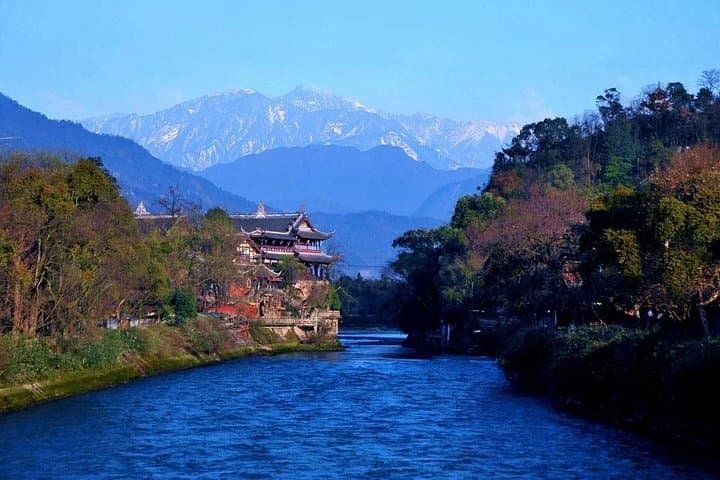
Qingcheng’s geology is gentle: rounded granite ridges and deep soil that support thick bamboo groves and mixed broadleaf forest. The mountain is a formative site for Taoism, with layered architecture and stone inscriptions that speak to centuries of spiritual practice. Downstream, Dujiangyan’s irrigation system—built in 256 BC—reframes the landscape: engineered levees and channels split the river’s will, delivering water for rice terraces and towns without a dam.
Expect a mix of easy boardwalks, stone steps and a few steep slopes on the Qingcheng hike; at Dujiangyan, stone bridges and viewing platforms trace the ancient hydraulic works. Guides explain how the fish-mouth levee and butterfly weirs divert and calm flood flows — engineering that still waters a large portion of Sichuan.
Practical guidance: start early to avoid crowds and midday heat, wear grippy shoes for wet stone steps, carry water and weather layers for sudden mountain showers, and leave time to explore smaller temples and Lidui Park after the main sites. Respect marked trails and photography rules in temples to preserve both the cultural sites and the forest.
moderate.
6–8 hours.
Suitable for travelers in average fitness who can manage a few steep sections and several flights of stairs.
The private day tour runs about 6–8 hours with a relaxed pace, including boat and cable-car rides, a guided hike on Qingcheng, lunch, and a visit to Dujiangyan.
Yes — the itinerary is classified as physically easy to moderate, but it includes some steep slopes and steps; those with mobility limits should request specific pickup and notify the operator ahead of time.
Yes — admission to the listed sites, a boat ride, cable car, and lunch at a local restaurant are included in the tour price.
Yes — guides explain the history and function of Dujiangyan’s fish-mouth levee, channels and temples, showing how the system still regulates water flow for the region.
Qingcheng Mountain is one of the birthplaces of Taoism with temples dating back many dynasties; Dujiangyan is an ancient Qin-era hydraulic project (256 BC) that transformed Sichuan agriculture.
Both sites manage visitor impact through defined paths and restricted areas—stay on trails, avoid touching temple artifacts, and carry out any trash to protect fragile forest and cultural features.
Samtour of Chengdu OTC Travel operates guided outdoor trips and adventures with an emphasis on safety, stewardship, and memorable experiences.
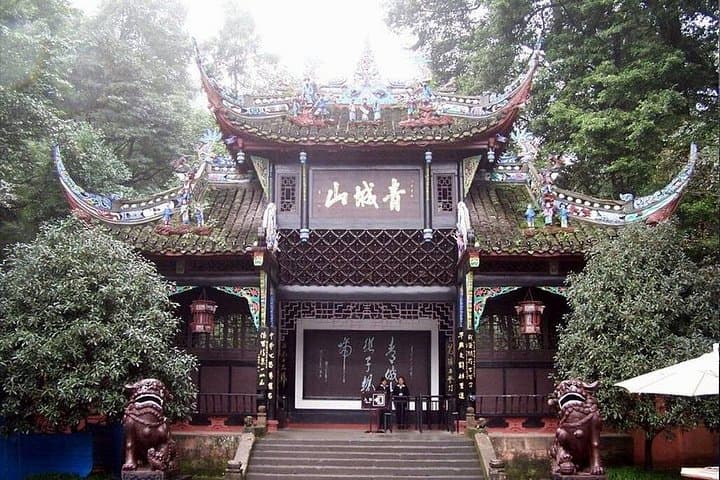
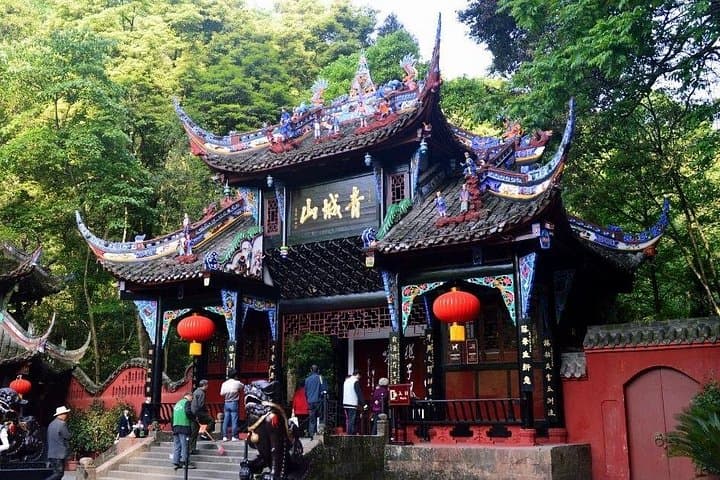
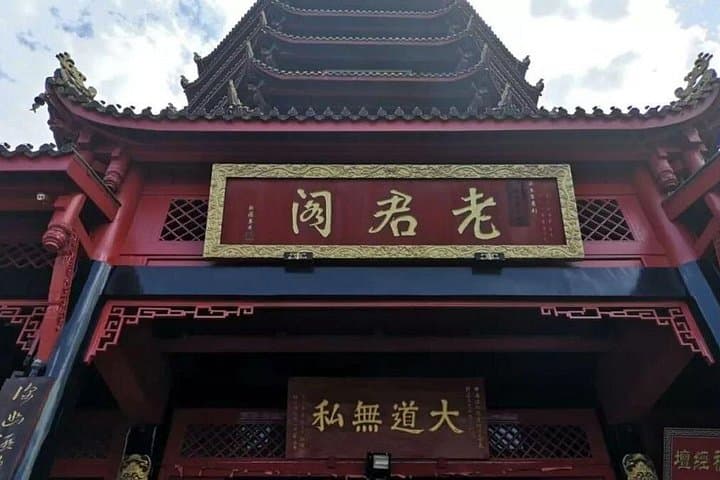
Morning mist lifts off bamboo slopes as the van winds out of Chengdu and the plain opens to green hills. At Qingcheng Mountain, temples press into the forest and a narrow cable car climbs above canopy; Yuecheng Lake invites a short boat ride that refracts temple roofs and bamboo stalks. The land here feels deliberate — paths that pilgrims once walked still guide visitors past Tang- and Qing-era halls.
Morning mist lifts off bamboo slopes as the van winds out of Chengdu and the plain opens to green hills. At Qingcheng Mountain, temples press into the forest and a narrow cable car climbs above canopy; Yuecheng Lake invites a short boat ride that refracts temple roofs and bamboo stalks. The land here feels deliberate — paths that pilgrims once walked still guide visitors past Tang- and Qing-era halls.
Qingcheng’s geology is gentle: rounded granite ridges and deep soil that support thick bamboo groves and mixed broadleaf forest. The mountain is a formative site for Taoism, with layered architecture and stone inscriptions that speak to centuries of spiritual practice. Downstream, Dujiangyan’s irrigation system—built in 256 BC—reframes the landscape: engineered levees and channels split the river’s will, delivering water for rice terraces and towns without a dam.
Expect a mix of easy boardwalks, stone steps and a few steep slopes on the Qingcheng hike; at Dujiangyan, stone bridges and viewing platforms trace the ancient hydraulic works. Guides explain how the fish-mouth levee and butterfly weirs divert and calm flood flows — engineering that still waters a large portion of Sichuan.
Practical guidance: start early to avoid crowds and midday heat, wear grippy shoes for wet stone steps, carry water and weather layers for sudden mountain showers, and leave time to explore smaller temples and Lidui Park after the main sites. Respect marked trails and photography rules in temples to preserve both the cultural sites and the forest.