THE ADVENTURE COLLECTIVE® · Independent discovery and booking for outdoor travel

A full-day trip from Cusco to Q'eswachaka takes you across a living Inca bridge and past four high Andean lagoons. Expect long drives, easy walks at altitude, and vivid cultural encounters with communities that still rebuild the bridge by hand.
A full-day trip from Cusco to Q'eswachaka takes you across a living Inca bridge and past four high Andean lagoons. Expect long drives, easy walks at altitude, and vivid cultural encounters with communities that still rebuild the bridge by hand.
You step off the minivan onto high puna grass and feel the Apurímac valley breathe beneath you—the river arguing with the canyon walls, the wind pushing hard at your jacket as if testing your intentions.
Verified experiences and guided adventures in the surrounding area.
Operated by Naydas Travel · Quehue, Cusco Region
You step off the minivan onto high puna grass and feel the Apurímac valley breathe beneath you—the river arguing with the canyon walls, the wind pushing hard at your jacket as if testing your intentions.
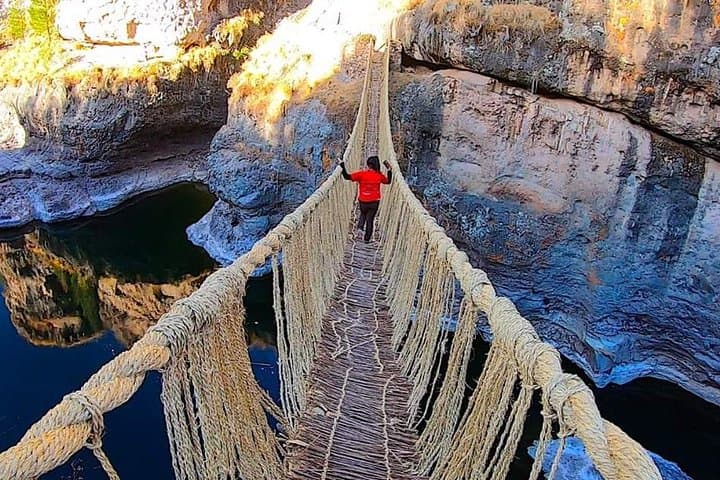
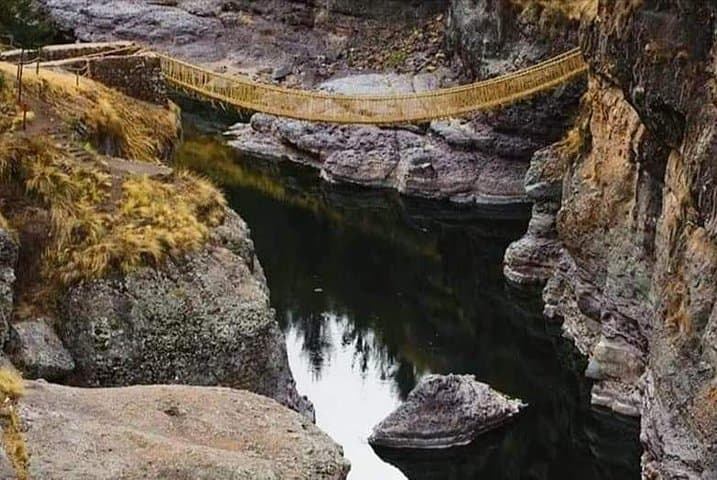
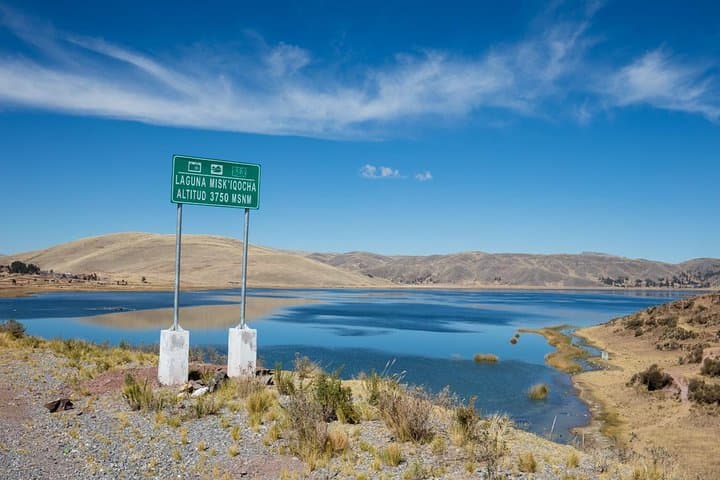
The tour centers on Q'eswachaka (Q'eswa Chaka), a living Inca suspension bridge rebuilt each June using ichu grass and centuries-old techniques. The path also threads past four high Andean lagoons—small, glassy basins that collect sky and cloud—each a change in mood: reflective, wind-rippled, sun-bright, and peat-dark. Geologically, you're on Miocene and Pliocene uplands carved by glacial and fluvial action; the Apurímac has gouged the canyon that gives the bridge its vertiginous setting.
This place is cultural as much as scenic. The bridge is part of the qhapaq ñan network and the annual minka renewal is an act of communal stewardship that UNESCO recognized as intangible heritage in 2013. Local weavers and farmers still work the slopes; expect simple village life and strong Quechua identity.
Practically: it’s a long day from Cusco (roughly 3–4 hours each way by road) with short, user-friendly walks at altitude. Acclimatize first, carry sun protection, and use sturdy shoes for uneven trail sections near the bridge approaches. Respect the site—no graffiti, follow local guides, and photograph from established viewpoints.
The reward is direct: crossing a rope bridge that still holds hands across centuries, watching lagoon light shift like a slow tide, and seeing a community keep an Inca ritual alive.
easy.
14 hours (full day, including transport).
Basic fitness for short, gentle walks; able to stand and walk at altitude for 1–2 hours total
Expect roughly 3–4 hours each way depending on traffic and road conditions; the tour is a full-day excursion.
Yes—the bridge is maintained annually by local communities using traditional methods; follow guide instructions and cross in small groups.
No specialized fitness is required—walks are short and easy, but you should be comfortable at 3,600–4,000 m (11,800–13,100 ft) altitude.
Photography is allowed, but be respectful—ask permission before photographing people and avoid disturbing ritual activities.
Q'eswachaka is part of the Inca qhapaq ñan road network; its annual reconstruction is a communal minka tradition maintained for centuries and recognized by UNESCO.
The bridge’s maintenance depends on traditional community stewardship—visitors should minimize impact by staying on paths, packing out trash, and supporting local guides.
Naydas Travel operates guided outdoor trips and adventures with an emphasis on safety, stewardship, and memorable experiences.
You step off the minivan onto high puna grass and feel the Apurímac valley breathe beneath you—the river arguing with the canyon walls, the wind pushing hard at your jacket as if testing your intentions.
You step off the minivan onto high puna grass and feel the Apurímac valley breathe beneath you—the river arguing with the canyon walls, the wind pushing hard at your jacket as if testing your intentions.
The tour centers on Q'eswachaka (Q'eswa Chaka), a living Inca suspension bridge rebuilt each June using ichu grass and centuries-old techniques. The path also threads past four high Andean lagoons—small, glassy basins that collect sky and cloud—each a change in mood: reflective, wind-rippled, sun-bright, and peat-dark. Geologically, you're on Miocene and Pliocene uplands carved by glacial and fluvial action; the Apurímac has gouged the canyon that gives the bridge its vertiginous setting.
This place is cultural as much as scenic. The bridge is part of the qhapaq ñan network and the annual minka renewal is an act of communal stewardship that UNESCO recognized as intangible heritage in 2013. Local weavers and farmers still work the slopes; expect simple village life and strong Quechua identity.
Practically: it’s a long day from Cusco (roughly 3–4 hours each way by road) with short, user-friendly walks at altitude. Acclimatize first, carry sun protection, and use sturdy shoes for uneven trail sections near the bridge approaches. Respect the site—no graffiti, follow local guides, and photograph from established viewpoints.
The reward is direct: crossing a rope bridge that still holds hands across centuries, watching lagoon light shift like a slow tide, and seeing a community keep an Inca ritual alive.